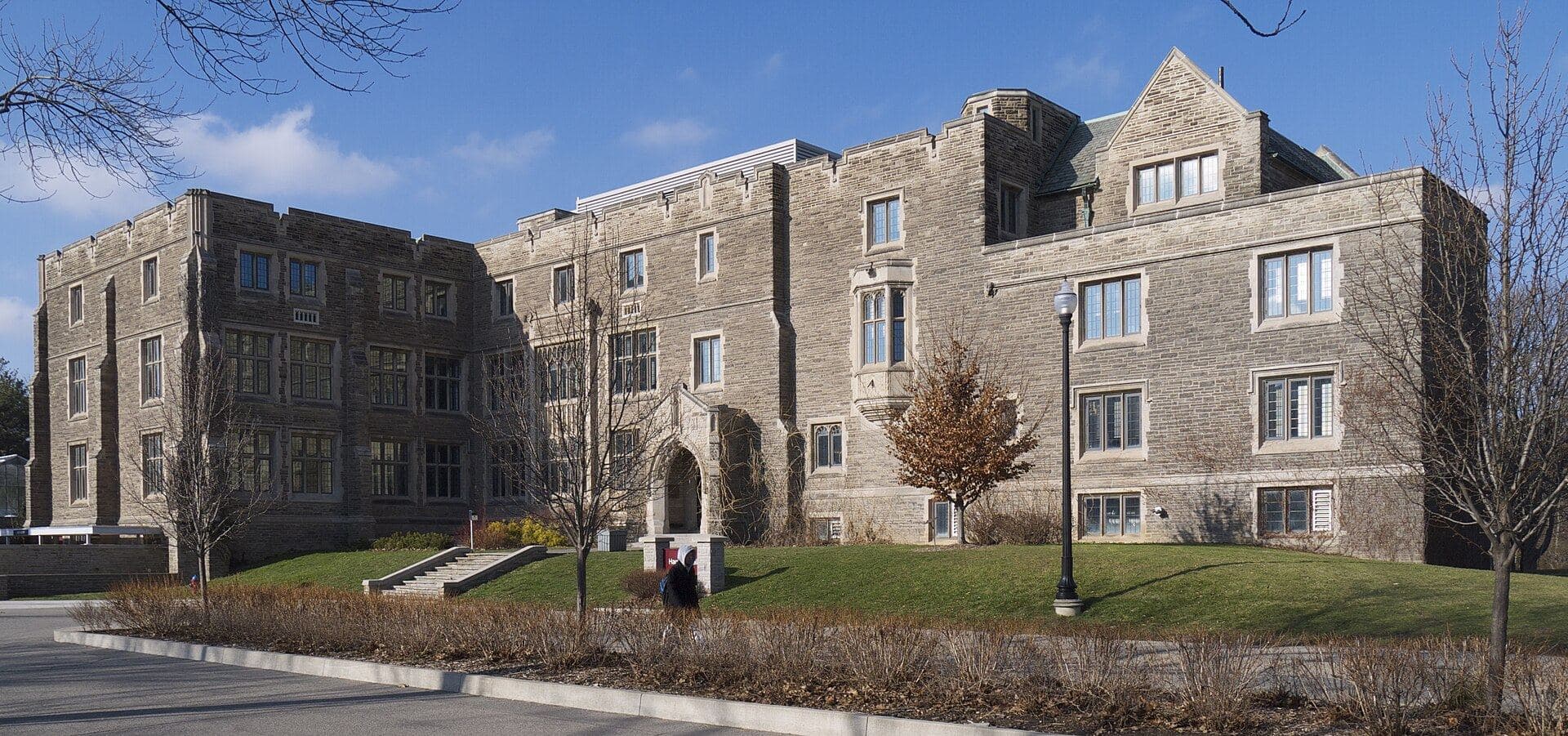
Health Sciences & Pre-Med in Canada 2027
Compare Canadian Health Sciences and pre-med degrees. Compare 19 medical faculties. Look at fit, prerequisites, GPA (grade point average), MCAT, cost, eligibility and backup careers.
Explore this guide
Each section is a focused resource with its own link, sources, and manageable reading path. Start wherever your current question fits.
- 01Medical Sciences degree, BMSc, and medical degree are not the sameThe search phrase “medical science” can point to several stages of study. An undergraduate Bachelor of Medical Sciences (BMSc or BMedSci) studies subjects…
- 02McMaster Health Sciences requirementsMcMaster Honours Health Sciences is a direct Level I BHSc with an inquiry-based, interdisciplinary curriculum. Ontario applicants currently need:
- 03Health sciences vs life sciences vs biomedical sciencesThese names are not standardized across Canada.
- 04Canadian medical school prerequisites: Ontario 2027 comparisonThis table summarizes the live 2027 OMSAS cycle. It is not a complete application guide.
- 05MCAT requirements for Canadian medical schools- Chemical and Physical Foundations of Biological Systems; - Critical Analysis and Reasoning Skills; - Biological and Biochemical Foundations of Living Sys…
- 06Nursing is a separate professional route, not a generic pre-med backupA Health Sciences or Life Sciences degree and a nursing degree answer different applicant tasks. Nursing programs lead through province- or territory-speci…
Undergraduate Health Sciences and professional medical school are different stages. A Health Sciences, Life Sciences, Biomedical Sciences or unrelated bachelor's degree is an undergraduate program. An MD program is a professional degree with its own postsecondary study, course, GPA, test, residency, language and non-academic requirements.
Canada does not have one required “pre-med” major, and no undergraduate program guarantees medical-school admission. A Health Sciences, Life Sciences or Biomedical Sciences degree can be a useful route, but Canadian MD schools set their own degree length, course prerequisites, GPA calculation, MCAT, residency and non-academic rules.
Fast answer: choose the undergraduate program in which you can learn well, complete the prerequisites for several future schools, sustain a strong academic record, afford the full degree and build a credible alternative career path. Do not choose a program because of an unsupported medical-school acceptance-rate claim.
Reviewed September 1, 2026 for Fall 2027 undergraduate planning and the 2027 medical-school cycle. Requirements can change yearly. The official school page and your personalized applicant checklist remain authoritative.
Medical Sciences degree, BMSc, and medical degree are not the same
The search phrase “medical science” can point to several stages of study. An undergraduate Bachelor of Medical Sciences (BMSc or BMedSci) studies subjects related to human health, disease, treatment, and research. A university may instead award a BSc with a Medical Sciences major. Graduate institutes also use “medical science” for master's and doctoral research.
A BMSc is not an MD. It does not qualify a graduate to practise medicine, and it does not guarantee admission to medical school. Canadian MD programs set their own rules for prior university study, GPA, courses, tests, residency, language, and non-academic review.
Western's current BMSc explanation describes a four-year undergraduate degree in basic medical-science disciplines. Entry to the BMSc program normally occurs in Year 3 after Medical Sciences 1 and 2 and the published progression process. Dalhousie's Medical Sciences BSc is direct from high school and uses a different program structure. The shared words do not make the routes interchangeable.
You may compare Medical Sciences, Biomedical Sciences, Health Sciences or Life Sciences. Check the credential, entry point and required laboratory sciences. Check the research options, elective room and progression rules. Check credible careers outside medicine. Then map the exact prerequisites for every future professional program on your realistic list.
How to compare the best medical programs in Canada without a fake ranking
“Best medical program” can mean an undergraduate route before medicine or an MD program itself. Start by naming the stage. Then compare the constraints that change a student's real options:
- undergraduate curriculum and assessment fit;
- elective room for school-specific prerequisites;
- progression and limited-enrolment risk;
- location, language, residency, and application-system eligibility;
- total cost and time;
- research, work-integrated learning, and support;
- credible careers if medicine changes;
No single university wins every dimension. A curriculum that supports one student's learning and prerequisites may be a poor fit for another student. That fit may fail on cost, language, residency, assessment or backup-career needs. So this guide uses source-backed fit dimensions and an unranked directory. It does not use a fabricated league table.
Best pre-med programs in Canada: there is no required major
“Pre-med” is a planning goal, not a standardized Canadian undergraduate credential. The most important evidence is in the medical schools' own rules:
- McMaster accepts at least three years of undergraduate study in any discipline. It has no course prerequisites.
- Queen's has no preferred program and no prerequisite courses.
- Western explicitly says it has no preferred undergraduate program or institution. It also says it has no course prerequisites.
- TMU requires a four-year degree but no particular discipline or prerequisite coursework.
- U of T accepts any discipline. But you need two full-course equivalents in life sciences. You also need one in humanities, social sciences or languages.
- uOttawa accepts any discipline but requires a broader set of specified university courses.
That variation makes “Which degree gets me into medical school?” the wrong first question. Ask:
- Which medical schools could I be eligible for under this degree's required and elective space?
- Which assessment style helps me learn and demonstrate mastery?
- Can I manage the course load rules used by schools I may target?
- What happens if I change my mind or do not enter medicine?
- What will the degree cost after tuition, housing and travel? What if you need a possible extra application year?
Health Sciences programs in Canada compared
Health Sciences programs in Canada compared comparison tableSwipe or scroll horizontally
| Program | Entry and degree structure | Current admission evidence | Material watchout |
|---|---|---|---|
| McMaster Honours Health Sciences | Direct Level I BHSc with an interdisciplinary, inquiry-based curriculum and substantial elective space. | Ontario applicants need English, one accepted mathematics course, Biology, Chemistry and one non-math, non-science, non-technology 4U/M course. A minimum 90% average is required for consideration. Mandatory program-specific supplementary application. It is not the Casper test. | A 90% average makes an applicant eligible for review. It does not predict or guarantee selection. |
| Queen's Health Sciences | Direct-entry on-campus BHSc with a health-sciences core, electives and a separate fully online route. | Ontario applicants need ENG4U at 80% or higher, SBI4U, SCH4U and either MHF4U or MCV4U. They also need two additional 4U/M courses. The on-campus program requires the Queen's supplementary application. It currently has one written and one video response. | The mandatory supplement applies to the on-campus route. Applicants should not transfer that rule to the fully online program. |
| Western Medical Sciences First Entry | Years 1 and 2 are Medical Sciences First Entry; eligible students enter the BMSc program and a module in Year 3. | Ontario applicants need ENG4U, SBI4U, SCH4U and MCV4U plus two 4U/M courses. Western reports recent cutoffs in the high 80s to low 90s, not a preset guarantee. No Medical Sciences-specific supplementary application is required. | Admission to ESM is not admission to Year 3 BMSc. Students must satisfy course, mark and progression conditions. |
| McMaster Life Sciences Gateway | Broad Level I science gateway followed by ranked applications to up to four Level II programs. | McMaster currently publishes a low-90s admission average as planning evidence; applicants must use the admission tool for curriculum-specific prerequisites. It does not use the BHSc supplementary application. | Some Level II programs are limited enrolment. Build first-year courses around several viable upper-year choices. |
| U of T Life Sciences | Separate Life Sciences admission categories and program options exist at St. George, Scarborough and Mississauga. | Admission prerequisites, planning ranges and program choices differ by campus. Applicants can apply separately to Life Sciences at all three campuses. Standard UTM programs do not need reference letters, personal statements or extra applications. Check the exact campus choice. | An admission category is not the same as a guaranteed upper-year specialist or major. Check each campus calendar and program-enrolment rules. |
| Waterloo Health Sciences | This is a direct BSc in Health Sciences. It has regular and co-op systems. It also has an optional Pre-Clinical specialization. | Ontario applicants need Biology, Chemistry, one Grade 12 U English and one Grade 12 U mathematics course, each at 70% or higher. Waterloo lists mid-80s for regular and high 80s for co-op. Applicants select regular, co-op or both through the application process. | Waterloo advises prospective health-profession students. They should map the requirements of each future professional program. The degree name alone does not satisfy every school. |
The figures above are current planning evidence. They are not predicted Fall 2027 cutoffs. Admission averages depend on the applicant pool, course mix, available spaces and each institution's process.
McMaster Health Sciences requirements
McMaster Honours Health Sciences is a direct Level I BHSc with an inquiry-based, interdisciplinary curriculum. Ontario applicants currently need:
- ENG4U;
- one of MHF4U, MCV4U or MDM4U;
- SBI4U;
- SCH4U;
- one qualifying 4U/M course that is not mathematics, science or technology based; and
- one additional 4U/M course.
McMaster requires a minimum 90% average for consideration. It also requires a mandatory BHSc supplementary application. That supplement is not Casper. The 90% threshold is not an acceptance prediction. The university does not publish an official claim. The claim is that roughly 80% of BHSc graduates enter Canadian medical schools.
Another program in your list may require the assessment. If so, use the 2026–2027 Casper test guide and practice questions. It explains the official format, human scoring, quartiles and the one-test-type rule. It does not turn a separate admissions component into a McMaster BHSc requirement.
The curriculum includes foundational science, Inquiry, interdisciplinary problem solving and elective room. That structure can fit a student who likes self-directed, collaborative work. It is not automatically the best fit for someone who prefers large lectures. It is not the best fit for highly prescribed technical sequences. It is not the best fit for a degree with a direct regulated profession.
Use the dedicated McMaster Health Sciences application guide to plan supplements. It keeps prompt work apart from the wider question of medical-school eligibility.
For the wider university application, the McMaster University admission requirements guide connects BHSc and Life Sciences prerequisites with current program ranges, the January OUAC timing, supplementary distinctions and offer rounds.
Queen's Health Sciences requirements
For Ontario applicants, Queen's on-campus Health Sciences currently requires:
- ENG4U with at least 80%;
- SBI4U;
- SCH4U;
- either MHF4U or MCV4U; and
- two additional 4U/M courses.
The on-campus program has a mandatory supplementary application. Queen's current public format contains one timed written response and one timed video response through Kira Talent. The fully online Health Sciences program does not use the same supplement rule. So always match advice to the exact program choice.
Queen's does not publish a guaranteed high-school average for Health Sciences. A previous consideration level or crowd-sourced cutoff is not an offer formula. The current applicant portal, live questions, rubric and deadline should control the application.
Use the complete Queen's Health Sciences pathway guide. It covers the on-campus and online distinction. It covers Ontario prerequisites and the current Kira format. It also covers Fall 2027 dates, degree structure and applicant checklist.
Western Medical Sciences requirements and progression
Western Medical Sciences First Entry uses OUAC code ESM. Ontario applicants currently need Biology, Chemistry, Calculus and Vectors, English and two other 4U/M courses. Physics is recommended because students take university physics.
Use the Western University admission requirements guide. Check the ESM deadline. Check the current Ontario prerequisites. Check the published planning range. Check the application sequence. Do this all together.
Western reports recent admission cutoffs in the high 80s to low 90s, but the number is not preset. There is no Medical Sciences-specific supplementary application.
The structural detail matters more than the label:
- students enter Medical Sciences 1;
- they complete required first-year biology, chemistry, mathematics, physics or computer science and breadth courses;
- eligible students progress to Medical Sciences 2;
- students select preferred Year 3 BMSc modules; and
- admission to Year 3 BMSc follows the assured-admission and competitive-pool rules.
Admission to ESM does not guarantee admission to the BMSc program. Western describes assured Year 3 BMSc admission for eligible Medical Sciences 2 students who carry a full second-year course load. They also need at least an 80% average on the relevant 2000-level admission courses. They must also satisfy the module requirements.
Do not attach SWOMEN to undergraduate Medical Sciences admission. Southwestern Ontario pathways are part of Western's MD admissions framework, not a bonus conferred on a high-school applicant because they chose ESM. Western's MD program also states that it gives no preference to an undergraduate program or institution.
McMaster Life Sciences, U of T Life Sciences and Waterloo Health Sciences
These routes illustrate why “health” or “life” in the title does not determine the degree experience.
McMaster Life Sciences Gateway
McMaster Life Sciences is a broad first-year gateway. The university currently publishes a low-90s admission average as planning evidence. Students take science courses and electives. Then they rank up to four Level II choices. The program can support biology, chemistry, psychology, neuroscience, medical and biological physics and other routes.
It does not use the BHSc supplementary application. Some Level II destinations are limited enrolment, so first-year planning should keep more than one acceptable path open. A student choosing the Gateway only as a “backup BHSc” should first confirm that they actually want its science curriculum and upper-year options.
U of T Life Sciences
U of T offers Life Sciences choices at St. George, Scarborough and Mississauga. Applicants can apply separately to Life Sciences at all three campuses. Admission requirements, co-op availability, course sequences and upper-year program-enrolment rules differ by campus.
Do not describe U of T as one generic “POSt system.” The university has changed terminology and individual programs use different open, limited or minimum-requirement enrolment models. Review the current campus calendar for every intended specialist, major or minor.
At UTM, standard programs do not require reference letters. They do not require personal statements or supplements. Other U of T programs can have extra requirements. So that statement cannot be generalized. It only fits the exact admission choice.
Waterloo Health Sciences
Waterloo Health Sciences uses a cell-to-society curriculum. It covers biology and physiology. It covers social determinants and epidemiology. It also covers health systems and policy. You can take it in regular or co-op systems. It offers an optional Pre-Clinical specialization.
Ontario applicants currently need Biology, Chemistry, one Grade 12 U English and one Grade 12 U mathematics course. Each course must be at 70% or higher. Waterloo lists a mid-80s admission average for regular and high 80s for co-op. This is based on previous years.
Waterloo explicitly tells prospective medicine, dentistry and pharmacy students to check each professional school's requirements. Required and elective courses can cover many prerequisites, but no degree label guarantees eligibility everywhere.
Health sciences vs life sciences vs biomedical sciences
These names are not standardized across Canada.
Treat each label as a navigation hint, not a portable curriculum. Two programs with the same name can require different sciences. They can offer different elective room and use different progression rules. Two programs with different names can still support the same future prerequisites. Compare the actual calendar, course sequence and assessment model.
Health sciences vs life sciences vs biomedical sciences comparison tableSwipe or scroll horizontally
| Program family | Common emphasis | Questions to ask before applying |
|---|---|---|
| Health Sciences | Human health across biological, behavioural, population, policy and social perspectives | How much laboratory science is required? How much epidemiology, policy, ethics and group inquiry? |
| Life Sciences | Biology, chemistry, organisms, cells, genetics, physiology and related natural sciences | Is first year a gateway? Which upper-year programs are limited? How much room exists for humanities and professional prerequisites? |
| Biomedical or Medical Sciences | Mechanisms of health and disease, anatomy, physiology, biochemistry, pathology and research methods | Is entry direct or delayed? Which modules are competitive? Does the degree itself qualify for any profession? |
| General Science | Flexible combinations of science disciplines and electives | Can you build the exact prerequisite set and a coherent backup specialization? |
| Kinesiology | Human movement, exercise science, biomechanics, physiology and health | Is the degree a BA, BSc or professional route? How much chemistry and laboratory biology must be added? |
Open the academic calendar and count:
- required first- and second-year courses;
- elective spaces by graduation;
- prerequisite chains for intended upper-year courses;
- grading and assessment formats;
- limited-enrolment modules;
- co-op or placement terms;
- research thesis or project options; and
- courses needed for every future medical school on your realistic list.
Medical schools in Canada: undergrad-to-MD requirements overview
“Medical schools in Canada,” “Canadian medical schools” and “UBC med school requirements” cover more than one admissions system. Ontario's seven MD programs share one application service, OMSAS, summarized in the Ontario comparison below. British Columbia now has UBC and the new SFU Stephens Family School of Medicine, each with its own application. Other provinces and French-language faculties use their own rules. Compare the exact school and cycle before assuming one national rule applies everywhere.
Medical schools in Canada: current 19-faculty directory
The Association of Faculties of Medicine of Canada reports 19 current member faculties as of August 31, 2026. This is an unranked directory. It is not a claim that every faculty accepts the same applicant type or uses the same application service. Open the official faculty destination. Then verify the current admissions page for degree study, language, residency, prerequisites, tests and deadlines.
Medical schools in Canada: current 19-faculty directory comparison tableSwipe or scroll horizontally
| Province | University and official faculty | Comparison boundary |
|---|---|---|
| NL | Memorial University of Newfoundland — Faculty of Medicine | Unranked official destination; verify the current admissions cycle. |
| NS | Dalhousie University — Faculty of Medicine | Unranked official destination; verify the current admissions cycle. |
| QC | Université Laval — Faculté de médecine | Unranked official destination; verify the current admissions cycle. |
| QC | Université de Sherbrooke — Faculté de médecine et des sciences de la santé | Unranked official destination; verify the current admissions cycle. |
| QC | Université de Montréal — Faculté de médecine | Unranked official destination; verify the current admissions cycle. |
| QC | McGill University — Faculty of Medicine and Health Sciences | Unranked official destination; verify the current admissions cycle. |
| ON | University of Ottawa — Faculty of Medicine | Unranked official destination; verify the current admissions cycle. |
| ON | Queen's University — School of Medicine | Unranked official destination; verify the current admissions cycle. |
| ON | University of Toronto — Temerty Faculty of Medicine | Unranked official destination; verify the current admissions cycle. |
| ON | McMaster University — Michael G. DeGroote School of Medicine | Unranked official destination; verify the current admissions cycle. |
| ON | Western University — Schulich School of Medicine & Dentistry | Unranked official destination; verify the current admissions cycle. |
| ON | NOSM University — NOSM University | Unranked official destination; verify the current admissions cycle. |
| ON | Toronto Metropolitan University — School of Medicine | Unranked official destination; verify the current admissions cycle. |
| MB | University of Manitoba — Max Rady College of Medicine | Unranked official destination; verify the current admissions cycle. |
| SK | University of Saskatchewan — College of Medicine | Unranked official destination; verify the current admissions cycle. |
| AB | University of Alberta — Faculty of Medicine and Dentistry | Unranked official destination; verify the current admissions cycle. |
| AB | University of Calgary — Cumming School of Medicine | Unranked official destination; verify the current admissions cycle. |
| BC | University of British Columbia — Faculty of Medicine | Unranked official destination; verify the current admissions cycle. |
| BC | Simon Fraser University — Stephens Family School of Medicine | Unranked official destination; verify the current admissions cycle. |
Canadian medical school prerequisites: Ontario 2027 comparison
This table summarizes the live 2027 OMSAS cycle. It is not a complete application guide.
Canadian medical school prerequisites: Ontario 2027 comparison comparison tableSwipe or scroll horizontally
| Medical school | Degree or study requirement | Course prerequisites | MCAT | Other current signals |
|---|---|---|---|---|
| McMaster | At least 3 years of undergraduate degree-level study; any discipline | None | Required; only CARS is used, with a published minimum of 123 for the 2027 cycle | Minimum OMSAS GPA 3.0, Casper, references and interview. Minimums do not show a typical successful applicant. |
| NOSM University | Completed 4-year undergraduate degree; any discipline | None | Not required | Minimum OMSAS GPA 3.0 plus context score, autobiographical sketch, references and interview. |
| University of Ottawa | At least 3 full-time years in a program leading to a bachelor's degree; any discipline | Humanities/social sciences, biology, general and organic chemistry, biochemistry and statistics, including a published lab requirement | Not required | The published minimum cGPA is 3.50 for the 2027 cycle. The process includes an early-phase MMI, an autobiographical sketch, references and an interview. |
| Queen's | At least 30 half-course equivalents of undergraduate university study | None | Required; current thresholds are 500 total and 125 in each section | Minimum OMSAS GPA 3.0, Casper and the current Qualified Applicant Randomization Selection process after published thresholds and the early-phase MMI. |
| University of Toronto | At least 3 years or 15 full-course equivalents toward a Canadian bachelor's degree; any discipline | 2 FCEs in life sciences and 1 FCE in humanities, social sciences or languages | Required as a threshold: 125 in each section, with an allowance of 124 in one section | General undergraduate minimum OMSAS GPA 3.6 plus essays, autobiographical sketch, references and interview. |
| Toronto Metropolitan University | Completed 4-year undergraduate degree or equivalent; any discipline | None | Not required | Minimum OMSAS GPA 3.5 for 2027. No Casper. Holistic file, asynchronous assessment and interview process. |
| Western | At least 3 years of a 4-year undergraduate degree; any discipline | None and no preferred degree program | Required; section thresholds are reset by cycle and pathway, so use the current official table | The minimum GPA is 3.70 in each of 2 qualifying undergraduate years. You also need a Western autobiographical sketch, references and an interview. |
Three lessons follow:
- A Health Sciences degree is neither required nor sufficient by itself.
- “MCAT required” is incomplete because schools use different sections and thresholds.
- A published minimum is a rule for eligibility. It is not an estimate of a successful applicant's chance.
Ontario's current residency rule also matters. Publicly assisted Ontario medical schools must reserve at least 95% of seats for applicants who meet the province's ordinarily-resident definition. A student should read the live OMSAS definition rather than assume that attending an Ontario university automatically settles every residency question.
TMU's MD program adds an equity-deserving-group structure on top of that OMSAS process. It also does its standard holistic review. TMU runs named pathways for Indigenous applicants and Black applicants. Other named pathways cover applicants who identify as 2SLGBTQ+. They also cover applicants who live with a disability. They cover applicants who face familial or socio-cultural barriers. TMU also lists racialized applicants. It lists applicants from low-socio-economic-status households. TMU defines that as family income under $100,000 per year. Its page says a shown regional connection to Peel Region and Brampton is preferred. But it is not required to apply. The page also confirms the province-wide 95% Ontario-resident reservation. It became effective for this program on July 1, 2025.
UBC Faculty of Medicine: MD admission requirements
UBC is one of British Columbia's two current medical faculties and runs a fully separate application from OMSAS and SFU. Facts below were fetched live from UBC's own MD Undergraduate Program pages on August 25, 2026.
UBC Faculty of Medicine: MD admission requirements comparison tableSwipe or scroll horizontally
| Criterion | Current UBC evidence |
|---|---|
| Degree and credits | No preferred undergraduate program or discipline. You must complete at least 90 university-transferable credits. You must have grades by April 30 of the entry year. |
| Academic screening | UBC does not publish one minimum GPA for everyone. If you say you are a British Columbia resident and your overall average is below 75%, you do not get a full file review. Out-of-province applicants below 85% also do not get a full file review. |
| MCAT | Required for every applicant. UBC accepts only the MCAT2015 version (Chemical and Physical Foundations, CARS, Biological and Biochemical Foundations, and Psychological, Social and Biological Foundations) and currently publishes a minimum total score of 496 on a single exam. |
| CASPer | Not required. Instead, UBC reviews non-academic strengths through an application-based review of experiences. This includes required essays for Indigenous and Black applicant pathways, references, and a Multiple Mini Interview for invited applicants. |
| BC residency preference | Preference goes to British Columbia residents. This means you hold a valid BC Services Card by the application deadline. A small number of out-of-province applicants are accepted each year. UBC says it cannot admit international students to the MD Undergraduate Program. |
UBC gives no preference to any undergraduate degree program. Applicants must be Canadian citizens or permanent residents. UBC says it cannot admit international students to the MD Undergraduate Program. Interviews use a Multiple Mini Interview format. Applicants in the Indigenous, Black, Northern and Rural, or MD/PhD pathways can also have a separate panel stage.
Use UBC's admission requirements page before you apply. It has the live UBC med application deadline. It has the prerequisite course list for the current cycle. It has every screening threshold.
GPA for medical school in Canada
There is no truthful universal statement such as “maintain 3.85+.” Schools differ in:
- the minimum GPA required to apply;
- cumulative versus selected-year calculations;
- eligible years and required course loads;
- treatment of summer, part-time, repeated, pass/fail and exchange courses;
- graduate-degree treatment;
- disability or exceptional-circumstance processes; and
- how GPA is used after an applicant crosses a threshold.
For the 2027 Ontario cycle, published minimums include 3.0 at McMaster, NOSM and Queen's, and 3.5 at uOttawa and TMU. U of T lists 3.6 for general undergraduate applicants. Western requires 3.70 in each of two qualifying years. These figures are not directly comparable and do not describe the full admitted class.
UBC uses a different GPA structure from the Ontario schools summarized above. It does not publish one cross-Canada-comparable minimum GPA on a 3.0-to-4.0 scale. Applicants who self-identify as BC residents need an overall average of at least 75% to receive a full file review. Out-of-province applicants need at least 85%. Clearing either threshold still does not predict admission. SFU is a separate medical school with its own current admissions rules and must not inherit UBC's thresholds.
Make a worksheet for each school. Give it five columns: eligible credits, course-load rule, GPA calculation, published minimum, and how the score enters selection. Update it every application year.
MCAT requirements for Canadian medical schools
The MCAT has four scored sections:
- Chemical and Physical Foundations of Biological Systems;
- Critical Analysis and Reasoning Skills;
- Biological and Biochemical Foundations of Living Systems; and
- Psychological, Social and Biological Foundations of Behaviour.
Ontario schools use them differently:
- McMaster requires the test but uses CARS only and currently publishes a 123 minimum.
- Queen's currently requires 500 total and at least 125 in every section.
- U of T uses threshold scores of 125 in each section, with 124 allowed in one section.
- Western considers all sections and resets thresholds by cycle and pathway.
- NOSM, uOttawa and TMU do not require the MCAT for the 2027 cycle.
- UBC requires the test. It accepts only the MCAT2015 version. It currently publishes a minimum total score of 496 on a single exam.
A blanket “515+ goal” does not map to those policies. Decide where you may apply before setting a preparation target. Check score-validity windows, the latest acceptable test date, release instructions and whether the newest or best eligible attempt is used.
A practical MCAT timeline
- List the schools that require the test.
- Map the university subjects you personally need for preparation.
- Protect the academic term rather than sacrificing grades for an arbitrary test date.
- Select a date that returns scores before the earliest deadline.
- Leave a rewrite window only if it is realistic and financially responsible.
- Release scores exactly as the application service instructs.
Writing after Year 2 or 3 is common, but it is not mandatory. A humanities student may need more independent science preparation. A science student may need deliberate CARS practice. Degree title does not determine readiness.
Plan undergraduate courses backward from medical-school eligibility
Create a separate row for every intended school. For each one, record:
- minimum university credits or degree completion;
- required subject areas and laboratory components;
- course-load and academic-level rules;
- GPA calculation;
- MCAT sections and score validity;
- Casper or other assessment;
- citizenship and provincial-residency rules; and
- the application deadline.
Then map those rows against the undergraduate calendar. If uOttawa remains on the list, reserve room for humanities or social sciences. Reserve room for biology, general and organic chemistry, biochemistry, statistics and the laboratory requirement. If U of T remains on the list, confirm two life-science FCEs. Confirm one humanities, social-science or language FCE.
Ask the medical school for written clarification. Do this when a course title is ambiguous. Do this for an online lab, exchange credit or interdisciplinary subject too. An undergraduate adviser can help with degree requirements. But the medical school decides its own eligibility.
Experiences for Canadian medical school
There is no universal requirement for research publications, physician shadowing, hospital hours or a particular club title. Ontario schools currently use different combinations of:
- autobiographical sketches;
- brief essays or supplementary questions;
- references;
- context or regional information;
- Casper or asynchronous assessments;
- MMIs or panel interviews; and
- pathway-specific materials.
Choose experiences that are lawful, accessible, sustained and meaningful. Paid work can build relevant evidence. Family caregiving can too. So can community organizing, sport, arts and cultural participation. Service can build it. So can entrepreneurship, research and student leadership. The point is not to copy a stereotyped applicant.
Keep a private log of your evidence. Include dates, hours and supervisor details. Include duties, decisions, impact, challenges and learning. Do not overstate clinical access. Do not give out patient information. Never treat special access to a physician as an advantage at all medical schools.
Undergraduate supplementary applications are not medical-school tests
Keep these processes separate:
Undergraduate supplementary applications are not medical-school tests comparison tableSwipe or scroll horizontally
| Application | Current process | Common error |
|---|---|---|
| McMaster BHSc Level I | Program-specific written supplementary application | Calling it Casper |
| Queen's on-campus Health Sciences | One written and one video response through the current Kira process | Reusing an old essay-only format |
| Western Medical Sciences | No program-specific supplement | Inventing a SWOMEN advantage for high-school admission |
| McMaster Life Sciences Gateway | No BHSc supplement | Treating it as the same admissions process as BHSc |
| Medical-school applications | School-specific OMSAS requirements, which may include Casper, sketches, essays or interviews | Assuming the undergraduate program's process predicts MD admission |
Answer each live prompt directly and follow authorship rules. Use an evidence inventory to recall experiences, but do not paste one generic “why medicine” answer into unrelated undergraduate questions.
Fall 2027 undergraduate planning timeline
Summer 2026
- Compare curricula, assessment styles, progression rules, costs and backup routes.
- Map Ontario high-school prerequisites and equivalents for your curriculum.
- Build a medical-school prerequisite worksheet without committing to one MD school.
- Read the dedicated supplementary applications guide.
- Visit campuses or attend official webinars when possible.
September to December 2026
- Recheck every program page after Fall 2027 information is published.
- Apply early enough to receive applicant-portal and supplement invitations.
- Record application, document, scholarship, supplement and residence dates separately.
- Begin McMaster BHSc and Queen's Health Sciences preparation only from the live prompts and rubrics.
- Maintain genuine academic and non-academic commitments rather than manufacturing a “pre-med” résumé.
January to February 2027
- Submit the university application and every separate mandatory supplement by its own deadline.
- Confirm that courses, school records and English-language evidence are complete.
- Save confirmation emails and check applicant portals weekly.
- Do not relabel Fall 2026 supplement dates as 2027 dates if a university has not republished them.
March to June 2027
- Monitor conditional-offer requirements and document requests.
- Compare the actual degree calendar, net cost, housing and progression risk.
- Accept the university and residence through the required systems.
- Build a first-year course plan with several professional-school and career options.
Nursing is a separate professional route, not a generic pre-med backup
A Health Sciences or Life Sciences degree and a nursing degree answer different applicant tasks. Nursing programs lead through province- or territory-specific education and registration requirements. They include structured clinical education. Their entry models can begin from high school. They can begin from prior university credits. They can begin from a completed degree. They can begin from a practical-nursing credential. Do not assume a general science degree transfers automatically into a nursing sequence. Do not assume every nursing route is direct entry.
Start with the Canada-wide nursing programs best-fit guide to distinguish profession, regulator, voluntary accreditation, entry model, language, delivery, clinical geography, cost, and application timing. It includes the latest identified official national accreditation snapshot while keeping accreditation separate from provincial approval.
Applicants considering Ontario should use the complete Ontario nursing-program guide to check the current CNO baccalaureate RN inventory, approval meaning, universities, college-conferred degrees, collaborative delivery, second entry, compressed study, and RPN bridges. Applicants with prior postsecondary study should also use the accelerated and second-entry nursing guide to compare degree-holder, university-credit, advanced-standing, compressed, and bridge eligibility without assuming one universal duration, GPA, prerequisite set, or deadline.
Treat nursing as a deliberate professional choice. Compare the work, placements, schedule, regulator path, and degree value on their own terms. Do not treat nursing as an automatic substitute for medicine.
Backup plans should shape the first degree
Medicine is one possible outcome. It is not the definition of an undergraduate degree. A general Health Sciences or Life Sciences bachelor's degree does not by itself license someone. It does not license a nurse, pharmacist or dietitian. It does not license a physiotherapist. It does not license a physician assistant or laboratory technologist.
Compare alternatives by their own entry and accreditation rules:
- research, biotechnology and graduate study;
- public health, epidemiology, health policy and health administration;
- data science, bioinformatics and clinical research coordination;
- nursing, midwifery and regulated allied-health degrees;
- pharmacy, dentistry, optometry, rehabilitation and other professional schools;
- education, communications, law, business or technology; and
- a different field discovered through electives.
A credible backup is not a failure plan. It is evidence that the undergraduate choice has value even if an admissions outcome changes.
Questions to ask program advisers and current students
- Which required courses most often surprise first-year students?
- Is entry direct, a gateway or conditional on later competitive progression?
- Which upper-year programs or modules are limited enrolment?
- How much elective space remains after prerequisites?
- Which assessment types dominate: exams, labs, inquiry, group work, writing or presentations?
- How are group contributions assessed?
- Can students access research through credit, paid summer work or competitive theses?
- Is co-op direct, optional, later-entry or unavailable?
- What happens if a student misses a progression threshold?
- What career outcomes are supported by the degree itself?
- Which current medical-school prerequisites do students commonly need to add?
- What would the student choose differently after first year?
Common pre-med planning mistakes
- Treating “pre-med” as a standardized Canadian major.
- Publishing an unsupported McMaster BHSc acceptance rate or medical-school success rate.
- Calling the McMaster BHSc supplement Casper.
- Saying McMaster's MD program is MCAT optional.
- Saying uOttawa requires the MCAT.
- Attaching SWOMEN to Western undergraduate Medical Sciences admission.
- Assuming Western ESM guarantees Year 3 BMSc or a Schulich Medicine advantage.
- Using one GPA target across schools with different calculations.
- Choosing a degree by reputation before reading its required courses and assessments.
- Collecting shadowing, research or volunteering as universal quotas.
- Ignoring citizenship, Ontario residency or regional-context rules.
- Assuming a science degree automatically satisfies every professional-school prerequisite.
- Building no financial or career alternative to medicine.
- Relying on forum cutoffs after the official cycle changes.
Official sources
- McMaster Honours Health Sciences program
- McMaster BHSc Level I application
- McMaster BHSc supplementary application
- McMaster BHSc supplementary-application FAQs
- McMaster Life Sciences Gateway
- Queen's Ontario admission requirements
- Queen's supplementary application
- Western Medical Sciences First Entry
- Western BMSc first-year course selection
- Western — what is the Bachelor of Medical Sciences
- Dalhousie — undergraduate Medical Sciences BSc
- Waterloo Health Sciences admission requirements
- Waterloo Health Sciences program
- Waterloo Life Sciences program
- U of T Mississauga admission requirements
- U of T Mississauga application and program-choice FAQ
- UTSC Ontario high-school requirements
- OMSAS 2027 medical-school requirements overview
- OMSAS 2027 McMaster requirements
- OMSAS 2027 NOSM requirements
- uOttawa MD application requirements
- OMSAS 2027 Queen's requirements
- University of Toronto MD requirements
- OMSAS 2027 University of Toronto requirements
- TMU MD admission requirements
- TMU MD admissions FAQ
- Western MD admission requirements
- OMSAS 2027 Western requirements
- OMSAS 2027 MCAT requirements
- OMSAS 2027 application process
- UBC MD Undergraduate Program admission requirements
- UBC MD Undergraduate Program evaluation criteria
- UBC MD Undergraduate Program interviews
- AFMC current Canadian faculties of medicine
- AFMC 2027 Canadian medical-faculty admission requirements
- Memorial University of Newfoundland Faculty of Medicine
- Dalhousie University Faculty of Medicine
- Université Laval Faculté de médecine
- Université de Sherbrooke Faculté de médecine et des sciences de la santé
- Université de Montréal Faculté de médecine
- McGill University Faculty of Medicine and Health Sciences
- University of Ottawa Faculty of Medicine
- Queen's University School of Medicine
- University of Toronto Temerty Faculty of Medicine
- McMaster University Michael G. DeGroote School of Medicine
- Western University Schulich School of Medicine & Dentistry
- NOSM University NOSM University
- Toronto Metropolitan University School of Medicine
- University of Manitoba Max Rady College of Medicine
- University of Saskatchewan College of Medicine
- University of Alberta Faculty of Medicine and Dentistry
- University of Calgary Cumming School of Medicine
- University of British Columbia Faculty of Medicine
- Simon Fraser University Stephens Family School of Medicine
Medical-school and undergraduate requirements can change without notice. Use this guide to compare structures and to build questions. Then check every course, score, date, residency rule and document on the official page for your application year.