Waterloo Kinesiology admission requirements
Low 80s regular, mid-80s co-op and 70% prerequisites
Past admission averages were in the low 80s for regular and the mid-80s for co-op.
Checked October 2, 2026 · Published by Stellar Advisers · How we check guides
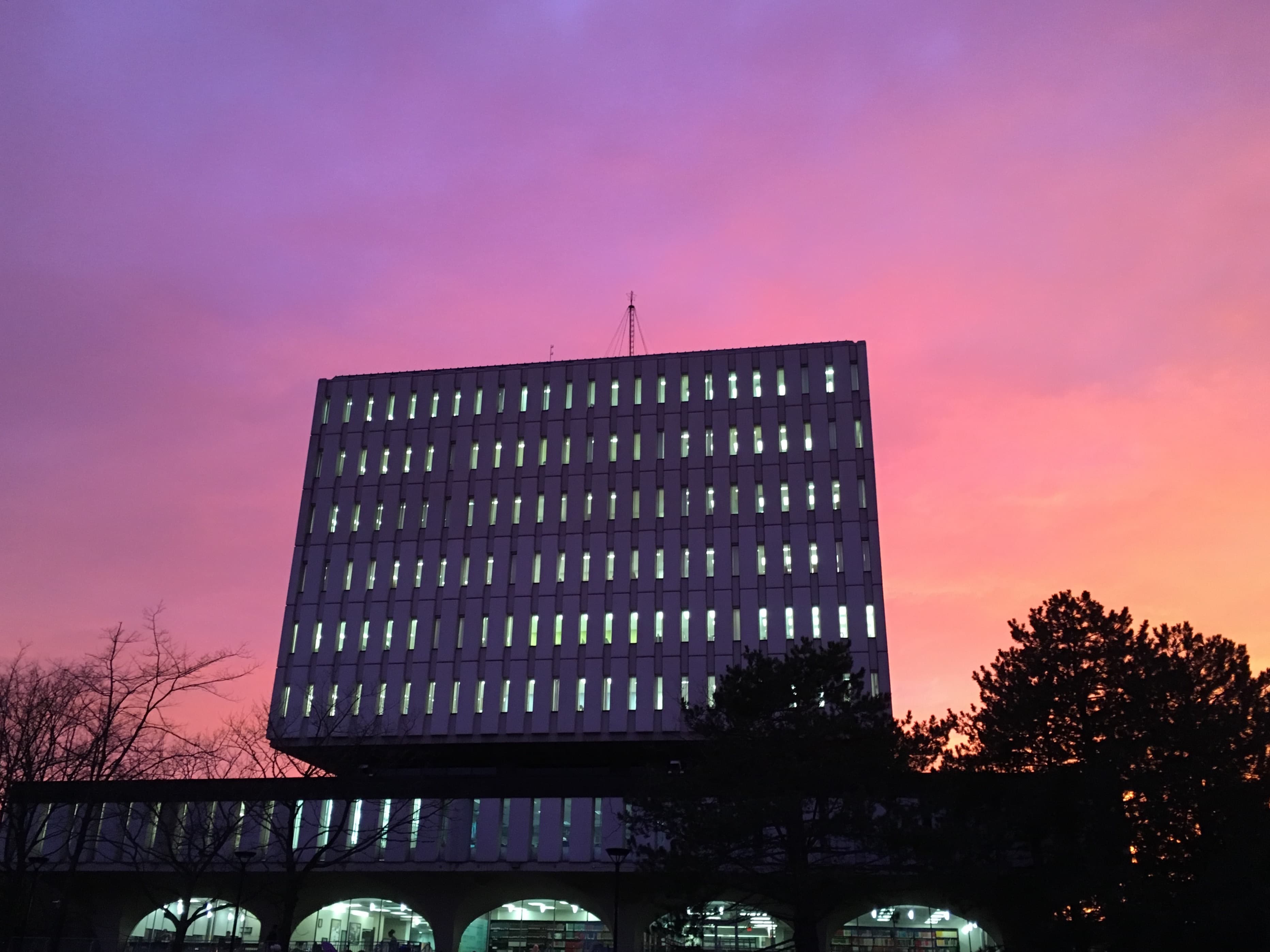
Waterloo's Kinesiology is a Bachelor of Science in the Faculty of Health, offered with or without co-op. From Ontario you need a Grade 12 U English, Advanced Functions or Calculus and Vectors, and two of Biology, Chemistry or Physics, each at 70% or more. Apply by February 1, 2027. There's no AIF.
Key facts
- Grade 12 courses
- 4U English, MHF4U or MCV4U, and two of SBI4U, SCH4U or SPH4U, each at 70%.
- Admission average
- Low 80s regular and mid-80s co-op, based on past years.
- Apply by
- February 1, 2027. Documents by February 15, 2027.
- Cost
- About $9,000 in tuition and fees for Ontario students, 2026-27 estimate.
Save this to your free account
Track University of Waterloo with a checklist for how you apply. Free account. Add your dates in the tracker to request reminder emails; unsubscribe any time.
Free account. No card needed.
Waterloo Kinesiology co-op sequence
Co-op takes five years. Your first work term is the spring after second year.
| Year | Fall | Winter | Spring |
|---|---|---|---|
| First | Study | Study | OffWaterloo Kinesiology |
| Second | Study | Study | Co-opWaterloo Kinesiology |
| Third | Co-op | Study | Co-opWaterloo Kinesiology |
| Fourth | Study | Co-op | Co-opWaterloo Kinesiology |
| Fifth | Study | Study | NoneWaterloo Kinesiology |
Reviewed against each row's official source. Recheck the source before you act, because dates and fees change.
Waterloo Faculty of Health first-year costs
Estimated tuition and incidental fees for two terms, based on fees for students starting in September 2026.
| Student | Tuition and incidental fees | Books and supplies |
|---|---|---|
| Canadian living in Ontario | About $9,000 | About $1,500Waterloo first-year tuition |
| Canadian living outside Ontario | About $10,000 | About $1,500Waterloo first-year tuition |
| International | About $54,000 | About $1,500Waterloo first-year tuition |
Reviewed against each row's official source. Recheck the source before you act, because dates and fees change.
Course requirements
Waterloo asks Ontario students for a high school diploma with at least six Grade 12 U or M courses. For Kinesiology those must include any Grade 12 U English, Advanced Functions (MHF4U) or Calculus and Vectors (MCV4U), and two of Biology (SBI4U), Chemistry (SCH4U) or Physics (SPH4U).
Each required course needs a final grade of at least 70%, and the courses must come from schools accredited by the Ontario Ministry of Education. Required courses taken more than 10 years ago may need updating. Plan your courses with our course planner.
- MHF4UAdvanced Functions
- MCV4UCalculus and Vectors
- SBI4UBiology
- SCH4UChemistry
- SPH4UPhysics
Low 80s regular, mid-80s co-op
Waterloo lists admission averages in the low 80s for the regular system of study and the mid-80s for co-op. They're based on previous years and change with the number of applications and spaces.
Waterloo says these published averages are based on the grades of students it admitted last year, and that it doesn't set them higher or lower than it expects.
Waterloo doesn't publish a Kinesiology acceptance rate; our Waterloo acceptance rate page explains what it does publish. Check your number with our Top 6 average calculator.
How Waterloo calculates your average
Your admission average is the average of your top six Grade 12 courses, including every course your program requires. If you take more than six, Waterloo uses the six highest, as long as the required courses are in.
For Ontario students, college (C), open (O) and co-op courses don't count. If you don't have final grades yet, Waterloo uses mid-term or predicted grades. A strong elective, such as Music or World Issues, can lift your average, but it can't replace a required science.
Sources
Applying from Alberta or BC
From Alberta, you need English Language Arts 30-1, Mathematics 30-1 or Mathematics 31, and two of Biology 30, Chemistry 30 or Physics 30, each at 70%, among five academic 30 or 31 courses. Physical Education 30 and Career and Technology Studies courses don't count.
From BC, you need English Studies 12 or English First Peoples 12, Pre-Calculus 12, Calculus 12 or AP Calculus, and two of Anatomy and Physiology 12, Chemistry 12 or Physics 12, each at 70%, among six Grade 12 academic courses. Upload your second-semester midterm marks as soon as you have them, because the electronic marks arrive too late. Both provinces list the same low 80s and mid-80s averages.
How to apply and key dates
Apply directly to Kinesiology by February 1, 2027, and send documents by February 15, 2027. Waterloo admits first-year students for September only. A deadline can be extended if a program isn't full, but late applications are reviewed only if spaces remain.
There's no Admission Information Form (AIF). Waterloo says the AIF isn't used for programs in the Faculty of Health. You choose co-op or regular study on your application.

What you study
First year mixes Faculty of Health and Faculty of Science courses. In the fall you take Fundamentals of Kinesiology with a lab, Sociology of Activity, Health and Well-being, Introductory Cell Biology, General Chemistry 1 and a quantitative analysis course. In the winter you take Regional Human Anatomy with a lab, Human Nutrition, Human Physiology, Physics 1 and Introductory Psychology.
Waterloo has a School of Anatomy, so you study anatomy on human cadavers in first year. After that, about half your courses are Kinesiology, from environmental physiology to trauma biomechanics, and you can choose from over 20 required and optional labs.
Sources
Areas of focus and minors
At the end of first year you can add an area of focus: Ergonomics and Injury Prevention, Human Nutrition, Medical Physiology, Neuroscience or Rehabilitation Sciences. Waterloo suggests Medical Physiology if you're thinking about medical school and Rehabilitation Sciences for physiotherapy or chiropractic.
Popular minors include Medical Physiology, Human Nutrition and Neuroscience. Waterloo notes the Human Nutrition minor isn't a direct path to becoming a Registered Dietitian.
Sources
Co-op
In co-op you normally alternate four-month school and work terms from second year, with your first work term in the spring after second year. Co-op takes five years and adds about 20 months of paid experience. The regular program takes four years with summers off.
You can return to one employer for several terms or try different ones. Sample co-op jobs include student ergonomist, physiotherapy assistant, clinical research assistant and chiropractic assistant. Co-op students pay $836 a school term toward the co-op program and don't pay tuition during work terms.

Medicine, physiotherapy and other next steps
Waterloo says that between required and elective courses, Kinesiology students can meet the requirements for most medical schools. Check each school you're aiming for, because requirements differ.
Graduates often go into physiotherapy, chiropractic, ergonomics, health and safety, exercise management and nutrition, or on to graduate and professional programs. You don't need to be an athlete: Waterloo says the program needs academic strength, not fitness.
Waterloo also explains how Kinesiology differs from Health Sciences. Kinesiology focuses on how the body works, through anatomy, biomechanics, physiology, nutrition and neuroscience. Health Sciences programs share some foundation science but lean toward population health and disease prevention.
Sources
Costs and scholarships
Waterloo estimates two terms of Faculty of Health tuition and incidental fees at about $9,000 for Ontario students, $10,000 for students from other provinces and $54,000 for international students, based on fees for students starting in September 2026. Add about $1,500 for books and supplies.
Scholarships are automatic in early May, based on your top six. The Merit Scholarship is $1,000 at 85% to 89.9%. The President's Scholarship is $2,000 at 90% to 94.9%. The President's Scholarship of Distinction, at 95% or more, adds up to $1,500 each for international experience and research.
For parents
Waterloo Kinesiology decides on grades, and the co-op stream asks for a few more points than regular study. Every required course needs at least 70%.
Our University of Waterloo co-op and careers guide explains work experience and career support at the school. Our Waterloo admission requirements page sets Kinesiology's courses and average beside the 49 programs you can enter from high school.
If your child wants paid work experience, co-op adds a fifth year but about 20 months of paid work. Compare it with McMaster Kinesiology and York Kinesiology.

Official sources
Confirm current dates, rules, fees, and program details in these primary sources.
- Waterloo: Kinesiology program pageCurrent page. BSc in Kinesiology, Faculty of Health; co-op or regular; first-year courses; cadaver anatomy; 20+ labs; areas of focus; co-op sequence; careers; four years regular, five years co-op.
- Waterloo: Kinesiology requirements, Ontario high schoolCurrent page. Grade 12 U English, MHF4U or MCV4U, two of SBI4U, SCH4U, SPH4U, each at 70%; low 80s regular, mid-80s co-op, based on previous years.
- Waterloo: Kinesiology requirements, AlbertaCurrent page. ELA 30-1, Math 30-1 or 31, two of Biology 30, Chemistry 30, Physics 30 at 70%; low 80s and mid-80s.
- Waterloo: Kinesiology requirements, British ColumbiaCurrent page. English Studies 12, Pre-Calculus 12 or Calculus 12, two of Anatomy and Physiology 12, Chemistry 12, Physics 12 at 70%; upload midterm marks.
- Waterloo: admission averageCurrent page. Top six Grade 12 courses including required ones; C, O and co-op courses excluded; published averages based on last year's admitted students.
- Waterloo: deadlinesFall 2027. Programs other than Engineering: apply by February 1, 2027; documents by February 15, 2027; September entry only.
- Waterloo: AIF and supplementary formsCurrent page. The AIF is not used for Faculty of Health programs.
- Waterloo: first-year tuitionEstimates based on September 2026 fees. Faculty of Health: about $9,000 (Ontario), $10,000 (other provinces), $54,000 (international), plus $1,500 books; co-op fee $836 per term.
- Waterloo: scholarshipsCurrent page. Automatic: Merit $1,000 (85-89.9%), President's $2,000 (90-94.9%), Distinction $2,000 plus up to $1,500 each for international experience and research (95%+).
Frequently asked questions
Applying to Waterloo Kinesiology?
An adviser can check your science prerequisites and help you weigh co-op against regular study. Your first consultation is free.
Full one-on-one advising: price set at your free consultation. See what's included