TMU Image Arts
Film (BFA) admission requirements: ENG4U, 75 to 80% range, portfolio and written statement
The film degree at Toronto Metropolitan University (TMU) is now called Image Arts: Film. It is a four year BFA in The Creative School. You need ENG4U and five more Grade 12 U or M courses. TMU says past admits had averages of 75 to 80%.
Fall 2027 entry · Checked October 7, 2026 · Published by Stellar Advisers · How we check guides
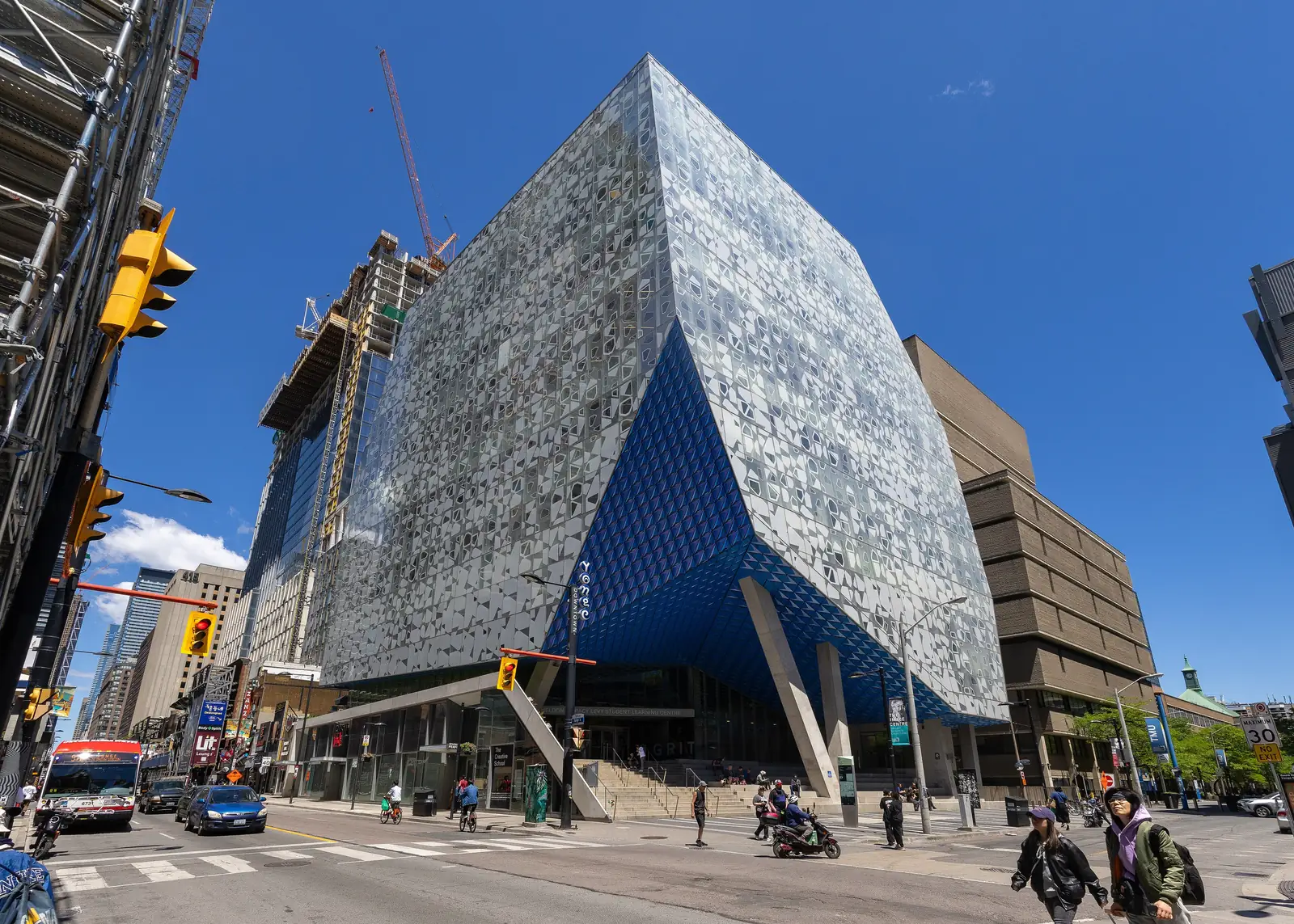
You also send a short film, three visual pieces, a project outline, a written statement and a resume. These are due February 1, 2027.
Key facts
- Courses
- Six Grade 12 U or M courses, including ENG4U. TMU lists 70% as the minimum in English.
- Average
- 70% to be considered. The grade range for past years was 75 to 80%.
- Portfolio
- A film of up to 90 seconds on this year's theme, three visual pieces, an outline, a statement and a resume.
- Deadline
- Apply by February 1, 2027. Portfolio due February 1, 2027, or 10 business days after you apply.
Save this to your free account
Track Toronto Metropolitan University with a checklist for how you apply. Free account. Add your dates in the tracker to request reminder emails; unsubscribe any time.
Free account. No card needed.
TMU Image Arts: Film portfolio for Fall 2027
Every part goes into the ChooseTMU Applicant Portal as a PDF.
| Part | What TMU asks for | Limit |
|---|---|---|
| Short film | A film or video shot in any medium on the theme "A Misunderstood Message". Upload it to Vimeo and paste the link in your PDF. | 90 seconds maximumTMU Image Arts: Film |
| Visual work | Three examples of any visual work, such as photos, drawings or paintings. No still frames from videos. | 3 piecesTMU Image Arts: Film |
| Project outline | A dramatic event from your life, or someone you know, that you'd turn into a short film. No script. Add why it would make a good film and your role. | 500 words, plus 100 wordsTMU Image Arts: Film |
| Written statement | The single film that most influenced you, how it changed your idea of cinema, and its impact. Must reflect only your own effort. | 300 wordsTMU Image Arts: Film |
| Resume | Education, work, skills, interests and awards. | 2 pagesTMU Image Arts: Film |
| Assessment fee | Paid through the eForms Centre in the applicant portal. Your file isn't reviewed until it's paid. | $50TMU Image Arts: Film |
Reviewed against each row's official source. Recheck the source before you act, because dates and fees change.
Program name and what it is
TMU's program page lists the degree as Image Arts: Film, a Bachelor of Fine Arts in The Creative School, run by the School of Image Arts. It is a four year, full-time program with no part-time format. If you're searching for "TMU Film Studies", this is the program you want.
TMU calls this a Grades-Plus program. Decisions use your grades plus non-academic items. TMU adds that your ability to follow the instructions is part of the assessment, so read every limit carefully.
Course requirements
Ontario students need the OSSD and six Grade 12 U or M courses with an overall average of at least 70%. The one required course is Grade 12 U English, with ENG4U or EAE4U preferred.
The two TMU pages differ on the English grade. The program page says a minimum grade of 70% in English. The 2026-2027 Undergraduate Calendar says the grade in the subject prerequisite is normally in the 65 to 70% range and is set by competition. Plan for at least 70%, and confirm with TMU if your English mark is close.
There's no required math or science. Use our course planner to line up six strong U or M courses.
The average you need
TMU says an overall average of 70% is required for consideration. The grade range at the top of the program page, 75 to 80%, is what TMU says was needed in previous years. TMU adds that the average can change each year with the number of applications and spaces.
TMU does not publish how many applicants it admits to film. The calendar says the assessment looks at academic performance, communication skills and creative potential. So a portfolio in good shape matters alongside your marks.
Check your number with our Top 6 average calculator.
The portfolio, outline and statement
The Fall 2027 theme is "A Misunderstood Message". TMU says you can read the theme literally, broadly or metaphorically. Your short film must address it. Your three visual pieces don't need to.
Upload the film to Vimeo. If you use Vimeo's privacy settings, TMU asks you to use the password FILM2027, and notes that Vimeo charges for privacy settings. You can skip privacy settings and avoid that fee.
The project outline is a non-binding proposal, and TMU says it may keep it. The written statement must reflect only your own effort. That is TMU's rule, so the words need to be yours.
To submit, get your TMU Student Number from your application email, activate your TMU Online Identity, then wait 24 hours before you log in to the ChooseTMU Applicant Portal. Upload under "Portfolio Pieces". TMU says you should submit well before the deadline because of system load.

Sources
Dates for Fall 2027
TMU's application dates page lists February 1 as the guaranteed consideration date for Fall 2027 for all programs. The film page says the non-academic requirements are due February 1, 2027, or 10 business days from when you submit your application, whichever is later.
Ontario students also apply through OUAC. See all the dates on our Ontario university deadlines page. Applying in December gives you time to activate the portal and pay the $50 fee before February.

What first year looks like
First year has eight required courses plus two liberal studies courses. In first semester you take MPC 103 Reframing Art History, MPF 110 Film Production I, MPF 115 Introduction to Cinematography and MPF 290 Introduction to Film Studies. In second semester you take MPC 220 Forms of Storytelling, MPC 225 Intro to Creative Technologies, MPF 210 Film Production II and MPF 215 Introduction to Picture Editing.
This is a new curriculum, first offered in 2026-2027 to students admitted Fall 2026 and after. Second year adds documentary production, writing for film and sound for film. Third year includes directing for camera, fiction production and capstone development.
Co-op and internships
Image Arts: Film does not have co-op. The program page lists "Internship available" as its experiential learning, and says you can combine your studies with an internship placement and make your own short fiction and documentary films. It also mentions exchanges, travel intensives and the Global Campus Studio.

Tuition for 2026-27
The film page lists 2026-2027 full-time tuition and fees of $7,466 to $8,018 for Ontario students, $9,266 to $9,851 for out-of-province students and $38,733 to $39,209 for international students. These match TMU's range for The Creative School on its main tuition page.
TMU says detailed program fees are updated each July for the year starting in September, so Fall 2027 figures may differ. On-campus residence for 2026-2027 is listed at $9,000 to $15,100 or more, plus a meal plan. Any gear you buy is extra.
Scholarships
TMU's guaranteed, renewable entrance scholarships for students admitted in 2027-2028 start at a final average of 86%. TMU lists $3,000 a year at 95% and up, $1,500 at 90 to 94.99% and $750 at 86 to 89.99%. Renewal depends on your yearly CGPA.
Because past film admits were in the 75 to 80% range, many film students won't reach 86%. TMU also has need-based entrance awards through AwardSpring, some needing an 80% average. Browse more in our scholarship finder.
Sources
How it compares to Media Production
TMU's Media Production BA, also in The Creative School, is Grades-Only. There's no portfolio. It asks for the same six U or M courses and ENG4U at 70%, but its past grade range is higher, 80 to 85%. It also lists an optional internship.
So the trade-off is simple. Film asks for less on marks but a full creative file. Media Production asks for higher marks and no file. Many students apply to both.
For parents
The portfolio has five parts and a fee, and TMU marks how well your child follows the instructions. Help with the calendar, a camera and quiet time. Don't edit the statement. TMU says it must reflect only the applicant's effort.
See our TMU guide for campus and residence context.

Sources
Official sources
Confirm current dates, rules, fees, and program details in these primary sources.
- TMU Image Arts: FilmBFA, Grades-Plus, grade range 75 to 80%; ENG4U 70%; Fall 2027 portfolio theme, statement, outline, resume, $50 fee; due February 1, 2027; 2026-2027 fees; internship available.
- TMU application datesFall 2027 guaranteed consideration date for all programs: February 1. Grades-Plus non-academic dates vary by program.
- TMU tuition and fees2026-2027 faculty fee ranges; The Creative School $7,466 to $8,018 Ontario; residence $9,000 to $15,100+.
- TMU scholarships and awardsGuaranteed renewable entrance scholarships for 2027-2028 admits: $750 to $3,000 a year from 86%; need-based AwardSpring awards.
- TMU 2026-2027 Undergraduate Calendar, Image ArtsAdmission: six U/M including ENG4U; prerequisite grade normally 65 to 70%; $50 assessment fee; new Film curriculum from Fall 2026.
- TMU Media ProductionBA, Grades-Only; grade range 80 to 85%; ENG4U at 70%; internship available.
Frequently asked questions
Applying to TMU film?
An adviser can check your courses, set an average target and build a balanced list of film programs. TMU requires the written statement to reflect only your own effort. We never write applicant answers or create portfolios. That statement rule does not establish a blanket ban on feedback for the separate outline or portfolio; check each item's instructions. Your first consultation is free.
Full one-on-one advising: price set at your free consultation. See what's included