University guides
On this page
Queen's Main Campus vs West Campus
Queen's Main Campus and West Campus are two parts of the university's Kingston footprint. Main Campus holds the dense historic core and most central student destinations. West Campus, about two kilometres west, centres on Duncan McArthur Hall, Jean Royce Hall and the Richardson Stadium area. Your timetable, residence and activities determine whether West Campus is an occasional destination or part of your daily route.
Sources checked September 11, 2026. View sources
Main Campus and West Campus at a glance
Main Campus sits on roughly 100 acres at the southwestern edge of downtown Kingston. Queen's Encyclopedia gives its approximate boundaries as King Street, Earl Street, Collingwood Street and Barrie Street. Because university buildings mix with homes, shops and hospital buildings near the edges, the campus does not behave like a closed compound.
West Campus is about two kilometres west of Main Campus. Queen's purchased the 61-acre site in 1969. It is smaller in the number of major destinations and more spread out around academic, residence and athletics uses.
| Question | Main Campus | West Campus |
|---|---|---|
| What anchors it? | Historic academic core, libraries, student services and the Queen's Centre | Duncan McArthur Hall, Jean Royce Hall and the Richardson Stadium precinct |
| Setting | Dense, walkable campus beside downtown, hospital lands and the waterfront | More open site west of the historic core, with playing fields and fewer major buildings |
| Who should map it first? | Every incoming student | Education students, Jean Royce residents, athletes and anyone with a class or event there |
What you will find on Main Campus
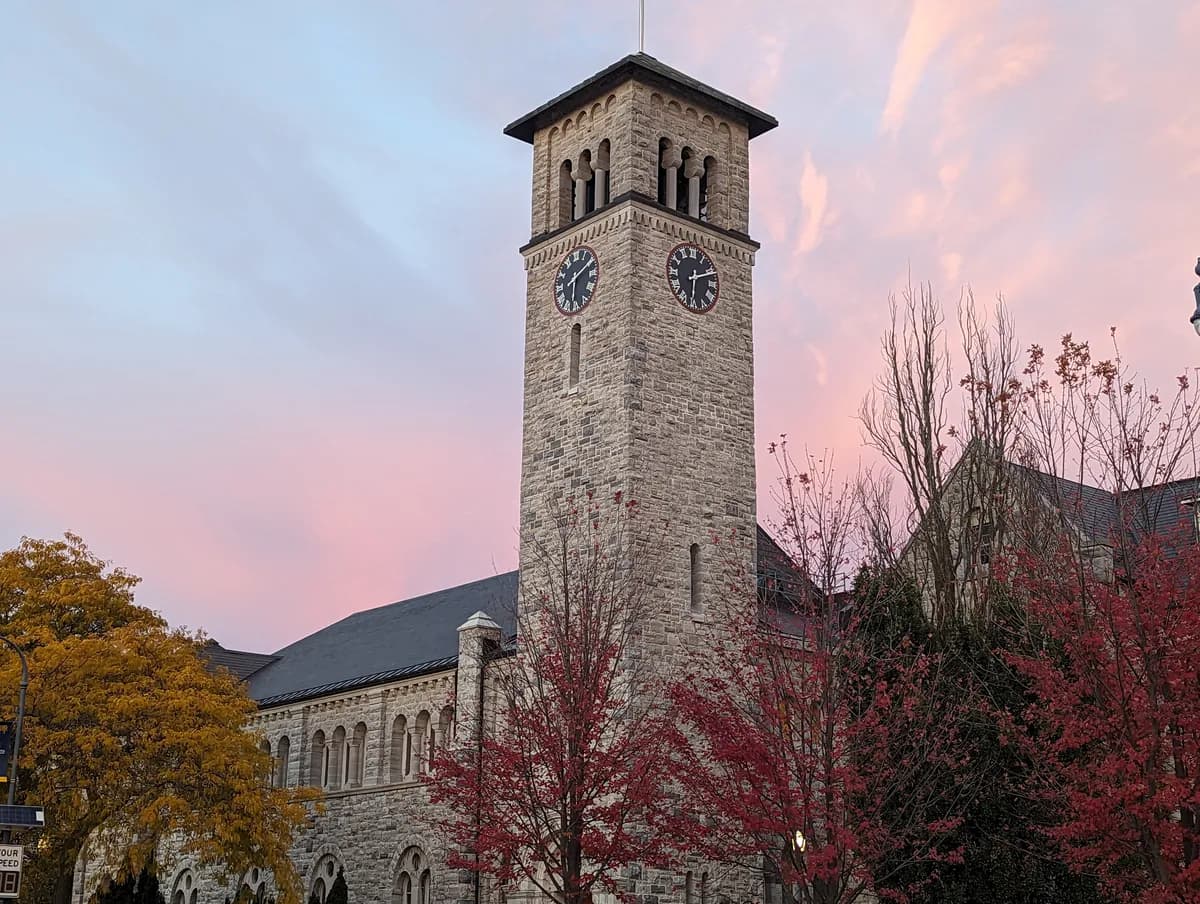
The official map is the safest way to locate a particular room or service. Common reference points include Stauffer Library, Douglas Library, Grant Hall, Mitchell Hall, the John Deutsch University Centre, the Queen's Centre and the Athletics and Recreation Centre. Health-sciences buildings sit toward the hospital and waterfront side of the campus, while other teaching buildings extend north and west through the university district.
Main Campus grew outward from Summerhill after Queen's purchased that seven-acre property in 1853. Buildings remained close to Summerhill until the 1890s; by the early 1900s, development had spread north to Union Street and west to University Avenue. That history helps explain the mix of eras, irregular edges and city streets you encounter today.
- Search the digital map for your exact building and turn on accessible-navigation information if needed.
- Use more than one landmark when planning a first day: your lecture hall, library, dining stop and recreation facility may sit in different parts of Main Campus.
.jpg)
What you will find on West Campus
Duncan McArthur Hall is the principal academic building on West Campus and houses the Faculty of Education, including offices, classrooms, labs and the Education Library. Jean Royce Hall is attached to the McArthur Hall complex and provides first-year residence space. Richardson Stadium and nearby practice fields make West Campus an important athletics destination as well.
The location has a history separate from the older core. Before Queen's acquired it in 1969, the site included a farm and stone quarry worked by Kingston Penitentiary inmates. The Faculty of Education moved into Duncan McArthur Hall in 1971, the same year the earlier Richardson Stadium opened there; John Orr Tower followed in 1973 and Jean Royce Hall in 1974. The current stadium occupies the same broader West Campus athletics precinct, but students should use today's digital map rather than a historic description to navigate.
Plan the trip between campuses
Queen's Arts and Science registration guide describes Duncan McArthur Hall as a 15–20 minute walk from Main Campus and tells students to leave at least half an hour between classes on the two campuses. Check the exact buildings and entrances when making your timetable; mobility, weather and construction can affect the trip.
Eligible students whose assessed fees include Bus-It use their Queen's student card for regular Kingston Transit services. The undergraduate AMS program includes summer coverage; SGPS has its own annual pass. Check your fee assessment because coverage does not apply to every student category. Use Kingston Transit's current trip planner for the route, stop and arrival time.
- For a back-to-back commitment, map building entrance to building entrance and add time for stairs, elevators and check-in.
- Test the trip once before a time-sensitive class, practicum meeting, game or residence appointment.
- Recheck transit alerts on the travel day; do not rely on a saved screenshot of an old timetable.
Build a visit that answers your own questions
A general Main Campus tour can orient you to the historic core, but it may not answer a West Campus question. If your program, residence or sport takes you west, add Duncan McArthur Hall, Jean Royce Hall or Richardson Stadium to the itinerary. The campus is open to the public, and Queen's provides a searchable map with accessible-navigation information.
Keep exploring
Sources and updates
This independent guide summarizes the official information linked below. Availability, access rules and application cycles can change; check the relevant university page before making a decision.
- Queen's Encyclopedia: Main Campus
- Queen's Gazette: One university, multiple campuses
- Queen's Encyclopedia: Duncan McArthur Hall
- Queen's digital campus map
- Visit Queen's
- Queen's self-guided campus tour
- Kingston Transit trip planner
- Queen's first-year Arts and Science registration guide
- AMS Bus-It program
- SGPS activity fees
- Queen's ancillary-fee eligibility