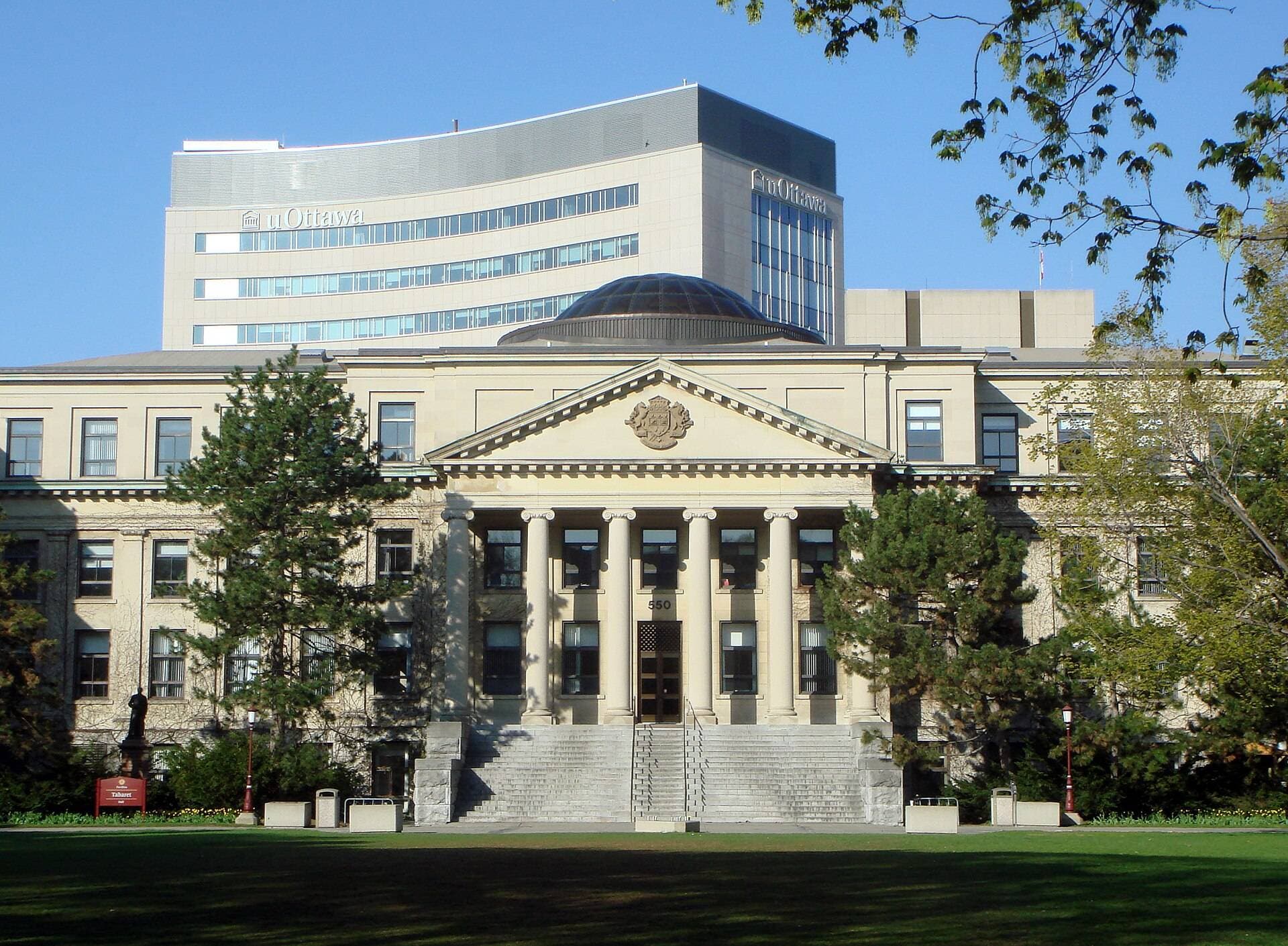

University of Ottawa Careers & Work Experience
Ottawa, Ontario
Co-op, internships, research, and outcome questions. This focused guide keeps the detailed tables, official sources, and practical next steps in one manageable reading path.
The short answer
- uOttawa offers paid co-op in many undergraduate programs. High-school applicants need at least 80% to be considered.
- Most students complete about 16 months of work. Software Engineering is mandatory and has five work terms.
- For 2026–2027, optional co-op costs $896 for Canadian citizens and permanent residents. International students pay $1,125.
- Mandatory co-op costs $672 domestic and $843.75 international each study term. A master's with one work term costs $597.33 domestic and $750 international.
- As of April 1, 2026, eligible international students no longer need a separate co-op work permit for required placements.
Reviewed August 14, 2026 · Official university sources · How we review guides
Current admission, work-term, fee, hiring, and immigration guide
University of Ottawa co-op programs and requirements
uOttawa offers paid co-op education in many undergraduate subjects. For most optional programs, eligible students can ask for co-op with their university application. Or they can compete after they enrol. Students usually complete about 16 months of relevant experience. But the entry point, number of work terms, academic minimum, and sequence belong to the exact program. They do not belong to the university as a whole.
High-school eligibility
80% minimum
This lets you be considered for many optional co-op routes. It does not guarantee an academic offer or a co-op offer.
Typical experience
About 16 months
Most undergraduate routes use four paid placements, but the exact sequence and count vary.
Reserved-place standard
Usually 8.0 CGPA
A high-school co-op selection reserves a place; students must still meet the formal-admission conditions.
Mandatory exception
Software Engineering
The current default sequence includes five work terms, beginning after first year.
Direct-entry, later-entry, and mandatory co-op
Co-op appears across Arts, Civil Law, Engineering, Science, Health Sciences, Social Sciences, and Telfer. But the same admission model does not apply to every program. Use the live co-op directory and the exact program page before you select an application option.
| Co-op route | Program examples | How entry works | Academic and sequence rule |
|---|---|---|---|
| Most optional undergraduate co-op programs | Arts, Engineering other than Software Engineering, Science, Social Sciences, and Telfer programs on the live co-op list | Request co-op with the university application or compete after enrolling at uOttawa. | High-school applicants need at least 80% for consideration. A reserved place normally requires an 8.0 CGPA until formal admission; the later continuing minimum is program-specific and is often 6.0. |
| Software Engineering | BASc in Software Engineering | Co-op is mandatory and admission occurs with the academic program rather than through a separate optional-stream competition. | Students must remain full time, follow the approved sequence, and stay in good academic standing. The default sequence currently contains five work terms. |
| Later-entry undergraduate programs | Biomedical Science, Health Sciences, Human Kinetics, and Translation | These programs do not use the ordinary direct-from-high-school co-op request. Students apply after beginning their uOttawa studies. | Eligibility, application term, CGPA, completed-course requirements, and the first work term differ by program. |
| Current uOttawa students without a reserved place | Eligible students in participating programs who can still follow the approved work-study sequence | Apply through the Experiential Learning Platform in uoZone by the applicable program deadline. | Admission is competitive and limited. Meeting the minimum does not guarantee a place because applicants are ranked by academic performance and capacity. |
How to apply to uOttawa co-op
High-school applicants can request co-op with many participating programs. A successful request reserves a place. It does not complete formal co-op admission. After you start at uOttawa, verify that co-op appears in the Co-op Navigator. Also maintain the program's academic and course-sequence conditions. For an optional undergraduate route, this is normally an 8.0 CGPA until formal admission.
Students without a reserved place apply after enrolling through the Experiential Learning Platform in uoZone. Students in Biomedical Science, Health Sciences, Human Kinetics, or Translation apply after enrolling this way. Space is limited. Academic performance is ranked. The student must have enough study terms remaining to complete the approved sequence.
Current uOttawa co-op application deadlines
These are current in-course windows. They are not universal Fall 2027 dates. uOttawa's FAQ, regulations, and some individual program pages are not fully synchronized. Where they conflict, use the earliest published date as a planning guardrail. Confirm the authoritative task in uoZone.
| Program group | Current published window | Planning note |
|---|---|---|
| Most undergraduate disciplines | September 30 of second year | This is the current general deadline in the co-op FAQ and regulations. Confirm the exact program page and uoZone task. |
| Accounting, Physics, Biomedical Science, Biopharmaceutical Science | February 1 of second year in the current FAQ | Some individual program pages still display April 30, so the official sources are not synchronized. Use February 1 as the safer planning date and verify the live portal. |
| Biotechnology, Chemistry, Translation | September 30 of third year | Later entry changes the remaining course and work-term sequence; confirm that every required term still fits. |
| Data Science and integrated Physics–Electrical Engineering | February 1 of third year | The current FAQ lists this exception. Recheck it before the applicable academic year. |
Work terms, hiring, and placement risk
Most undergraduate co-op programs use four placements. They begin with a summer work term after second year. Accounting, Civil Law, Translation, master's programs, and mandatory Software Engineering use different counts or timing. Software Engineering's current default sequence begins after first year. It contains five work terms. The approved sequence can place work in summer, fall, or winter. So students should compare the entire degree calendar, not only the first placement.
Where co-op exists and how terms alternate
Current programs · Published for this period
The co-op option is available in four-year undergraduate programs — honours with specialization, double major, and major with minor — and some master's programs, across Arts, Civil Law (French), Engineering, Science, Health Sciences, Social Sciences, and Telfer. In most undergraduate programs the first work term is the summer after second year, then placements and study terms alternate, with a report due after each placement.
Applies to: All applicants
uOttawa Co-operative Education: Co-operative education overview · Verified August 14, 2026
Federal government and capital-region employers
Current employer base · Published for this period
uOttawa lists placements with federal government departments, municipal and provincial government offices, Crown corporations, private businesses, not-for-profits, NGOs, educational institutions, and high-tech companies — a mix shaped by the university's location in Canada's capital. Availability depends on the program.
Applies to: All applicants
uOttawa Co-operative Education: Co-operative education overview · Verified August 14, 2026
uOttawa provides exclusive postings, career coaching, application and interview preparation, and employer relationships. But admission does not guarantee a job. Portal access does not guarantee a job either. Students apply and interview. Employers choose whom to hire. The university's regulations expressly decline to guarantee placement. A self-developed job must be paid. It must be relevant to the field. It must be scheduled for the upcoming work term. It must be approved before it counts.
Compare this structure with Waterloo, Guelph, Carleton, McMaster, TMU, and other schools in the Ontario university co-op guide.
University of Ottawa co-op fees for 2026–2027
Optional co-op and mandatory co-op use different billing models. These are the university's current 2026–2027 amounts. They are not permanent fees. Wages also vary by program, employer, location, and work-term level. uOttawa's 2025 hourly-wage table is historical evidence. It is not a pay guarantee.
| Model | Canadian / permanent resident | International | Billing rule |
|---|---|---|---|
| Optional co-op | $896 | $1,125 | First fee in the term before the first placement, then during each matched work term |
| Mandatory co-op | $672 | $843.75 | Each study term; the fee remains attached to the mandatory program even if a work term is not obtained |
2026–27 co-op fees
2026–27 · Latest published information; newer cycle not yet confirmed
For 2026–2027, optional co-op costs $896 per fee event for Canadian citizens and permanent residents and $1,125 for international students. Mandatory co-op programs charge $672 domestic and $843.75 international during each study term, and master's mandatory co-op with one work term charges $597.33 domestic and $750 international.
Applies to: All applicants
uOttawa Co-operative Education: 2026–2027 co-op fees · Verified August 14, 2026
Published co-op wages
2025 placements · Latest published information; newer cycle not yet confirmed
uOttawa publishes program-level average hourly wages from jobs held in 2025, with most program averages between roughly $20 and $26 per hour and wide ranges around them. These are historical figures, not salary promises, and pay varies by employer, location, and work-term number.
Applies to: All applicants
uOttawa Co-operative Education: Average hourly co-op wages from 2025 placements · Verified August 14, 2026
Official sources
- uOttawa co-op program directory
- Applying to uOttawa co-op
- uOttawa co-op frequently asked questions
- uOttawa co-op regulations and procedures
- uOttawa co-op placement process
- 2026–2027 uOttawa co-op fees
- uOttawa 2025 average hourly wages
- Software Engineering mandatory co-op sequence
- IRCC postsecondary student work placements
Reviewed July 29, 2026. Deadlines, fees, standards, and employer facts re-verified August 14, 2026. Recheck program, deadline, fee, sequence, and immigration rules before applying or starting a placement.
Career Planning
| Experiential Learning | Check whether your target program offers co-op, internships, clinical placements, practicums, studios, field schools, or research terms. |
|---|---|
| Career Services | Compare job boards, employer partnerships, resume support, interview preparation, and alumni mentoring. |
| Research Access | For graduate-school or professional-school pathways, look for undergraduate research assistant roles and lab access. |
| Outcome Questions | Ask where graduates work or study next, and whether outcomes differ by program, co-op stream, or campus. |
Official Sources and Next Steps
Stellar keeps this guide structured for comparison, but official university pages remain the source of truth for program requirements, tuition, residence, scholarships, deadlines, and policy changes.
Prepared by Stellar Advisers Editorial Team · Reviewed August 14, 2026 · Editorial, corrections, and source methodology