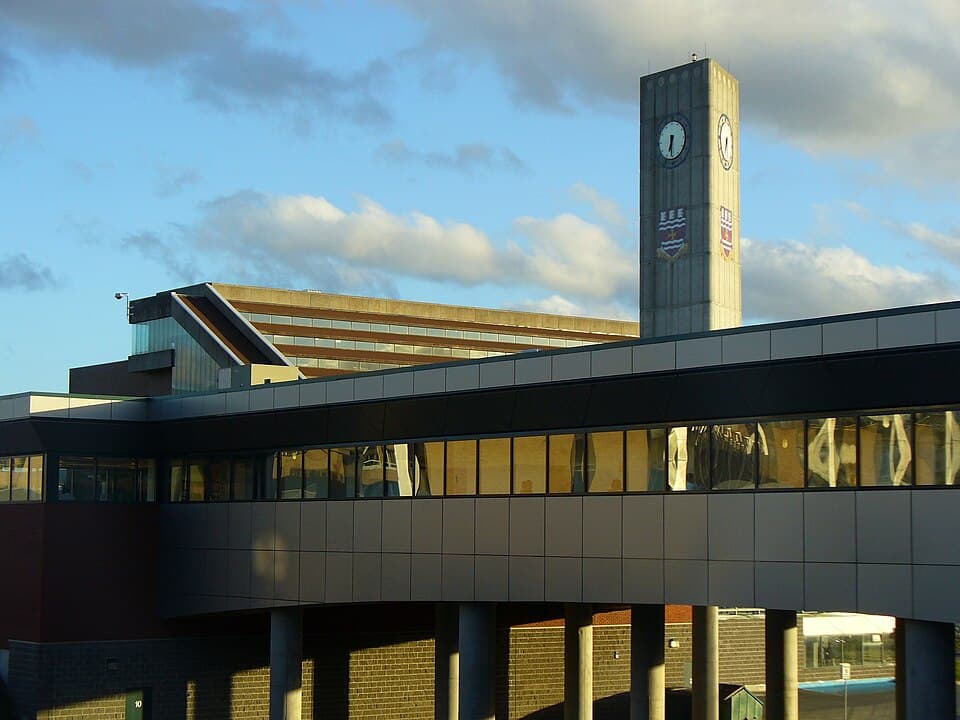

Memorial University of Newfoundland and Labrador Programs & Pathways
St. John's, Newfoundland and Labrador
Program strengths and how to compare pathways. This focused guide keeps the detailed tables, official sources, and practical next steps in one manageable reading path.
The short answer
- Memorial publishes more than 300 program options across four teaching campuses.
- St. John's campus has eleven faculties and schools, including Business, Engineering, Nursing and Science.
- Grenfell Campus in Corner Brook runs its own schools, housing and the Western Regional School of Nursing.
- The Marine Institute in St. John's runs its own credential ladder, from diplomas up to the Bachelor of Technology.
- Labrador Campus in Happy Valley-Goose Bay offers the BASIS degree, Nursing, Engineering One and a Diploma in Northern Peoples, Lands and Resources.
Reviewed August 16, 2026 · Official university sources · How we review guides
Memorial programs, Grenfell Campus, and the Marine Institute
Memorial publishes more than 300 program options. These are across four teaching campuses. Each campus works as a truly different institution. The St. John's campus has eleven faculties and schools. Grenfell Campus in Corner Brook has its own schools and housing. The Fisheries and Marine Institute has its own diploma-to-degree ladder and its own enrolment counts. Labrador Campus in Happy Valley-Goose Bay is built around Northern and Indigenous-led study. Choosing Memorial means you first choose one of those four.
St. John's campus
Memorial's largest campus has many areas of study. These include Business, Education, Engineering, Human Kinetics and Recreation, Humanities and Social Sciences, Medicine, Music, Nursing, Pharmacy, Science, and Social Work. Memorial publishes more than 300 program options in almost all fields of study.
Selection: General admission does not require you to choose a program. Memorial lets applicants enter without selecting one and declare later. This matters for students still deciding between faculties.
Grenfell Campus, Corner Brook
Memorial's west coast campus runs the School of Arts and Social Science. That school has Business Administration, English, Historical Studies, Psychology, and Social/Cultural Studies. It also runs the School of Fine Arts with Theatre and Visual Arts. It runs the School of Science and the Environment with Engineering One, Environmental Science, Mathematics, and Physics. It also runs the Western Regional School of Nursing. The campus also offers a Master of Applied Literary Arts and a Master of Management.
Selection: Grenfell is a distinct campus, not a satellite classroom. Memorial describes it as small yet mighty with a tight-knit, diverse community, and it has its own housing stock and its own rates.
Fisheries and Marine Institute, St. John's
The Marine Institute calls itself a world-leading centre for ocean-related career education and research. As of Fall 2025 it published 920+ students. That is 240+ graduate, 260+ undergraduate, and 400+ diploma and certificate students. It also published 4,000+ industrial course registrations in 2024/25. It published $10M in external research support in the same fiscal year.
Selection: MI runs its own credential ladder. It offers certificates and technology diplomas such as Nautical Science, Marine Engineering, Marine Environmental Technology and Underwater Vehicles. On top of a diploma, it offers the Bachelor of Technology and the Bachelor of Maritime Studies.
Bachelor of Technology admission categories
The B.Tech. is a completion degree, not a direct-entry degree. Memorial admits through five named categories. The first is a Marine Institute diploma of technology (excluding Nautical Science). The second is a CTAB, TAC or CMA-accredited diploma. The third is a comparable diploma of technology. The fourth is a CET or PTech designation with an acceptable diploma. The fifth is acceptable Canadian Forces training.
Selection: Both the Bachelor of Technology and the Bachelor of Maritime Studies carry a $300 admission fee on top of the general application fee.
Labrador Campus, Happy Valley-Goose Bay
Memorial's newest location houses the School of Arctic and Subarctic Studies and the Pye Centre for Northern Boreal Food Systems, offering place-based, Northern-focused and Indigenous-led education. Undergraduate offerings include the BASIS degree, Nursing, Engineering One, and a Diploma in Northern Peoples, Lands and Resources.
Selection: This is the route for applicants who want Northern and Indigenous-led study rather than a St. John's experience; graduate degrees in Arctic and Subarctic Futures sit above it.
Business One into Bachelor of Commerce (Co-operative)
The B.Comm.(Co-op.) runs five years. It has three mandatory work terms. Business One is ten courses or 30 credit hours. These are BUSI 1000, ECON 1010, ECON 1020, MATH 1000 or MATH 1005. You take six credit hours in English. Three of those English credit hours may be a critical reading and writing course. You take 12 more credit hours in non-business electives.
Selection: Entry to the degree needs 65% overall in Business One. It also needs 60% on the most recent 30 credit hours. It is competitive, so first-year grades decide this one, not Grade 12 grades.
Ocean and marine strengths
Memorial says that 40 per cent of research at Memorial is ocean-related. Marine Institute facilities include the Offshore Safety and Survival Centre. That centre has an international-class marine firefighting unit, a survival tank with environmental simulation, a helicopter underwater escape trainer, and a simulated ship structure. The facilities also include the Holyrood Marine Base, open since 2010. It houses the Centre for Applied Ocean Technology.
Selection: There is no single ocean admission route. Applicants reach the ocean cluster through Science, Engineering, or a Marine Institute diploma. So pick the credential ladder before the subject.
Business admission is not Commerce admission
Memorial admits high-school applicants into Business One, not into the Bachelor of Commerce. Business One is ten courses and 30 credit hours. The courses are BUSI 1000, ECON 1010, ECON 1020, and MATH 1000 or MATH 1005. You also take six credit hours in English. Three of those English credit hours may be a critical reading and writing course. You take 12 more credit hours in non-business electives. Entry to the five-year B.Comm.(Co-op.) then needs an overall average of at least 65% in Business One. It also needs at least 60% on your most recent 30 credit hours. It is competitive, so the minimum does not guarantee acceptance. Your Grade 12 grades get you to Memorial. Your first-year grades get you into Commerce.
Ocean concentration
40% of research
Memorial states that 40 per cent of research at Memorial is ocean-related. This is the highest published ocean concentration of any university in this library.
Marine Institute
920+ students, Fall 2025
In 2024/25, 240+ students were graduate students. Another 260+ were undergraduate students. Another 400+ were diploma and certificate students. There were also 4,000+ industrial course registrations. External research support was $10M.
Bachelor of Technology
Five entry categories
This is a completion degree, not a direct-entry one. It needs a prior technology diploma, a CET or PTech designation, or acceptable Canadian Forces training.
Three campuses that are not the main campus
Grenfell Campus in Corner Brook is a full campus, not a satellite: the School of Arts and Social Science, the School of Fine Arts, the School of Science and the Environment, and the Western Regional School of Nursing, with its own residence stock priced well below St. John's. Memorial describes it as small yet mighty with a tight-knit, diverse community.
The Fisheries and Marine Institute is on Ridge Road in St. John's. It is Memorial's ocean-career college. It describes itself as a world-leading centre for ocean-related career education and research. Its Offshore Safety and Survival Centre carries an international-class marine firefighting unit. It also has a survival tank with environmental simulation capabilities. It has a helicopter underwater escape trainer and a simulated ship structure. The Holyrood Marine Base has been open since 2010. It houses the Centre for Applied Ocean Technology.
Labrador Campus is at 171 Hamilton River Road in Happy Valley-Goose Bay. It is Memorial's newest location. It is home to the School of Arctic and Subarctic Studies and the Pye Centre for Northern Boreal Food Systems. It offers place-based, Northern-focused and Indigenous-led education. This includes the BASIS degree, Nursing, Engineering One, and a Diploma in Northern Peoples, Lands and Resources.
Program breadth
Current programs · Published for this period
Memorial publishes more than 300 program options in almost all fields of study. The St. John's program areas are Business, Education, Engineering, Human Kinetics and Recreation, Humanities and Social Sciences, Medicine, Music, Nursing, Pharmacy, Science, and Social Work, with Grenfell Campus, Labrador Campus, the Marine Institute, and online programs alongside them.
Applies to: All applicants
Memorial University of Newfoundland: Undergraduate programs by area and campus · Verified August 16, 2026
You can be admitted without choosing a program
Current process · Published for this period
Memorial states that general admission is open to you. You do not have to pick a specific program. Memorial also states that applicants can pursue certificates, diplomas, or degrees.
This is genuinely useful for undecided applicants. But it does not apply to competitive-entry routes such as Nursing. You must apply to those directly.
Applies to: All applicants
Memorial University of Newfoundland: Undergraduate admissions and programs home · Verified August 16, 2026
Business One into the Bachelor of Commerce (Co-operative)
Current program · Published for this period
The B.Comm.(Co-op.) runs five years with three mandatory work terms on the St. John's campus. Business One is ten courses / 30 credit hours: BUSI 1000, ECON 1010, ECON 1020, MATH 1000 Calculus I or MATH 1005 Calculus for Business, six credit hours in English of which three may be replaced by a critical reading and writing course, and 12 additional credit hours in non-business electives. Admission needs an overall average of at least 65% in Business One plus at least 60% on the most recent 30 credit hours. Deadlines are May 15 for fall and November 1 for winter.
This is a competitive-entry program entered after first year. So Grade 12 grades get you to Memorial, and first-year grades get you into Commerce.
Applies to: All applicants, Transfer
Memorial University of Newfoundland: Bachelor of Commerce (Co-operative): Business One and work terms · Verified August 16, 2026
Grenfell Campus is a distinct campus, not a satellite
Current programs · Published for this period
Grenfell Campus is in Corner Brook. It runs the School of Arts and Social Science. That school covers Business Administration, English, Historical Studies, Psychology, and Social/Cultural Studies. It runs the School of Fine Arts, with Theatre and Visual Arts. It runs the School of Science and the Environment, with Engineering One, Environmental Science, Mathematics, and Physics. It also runs the Western Regional School of Nursing. It offers a Master of Applied Literary Arts and a Master of Management. Memorial describes it as small yet mighty, with a tight-knit, diverse community.
The Grenfell pages reviewed do not publish an enrolment figure, so this guide does not assert one.
Applies to: All applicants
Memorial University of Newfoundland: Grenfell Campus, Corner Brook · Verified August 16, 2026
The Marine Institute and its own credential ladder
Fall 2025 counts · Latest published information; newer cycle not yet confirmed
The Fisheries and Marine Institute calls itself a world-leading centre. The centre is for ocean-related career education and research. As of Fall 2025, it published 920+ students. These were 240+ graduate, 260+ undergraduate, and 400+ diploma and certificate students. It also had 4,000+ industrial course registrations in 2024/25. It had $10M in external research support in the 2024/25 fiscal year. Programs range from certificates and technology diplomas up to the Bachelor of Technology. They also go up to the Bachelor of Maritime Studies and a Master of Applied Ocean Technology (Ocean Mapping). The technology diplomas include Nautical Science, Marine Engineering, Marine Environmental Technology, and Underwater Vehicles.
The Marine Institute publishes its own enrolment counts on its own site; they are separate from Memorial's 17,000+ university figure.
Applies to: All applicants
Memorial University of Newfoundland: Fisheries and Marine Institute: scale, programs, and research · Verified August 16, 2026
Bachelor of Technology is a completion degree
Current requirements · Published for this period
The Marine Institute admits to the Bachelor of Technology through five categories. One is a Marine Institute diploma of technology, but not Nautical Science. One is a diploma accredited by the Canadian Technology Accreditation Board, Technology Accreditation Canada, or the Canadian Medical Association. One is a diploma of technology comparable to a Marine Institute diploma. One is a Certified Engineering Technologist or Professional Technologist designation with an acceptable diploma. One is Canadian Forces training acceptable to the Admissions Committee.
There is no direct-from-high-school route into the B.Tech. Applicants need a prior technology credential or acceptable military training first.
Applies to: All applicants, Transfer, Mature
Memorial University of Newfoundland: Fisheries and Marine Institute: scale, programs, and research · Verified August 16, 2026
Labrador Campus and Northern, Indigenous-led study
Current programs · Published for this period
Memorial's Labrador Campus at 171 Hamilton River Road in Happy Valley-Goose Bay is described as Memorial's newest location and a leading centre of research, education, policy, and outreach by and for the North. It houses the School of Arctic and Subarctic Studies and the Pye Centre for Northern Boreal Food Systems, offering place-based, Northern-focused and Indigenous-led education. Undergraduate offerings include the BASIS degree, Nursing, Engineering One, and a Diploma in Northern Peoples, Lands and Resources, with graduate degrees in Arctic and Subarctic Futures.
Applies to: All applicants
Memorial University of Newfoundland: Labrador Campus, Happy Valley-Goose Bay · Verified August 16, 2026
Ocean concentration in Memorial's research
Current positioning · Published for this period
Memorial states that 40 per cent of research at Memorial is ocean-related. This is the highest published ocean concentration of any university in this library.
There is no single ocean admission route at Memorial. Applicants reach the cluster through Science, Engineering, or a Marine Institute diploma.
Applies to: All applicants
Memorial University of Newfoundland: About Memorial: scale, campuses, and ranking signals · Verified August 16, 2026
Marine Institute training facilities
Current facilities · Published for this period
The Marine Institute's Offshore Safety and Survival Centre includes an international-class marine firefighting unit. It has a survival tank with environmental simulation capabilities. It has a helicopter underwater escape trainer. It has a simulated ship structure. That structure gives practical experience in controlling and extinguishing all types of shipboard fires. The Holyrood Marine Base has been open since 2010. It houses the Centre for Applied Ocean Technology. It is described as the portal to the ocean for the Memorial University community.
Flume tank dimensions and superlative facility claims are not stated on the first-party facilities page reviewed. So this guide does not assert them.
Applies to: All applicants
Memorial University of Newfoundland: Marine Institute facilities: OSSC and Holyrood Marine Base · Verified August 16, 2026
Official Sources and Next Steps
Stellar keeps this guide structured for comparison, but official university pages remain the source of truth for program requirements, tuition, residence, scholarships, deadlines, and policy changes.
Prepared by Stellar Advisers Editorial Team · Reviewed August 16, 2026 · Editorial, corrections, and source methodology