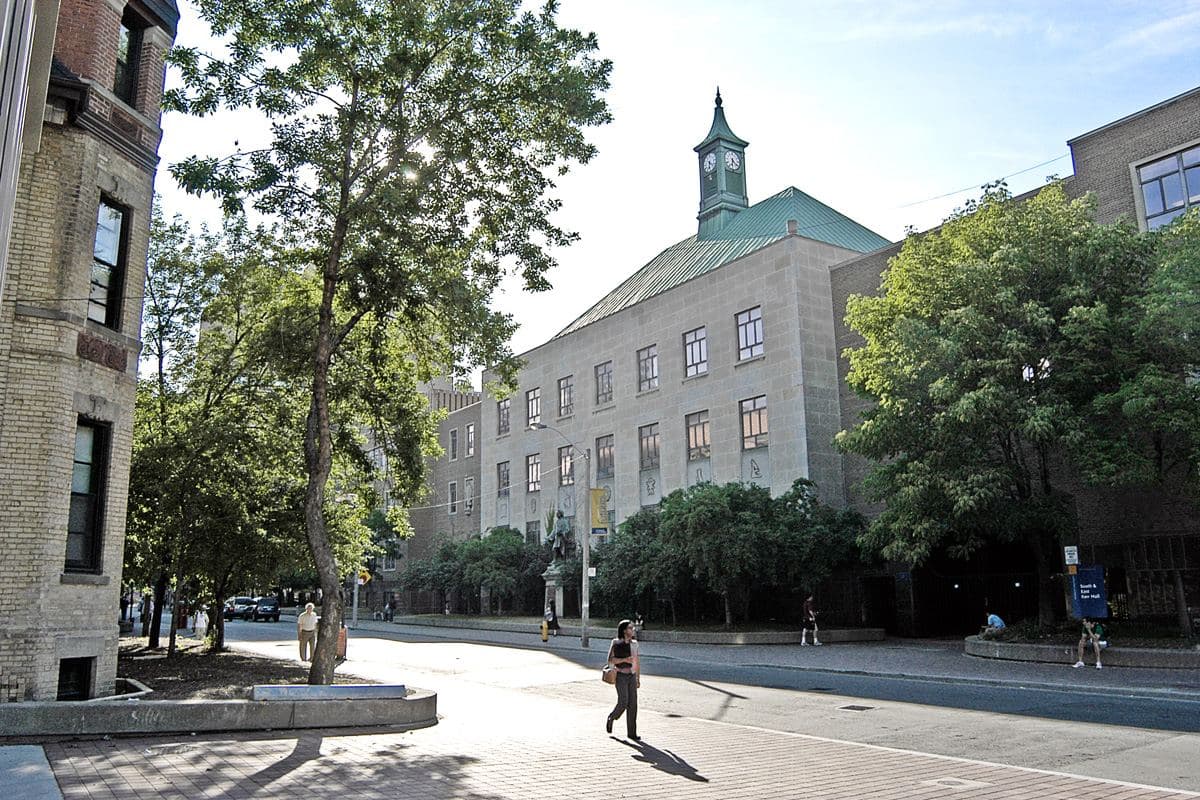

Toronto Metropolitan University Programs & Pathways
Toronto, Ontario
Program strengths and how to compare pathways. This focused guide keeps the detailed tables, official sources, and practical next steps in one manageable reading path.
The short answer
- TMU lists more than 60 undergraduate programs in six faculties for 2026–2027.
- Law and Medicine are not direct-entry choices from high school.
- Undeclared Arts and Undeclared Engineering are first-year-only routes.
- Each program page shows a past grade range, not a cut-off.
- Fashion is Grades-Plus; Media Production is Grades-Only for Fall 2026.
Reviewed August 14, 2026 · Official university sources · How we review guides
2026–2027 undergraduate calendar
Toronto Metropolitan University programs and faculties
TMU advertises more than 60 undergraduate programs. The calendar mixes direct-entry degrees, first-year undeclared options, advanced-standing pathways, degree-completion programs, and faculty-specific co-op models. So compare the exact program and entry route. Do not use a generic ranking or faculty label.
Undergraduate choice
60+ programs
TMU's live undergraduate directory includes direct-entry programs and international foundation options.
Main program groups
6 faculties
Arts, Community Services, Engineering and Architectural Science, Science, Ted Rogers, and The Creative School.
Undeclared entry
2 first-year routes
Undeclared Arts and Undeclared Engineering are specific options, not one university-wide undecided program.
Professional study
Law and Medicine are later
TMU lists Law and Medicine separately. Neither is a direct-entry undergraduate choice from high school.
Compare TMU undergraduate program routes
The program examples below come from TMU's 2026–2027 calendar. Use them to narrow the list. Then open the official program page. It has the exact prerequisites, curriculum, and application type. It also has current availability.
| Faculty | Current examples | Entry structure | What to compare |
|---|---|---|---|
| Faculty of Arts | Criminology, Economics and Finance, Environment and Urban Sustainability, Geographic Analysis, Psychology, Politics and Governance, and Undeclared Arts | Most choices are direct-entry BA programs. Undeclared Arts is a first-year-only route, and the calendar separately lists approved double majors. | Check whether the intended subject is a direct program, an approved double major, or a later choice from Undeclared Arts. Co-op availability is program-specific. |
| Faculty of Community Services | Child and Youth Care, Early Childhood Studies, Midwifery, Collaborative Nursing, Nutrition and Food, Public Health, Social Work, and Urban and Regional Planning | The faculty mixes high-school entry with advanced-entry, post-diploma, degree-completion, and other applicant-specific routes. | Not every credential listed is open from Grade 12. Check the exact entry level. Check the prerequisite pattern. Check the placement requirements. Check the non-academic review. |
| Faculty of Engineering and Architectural Science | Aerospace, Biomedical, Chemical, Civil, Computer, Electrical, Industrial, Mechanical, and Mechatronics Engineering; Architectural Science; and Undeclared Engineering | Applicants normally choose a named Engineering or Architectural Science route. Undeclared Engineering is a first-year-only option; Chemical Engineering is listed as a co-operative program. | Keep Engineering and Architectural Science apart. Confirm the live admission range and prerequisite set. Check the faculty-specific co-op or internship model. |
| Faculty of Science | Biology, Biomedical Sciences, Chemistry, Computer Science, Cyber Science, Financial Mathematics, Mathematics and Its Applications, and Medical Physics | Applicants select a named science program. The 2026–2027 calendar includes Cyber Science as a distinct undergraduate program. | Compare math and science prerequisites. Compare the direct program curriculum. Compare the optional co-op timing. Check if a specialized field is a program, a concentration, or an elective path. |
| Ted Rogers School of Management | Accounting and Finance, Business Management, Business Technology Management, Health Administration, Hospitality and Tourism Management, and Retail Management | The calendar lists six undergraduate program families. Business Management contains named majors that the faculty presents separately. Some routes are degree-completion or part-time. | Tell the application program apart from a later major or concentration. Check if co-op is selected at admission or through a separate in-program process. |
| The Creative School | Creative Industries, Fashion, Graphic Communications Management, Image Arts, Interior Design, Journalism, Media Production, New Media, Performance, Professional Communication, Professional Music, and Sport Media | Applicants select a named creative program. Several programs use Grades-Plus review. This can be a portfolio, creative project, essay, audition, interview, or other non-academic item. | Match the exact creative submission to the program and cycle. One portfolio or audition format does not apply across The Creative School. |
Program versus major
The application program and the later academic major are not always the same label. Business Management is one example. It contains named majors. Ted Rogers presents those majors separately.
Concentration versus minor
TMU defines a concentration as a 6-to-12-course focus within the major. A minor is a separate approved six-course set and can be unavailable to students in closely related programs.
Grades-Plus review
Creative programs can add a portfolio, creative project, essay, interview, or audition. So can other selective programs. Follow the format and deadline that each program sets for the current cycle.
Current TMU curriculum terminology
What is Table B at Ryerson or TMU?
Table B is TMU's current list of upper-level Liberal Studies courses. It is not an admissions, prerequisite, or grade table. “Ryerson University” is the institution's former name, which is why students still search for “Ryerson Table B.” The current university and calendar name is Toronto Metropolitan University.
Table A
Lower-level Liberal Studies, normally taken during the first two years of a four-year program.
Table B
Upper-level Liberal Studies, normally taken during the final two years. Use the current calendar list, not an archived Ryerson copy.
Program restrictions
Required course counts vary by program. Some listed courses cannot count when they are too closely related to the student's program or major.
Check the official 2026–2027 Table B course list together with the restriction list under your exact program. TMU states that courses not marked upper-level or lower-level Liberal Studies do not satisfy the Liberal Studies graduation requirement.
Verified TMU program facts for Fall 2027 planning
Each card shows the cycle it belongs to. It also shows its verification status and the official page it came from. This helps a family tell the published historical grade ranges and Grades-Plus rules apart from rumours. It also helps keep Law and Medicine off the direct-entry shortlist.
60+ programs across six undergraduate faculties
Current structure · Published for this period
TMU advertises more than 60 undergraduate programs, grouped in the 2026–2027 calendar under six faculties: the Faculty of Arts, Faculty of Community Services, Faculty of Engineering and Architectural Science, Faculty of Science, Ted Rogers School of Management, and The Creative School. The inventory mixes direct-entry degrees, first-year-only undeclared routes, advanced-standing pathways, and degree-completion programs.
Applies to: All applicants
Toronto Metropolitan University: TMU undergraduate programs directory · Verified August 14, 2026
TMU publishes a historical grade range on each program page
Current published ranges · Published for this period
Each undergraduate program page shows a grade range. This range is the average required in previous years, not a cut-off. Current examples are high 70s for Business Management and Fashion, low 80s for Computer Science, and high 80s for Mechanical Engineering and Media Production. TMU warns the average needed can fluctuate each year with competition. Meeting a minimum does not guarantee admission.
Applies to: Ontario high school, Other Canadian, International
Toronto Metropolitan University Undergraduate Admissions: Computer Science (BSc Hons) program page and grade range · Verified August 14, 2026
Grades-Only versus Grades-Plus review
Fall 2026 latest available · Latest published information; newer cycle not yet confirmed
TMU labels every program Grades-Only or Grades-Plus. Fashion is a current Grades-Plus example. It requires a portfolio of four finished creative pieces with process work, a 500-word statement of intent, and a $50 assessment fee through SlideRoom. Its posted February 1, 2026 deadline belongs to the Fall 2026 cycle. Media Production, by contrast, is currently listed as Grades-Only. So applicants must confirm the label on the live program page each cycle.
Grades-Plus formats, deadlines, and fees are program- and cycle-specific; do not reuse the Fall 2026 dates for a Fall 2027 file.
Applies to: Ontario high school, Other Canadian, International
Toronto Metropolitan University Undergraduate Admissions: Fashion (BDes) program page with Grades-Plus requirements · Verified August 14, 2026
Ted Rogers Business Management majors and co-op formats
2026–2027 calendar · Published for this period
The Business Management BComm publishes a high-70s grade range and eight majors: Economics and Management Science, Entrepreneurship and Innovation, Global Management Studies, Health Services Management (new for Fall 2026), Human Resources Management, Law and Business, Marketing Management, and Real Estate Management. Full-time formats include a 4-year degree, 5-year co-op, and direct-entry-to-third-year routes, but co-op is not available for part-time entry or for direct-entry students in some majors.
Applies to: All applicants
Toronto Metropolitan University Undergraduate Admissions: Business Management (BComm Hons) program page, majors, and co-op formats · Verified August 14, 2026
Engineering and Architectural Science entry structure
2026–2027 calendar · Published for this period
The 2026–2027 calendar lists Aerospace, Biomedical, Chemical, Civil, Computer, Electrical, Industrial, Mechanical, and Mechatronics Engineering. It also lists Architectural Science and the first-year-only Undeclared Engineering route. Mechanical Engineering currently publishes a high-80s grade range with 4-year and 5-year co-op formats. Chemical Engineering is listed as a co-operative program.
Applies to: All applicants
Toronto Metropolitan University Undergraduate Admissions: Mechanical Engineering (BEng Hons) program page and grade range · Verified August 14, 2026
Lincoln Alexander School of Law is not direct entry
Current route · Published for this period
TMU's Lincoln Alexander School of Law admits JD students through OLSAS. You apply after undergraduate study and the LSAT. The school advertises an Integrated Practice Curriculum. It combines legal theory with experiential learning and professional placements. So graduates can skip articling. It is a separate professional school. It is not a direct-entry undergraduate choice from high school.
Applies to: All applicants
Toronto Metropolitan University: Lincoln Alexander School of Law · Verified August 14, 2026
School of Medicine cohort size and route
Current programs · Published for this period
TMU's School of Medicine is the first new medical school in the GTA in more than a century. It is the 18th in Canada accredited to train doctors. It enrolled its inaugural cohort of 94 MD students in September 2025. A second class of 94 begins in September 2026. Admission is through the Ontario Medical School Application Service (OMSAS). It is not a direct-entry undergraduate application.
Applies to: All applicants
Toronto Metropolitan University: School of Medicine MD admissions · Verified August 14, 2026
TMU program-selection checklist
- 1.Choose the exact TMU program and entry level, not only a faculty or broad subject.
- 2.Confirm every Ontario prerequisite and the current admission-range guidance for that program.
- 3.Check whether the route is entry-level, advanced standing, degree completion, or first-year undeclared study.
- 4.Open the current Grades-Plus instructions for any portfolio, creative project, essay, interview, or audition.
- 5.Compare the named program with its co-op, internship, placement, accreditation, and curriculum rules.
- 6.Verify the live program-status page before applying because availability can change during a cycle.
Continue planning TMU
Official TMU program sources
Reviewed August 2, 2026. Grade ranges, Grades-Plus rules, and the law and medicine context were re-verified against live TMU pages on August 14, 2026. Program names and structures follow TMU's current 2026–2027 calendar. Availability and admission instructions can change during the application cycle.
- TMU undergraduate programs
- TMU 2026–2027 undergraduate programs by faculty
- TMU faculties and program lists
- TMU undergraduate program requirements and terminology
- TMU programs accepting applications
- TMU admissions viewbooks and faculty guides
- TMU 2026–2027 Table B upper-level Liberal Studies
- TMU 2026–2027 Liberal Studies requirements
Official Sources and Next Steps
Stellar keeps this guide structured for comparison, but official university pages remain the source of truth for program requirements, tuition, residence, scholarships, deadlines, and policy changes.
Prepared by Stellar Advisers Editorial Team · Reviewed August 14, 2026 · Editorial, corrections, and source methodology