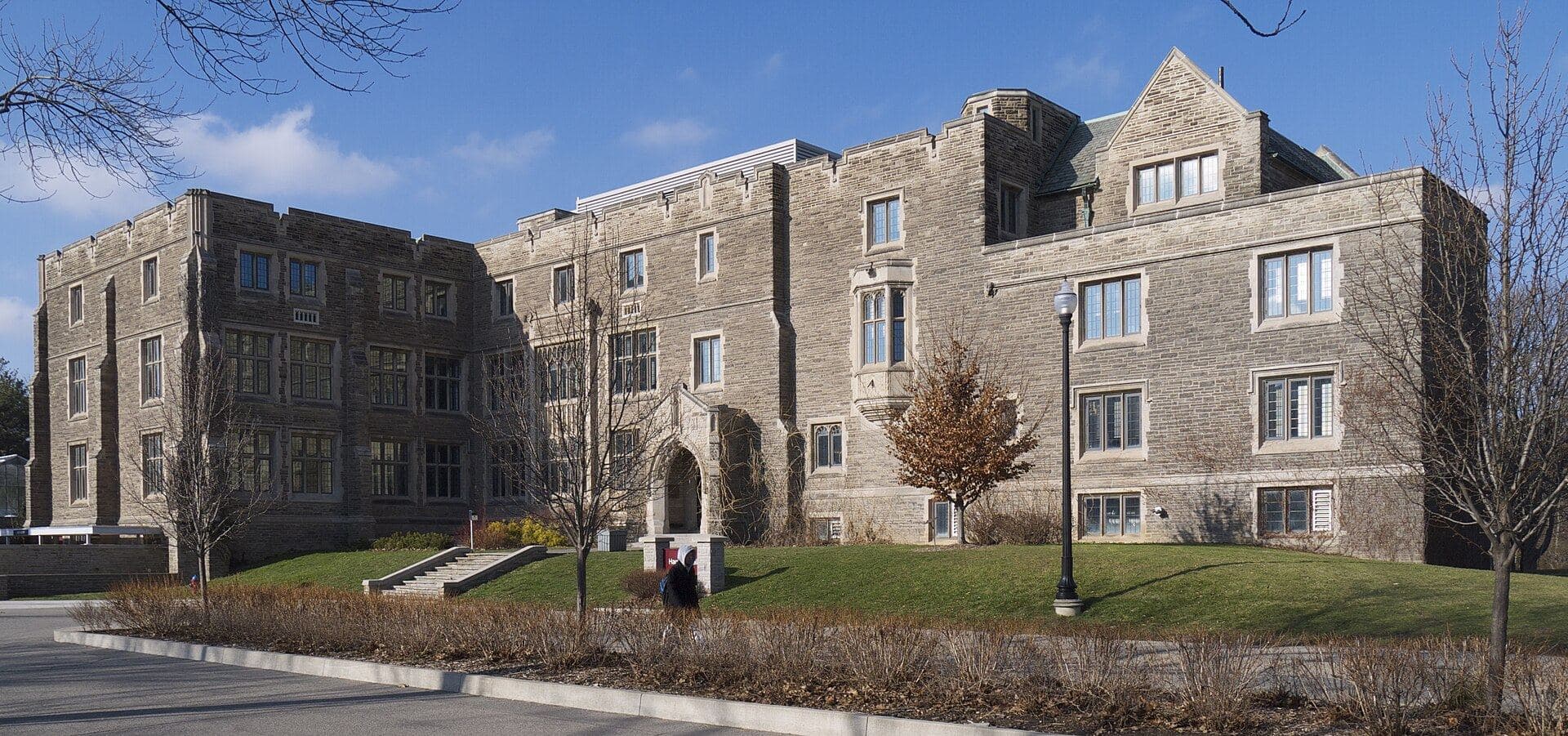

McMaster Admissions Requirements 2027
Hamilton, Ontario
Track McMaster's Group A deadline, Level I prerequisites by program, and the mid-March to early May decision window before you apply to McMaster University.
The short answer
- For 2027 entry, Ontario high school applicants apply through OUAC, the Ontario Universities' Application Centre, by January 15, 2027.
- You need an Ontario Secondary School Diploma plus six Grade 12 U/M courses. U/M courses are university (U) or university/college (M) preparation courses.
- Engineering I needs a minimum 87% for consideration and a mandatory Faculty of Engineering supplement.
- Computer Science I, iBioMed, and Honours Health Sciences each need a minimum 90% and a mandatory supplement.
- McMaster's current checklist says decisions come from mid-March through early May, and all decisions are made no later than the end of May.
Reviewed August 31, 2026 · Official university sources · How we review guides
Save this to your free account
Keep these dates where you'll see them. The calendar file needs no account.
- OUAC Group A deadline (Ontario high-school students)January 15, 2027
Free account. No card needed.
2027 applicant update
McMaster University admission requirements for 2027
Ontario high school applicants need an Ontario Secondary School Diploma and six Grade 12 4U/M courses, including ENG4U and every prerequisite for the chosen program. Co-op courses are excluded from the admission average. McMaster's published ranges are minimums or planning estimates—not guaranteed cut-offs—and by-selection programs also assess a mandatory supplementary component.
Group A deadline
January 15, 2027
OUAC lists this date for Ontario high school applicants. McMaster program, supplementary, assessment, and document dates can differ.
Academic review
Six eligible 4U/M courses
ENG4U and program prerequisites are included. Co-op courses do not count toward the admission or final admission average.
Current decision pattern
Mid-March to early May
McMaster's current checklist describes this as the typical decision window. Most by-selection offers are concentrated in May.
McMaster prerequisites and current admission averages
The table summarizes McMaster's currently published 2026 Ontario prerequisites and admission ranges as reviewed July 29, 2026. Use them to plan Grade 12 courses, then recheck the official admission tool when McMaster publishes Fall 2027 program details.
| Program | Ontario prerequisites | Current published range | Selection note |
|---|---|---|---|
| Humanities I | ENG4U | 78% | Most Humanities I applicants do not submit a general supplement |
| Social Sciences I | ENG4U | Low to mid-80s | Program-specific upper-year pathways have separate requirements |
| Business I | ENG4U, MHF4U, and MCV4U | Mid to high-80s | The supplementary application is currently optional |
| Engineering I | ENG4U, MCV4U, SCH4U, and SPH4U | Minimum 87% for consideration | A mandatory Faculty of Engineering supplement is currently required |
| Computer Science I | ENG4U, MCV4U, and two of SBI4U, SCH4U, SPH4U, SES4U, ICS4U, or TEJ4M | Minimum 90% for consideration | Admission is by selection with a mandatory supplement |
| iBioMed | ENG4U, MCV4U, SBI4U, SCH4U, and SPH4U | Minimum 90% for consideration | A mandatory Faculty of Engineering supplement is currently required |
| Honours Health Sciences | ENG4U, SBI4U, SCH4U, one of MCV4U, MHF4U, or MDM4U, and one non-math, non-science, non-technology 4U/M course | Minimum 90% for consideration | A mandatory Health Sciences supplementary application is required |
| Life Sciences | ENG4U, SBI4U, one of MHF4U or MCV4U, and one of MHF4U, MCV4U, SCH4U, or SPH4U | Low-90s | No general Level I supplement is currently listed |
| Nursing I | ENG4U, SBI4U, SCH4U, and one of MHF4U, MCV4U, or MDM4U | Minimum 85% for consideration | Applicants must complete Casper on an accepted testing date |
Which McMaster programs require a supplementary application?
McMaster calls programs that assess both grades and a mandatory supplementary component “by-selection” programs. The current 2026 list includes Arts & Science, Leadership & Civic Studies, Integrated Business & Humanities, Bachelor of Technology, Computer Science, Engineering, iBioMed, Honours Health Sciences, Midwifery, Nursing, iArts, and Honours Integrated Science. Business I currently offers an optional supplement.
The currently posted dates belong to the 2026 cycle. Engineering, Computer Science, iBioMed, and Bachelor of Technology used January 29, 2026. Arts & Science and Leadership used February 1. Integrated Business & Humanities, Integrated Science, and iArts used February 2. Health Sciences used an early-to-mid-February window, while Nursing used program-approved Casper dates. Applicants must verify the 2027 version rather than copying these dates into a new application calendar.
For the most competitive by-selection program, use the McMaster Health Sciences supplementary application guide.
When does McMaster send admission offers?
McMaster's current applicant checklist says decisions are typically released from mid-March through early May. OUInfo says rolling consideration can begin once McMaster has at least three final 4U/M results plus registration in enough courses to reach six, or six interim and final 4U/M results including prerequisites. Most by-selection offers are made in May, and McMaster says all decisions are made no later than the end of May. For 2027, OUAC sets May 28 as the latest response date for Ontario high school applicants who met the January deadline. The Mosaic applicant portal is authoritative for an individual decision.
How McMaster treats Grade 11, repeated, online, and summer courses
McMaster says Grade 11 marks may be used in a preliminary review when Grade 12 results are not yet available, but applicants are not refused based on Grade 11 marks. Midwifery is the stated exception to that no-refusal rule. If a final result is unavailable for one of its three Grade 12 prerequisites by February 1, the corresponding Grade 11 prerequisite and minimum can affect preliminary eligibility and interview selection. When an applicant repeats up to two courses, the highest reported mark is used. More than two repeats, or three or more attempts at one course, can trigger a request for an explanation that may be considered in the decision.
Compare that program-specific exception with other institutions in the Grade 11 marks and university admissions guide.
Ministry-accredited online, night, correspondence, and most summer courses can be used without a penalty. Courses completed after June 30 immediately before fall entry—including summer courses taken in that final summer—are not included in the admission average.
Official sources
- McMaster Ontario high school applicant guidance
- McMaster admission requirements tool
- McMaster 2026 undergraduate program guide
- McMaster supplementary applications
- McMaster applicant checklist and decision timing
- OUInfo McMaster offers and Ontario requirements
- OUAC 2026–2027 schedule of dates
Reviewed July 29, 2026 · Recheck McMaster's Fall 2027 program ranges and supplementary deadlines when the new cycle is published
Application Checklist
| Academic Requirements | Verify prerequisite courses, minimum averages, and program-specific requirements on the official admissions pages. |
|---|---|
| Supplementary Review | Competitive programs may ask for essays, portfolios, interviews, experience profiles, or timed video responses. |
| International Applicants | Plan transcript evaluation, English-language proof if required, study permit timing, and proof-of-funds documentation. |
| Deadlines | Confirm application, document, scholarship, residence, and portfolio deadlines every cycle before submitting. |
| Stellar Coaching Use | Bring your target program, transcript, activities, and draft responses to a coaching session for school-specific planning. |
Official Sources and Next Steps
Stellar keeps this guide structured for comparison, but official university pages remain the source of truth for program requirements, tuition, residence, scholarships, deadlines, and policy changes.
Prepared by Stellar Advisers Editorial Team · Reviewed August 31, 2026 · Editorial, corrections, and source methodology