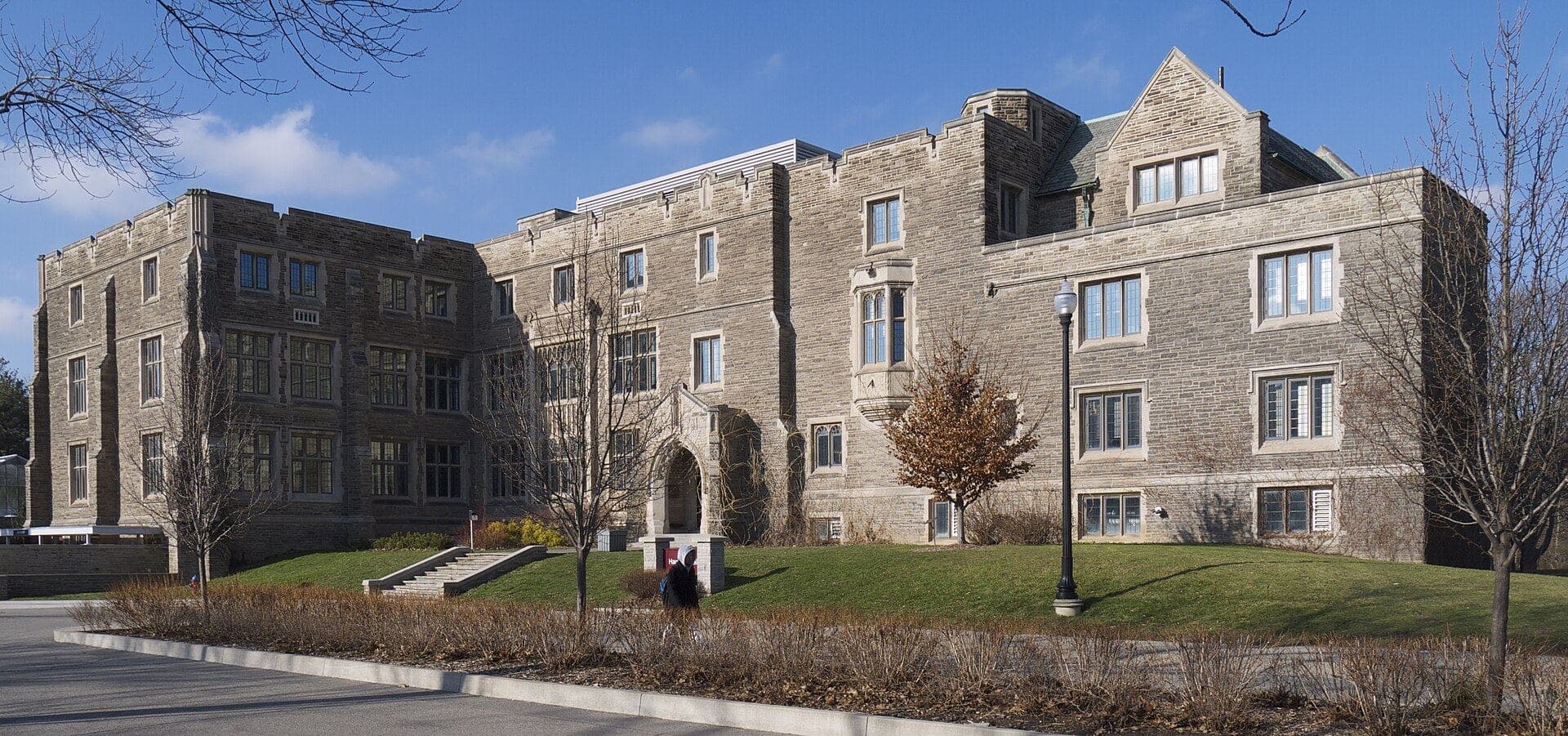

McMaster University Programs & Pathways
Hamilton, Ontario
Program strengths and how to compare pathways. This focused guide keeps the detailed tables, official sources, and practical next steps in one manageable reading path.
The short answer
- For Fall 2027, Engineering applicants can pick a Discovery Track or rank up to two named tracks in one application.
- iBioMed is a separate application with its own Discovery Track and named biomedical tracks, including HESE.
- Life Sciences, Chemical & Physical Sciences, Environmental & Earth Sciences, and Mathematics & Statistics are Level I Science gateways.
- Computer Science, Health Sciences, Nursing, Kinesiology, iSci, Medical Radiation Sciences, and BTech are named high-school entry choices.
- Health Sciences asks for a minimum 90% average and a supplement. More than 8,000 people applied for 240 spots.
Reviewed August 31, 2026 · Official university sources · How we review guides
Current undergraduate program map
McMaster University programs, gateways, and Level II choices
McMaster does not use one admission structure for every degree. Computer Science, Nursing, Health Sciences, BTech, and several interdisciplinary or Science programs are named high-school entry choices. Life Sciences and three other Science routes are Level I gateways. Humanities I and Social Sciences I preserve exploration before a later subject choice. Engineering and iBioMed add a new direct-track versus Discovery decision for students starting in Fall 2027.
Science exploration
4 Level I gateways
These programs lead to later choices. They are Life Sciences, Chemical & Physical Sciences, Environmental & Earth Sciences, and Mathematics & Statistics.
Engineering entry
New for Fall 2027
Choose Discovery or rank named program tracks while retaining a common first year.
Direct choices
Program-specific entry
Computer Science, Health Sciences, Nursing, Kinesiology, iSci, Medical Radiation Sciences, and BTech use named routes.
Selection
Requirements vary
Supplements, first-year prerequisites, capacity, grades, and co-op entry must be checked program by program.
Compare McMaster undergraduate program pathways
This table answers the most important application question. What does the high-school offer actually secure, and what choice remains after first year? It is a planning map. It is not a substitute for the live calendar or a program-specific admission page.
| Program pathway | High-school entry | What happens later | Planning note |
|---|---|---|---|
| Engineering | For Fall 2027, you can pick an Engineering Discovery Track. Or you can rank up to two named Engineering program tracks in one Engineering application. | Every route keeps the common Engineering 1 curriculum. Discovery students rank programs after first year; a named track locks in the second-year program. | Discovery spots are competitive. The school looks at first-year CGPA, preference, and capacity. Engineering & Management and Engineering & Society are still upper-year applications. |
| iBioMed | For Fall 2027, applicants can choose the iBioMed Discovery Track or rank named biomedical-engineering tracks or HESE. | All students complete the common iBioMed 1 year. Discovery students later rank eligible iBioMed routes; named-track students retain their selected second-year route. | Engineering and iBioMed are separate applications and their program choices cannot be mixed. HESE leads to an Honours BHSc rather than a BEngBME. |
| Life Sciences, Chemical & Physical Sciences, and Environmental & Earth Sciences gateways | Applicants enter one of three Level I Science gateways rather than a final upper-year major. | Students use first-year courses to qualify for Level II choices across Biology, Chemistry, Earth and Environment, Life Sciences, Math and Statistics, Physics, and PNB. | Build the Level I schedule backward from every intended Level II prerequisite. Life Sciences students currently rank and apply to as many as four Level II programs. |
| Mathematics & Statistics Gateway | Applicants enter a flexible Level I Science gateway with a mathematics and statistics foundation. | Level II options can include Actuarial & Financial Mathematics, Mathematics and Statistics specializations, Math and Computer Science, Math and Physics, and cross-science routes. | A preferred Level II program can require specific first-year courses. Electives should keep those requirements. Do not choose electives in isolation. |
| Humanities I | Applicants enter a broad first-year Humanities program with room to explore disciplines. | You move into an eligible subject. This can be History, Philosophy, Linguistics, Communication Studies, or English and Cultural Studies. It can also be another Humanities route. | Compare the Humanities I exploration route with selective direct-entry options such as iArts. Compare it too with programs that have an upper-year supplementary application. |
| Social Sciences I, Economics I, and Health & Society I | McMaster lists a broad Social Sciences I entry plus more focused Economics I and Health & Society I choices. | Social Sciences I students apply to a major or area of study after first year. Program requirements and capacity can differ. | Find the first-year prerequisites for the major you want. Then check if its co-op option needs a later application. |
| Business I and Integrated Business & Humanities | Business I leads to the DeGroote BCom route. Integrated Business & Humanities is a separate program. It is interdisciplinary and by selection. | Business students work toward Commerce electives and optional areas of focus. They do not compete for one universal major after first year. | Business I currently has an optional supplement. IBH uses a mandatory selection process. Compare their curricula and co-op models before you apply. |
| Computer Science | Computer Science I is a named high-school entry choice offered with co-op and non-co-op application routes. | Students move forward within the Computer Science degree. They do not use a general Science gateway to compete for the program. | The current Level I program has a supplementary application. Verify the 2027 format and deadline when McMaster publishes the new cycle. |
| Honours Health Sciences, Nursing, Midwifery, and Medical Radiation Sciences | These are distinct Faculty of Health Sciences or health-profession routes. They are not interchangeable versions of a generic pre-med program. | Progression follows each degree's own curriculum, clinical, placement, and academic rules. | Health Sciences uses its own supplement, Nursing uses Casper, and Midwifery uses an Identity and Admissions Survey in the current published cycle. |
| Honours Integrated Science, Kinesiology, and Medical Radiation Sciences | McMaster identifies these as direct-entry Faculty of Science programs rather than Science gateways. | Students follow the selected degree's structured curriculum; iSci is a small by-selection program. | Do not assume admission to a Science gateway transfers into these direct-entry programs. It does not happen automatically. |
| Arts & Science, iArts, and Leadership & Civic Studies | These are Level I choices with a name. They are interdisciplinary and have their own academic focus and selection requirements. | You can do interdisciplinary study in their degree structures. But they are not substitute entry routes to every McMaster major. | Review the current supplementary application, required courses, and combined-honours possibilities for the exact program. |
| Bachelor of Technology | High-school applicants choose one of three direct-entry BTech programs: Automation Systems, Automotive and Vehicle, or Biotechnology. | The degree integrates McMaster study with an advanced technology diploma and business-management certificate from Mohawk College. | BTech has mandatory co-op. It also has a current supplementary application. Degree-completion routes serve a different applicant group. |
Engineering and iBioMed: the 2027 choice
Starting with Fall 2027 entry, each Engineering or iBioMed application can rank as many as two choices inside that application. A named track locks in the second-year program. Every student still completes the applicable common first year. Discovery gives a student more time. But the specific second-year allocation depends on first-year CGPA, ranked preference, and capacity.
Engineering and iBioMed remain separate application families. An Engineering application cannot rank an iBioMed track, and an iBioMed application cannot rank Engineering tracks. Read McMaster Engineering's Fall 2027 model.
Verified program facts for Fall 2027 planning
Each card states the cycle it belongs to. It states its verification status. It states the official page it came from. So a family can separate the confirmed Fall 2027 Engineering model from Health Sciences dates McMaster has not yet published.
Engineering entry model for Fall 2027
Fall 2027 · Published for this period
Fall 2027 Engineering applicants choose the Discovery Track. Or they apply directly to named program tracks. The named tracks are Chemical, Civil, Computer, Electrical, Engineering Physics, Materials, Mechanical, Mechatronics, Nuclear, and Software. You can rank up to two choices in one Engineering application. Every route completes the common Engineering 1 year. The second choice is considered only if the first is not offered.
Applies to: All applicants
McMaster University Faculty of Engineering: Applying to Mac Eng: 2027 and beyond · Verified August 13, 2026
iBioMed entry model for Fall 2027
Fall 2027 · Published for this period
iBioMed is a separate application with its own Discovery Track and named biomedical tracks, including Health, Engineering Science and Entrepreneurship (HESE). Engineering programs cannot be ranked inside an iBioMed application or iBioMed programs inside an Engineering application, and every iBioMed student completes the common iBioMed 1 year.
Applies to: All applicants
McMaster University Faculty of Engineering: Applying to Mac Eng: 2027 and beyond · Verified August 13, 2026
Honours Health Sciences selection requirements
Current requirements · Published for this period
The Level I page publishes a minimum 90% secondary-school average for consideration. It also publishes more than 8,000 applicants annually for 240 spots. A supplementary application is mandatory. It is assessed together with Grade 12 results. No additional documentation such as a CV or résumé is required or accepted.
Applies to: Ontario high school, Other Canadian, International
McMaster University Faculty of Health Sciences: Honours Health Sciences Level I program and 2027 date status · Verified August 13, 2026
Health Sciences 2027 dates
2027 pending · Fall 2027
Not yet published. The Level I page currently lists the OUAC portal opening, application deadline, supplementary-application portal access, and offer date for 2027 as "Coming Soon."
McMaster normally posts supplementary questions in September. It emails submission instructions in January. Use the live page rather than a prior cycle's dates.
Applies to: All applicants
McMaster University Faculty of Health Sciences: Honours Health Sciences Level I program and 2027 date status · Verified August 13, 2026
McMaster program-choice checklist
- 1.Identify whether the OUAC choice is a named direct-entry program, a broad Level I gateway, or a 2027 Engineering or iBioMed track.
- 2.Map every Grade 12 prerequisite and supplementary requirement for that exact entry choice.
- 3.For gateway routes, work backward from the first-year courses required by every intended Level II program.
- 4.Check whether Level II admission is open, limited enrolment, grade-based, or capacity constrained.
- 5.Compare direct, mandatory, optional, and later-entry co-op instead of assuming one McMaster-wide model.
- 6.Recheck the live program page and Undergraduate Calendar before applying and again before course selection.
Official McMaster sources
- McMaster undergraduate program directory
- McMaster Engineering and iBioMed entry for 2027 and beyond
- McMaster Engineering program page
- McMaster iBioMed program page
- McMaster Life Sciences Gateway
- McMaster Chemical & Physical Sciences Gateway
- McMaster Environmental & Earth Sciences Gateway
- McMaster Mathematics & Statistics Gateway
- McMaster Humanities I
- McMaster Social Sciences I
- McMaster Business program
- McMaster Bachelor of Technology
- McMaster supplementary applications
Reviewed July 29, 2026. Fall 2027 Engineering and iBioMed model and Health Sciences requirements re-verified August 13, 2026. Recheck live program and calendar pages before applying.
Official Sources and Next Steps
Stellar keeps this guide structured for comparison, but official university pages remain the source of truth for program requirements, tuition, residence, scholarships, deadlines, and policy changes.
Prepared by Stellar Advisers Editorial Team · Reviewed August 31, 2026 · Editorial, corrections, and source methodology