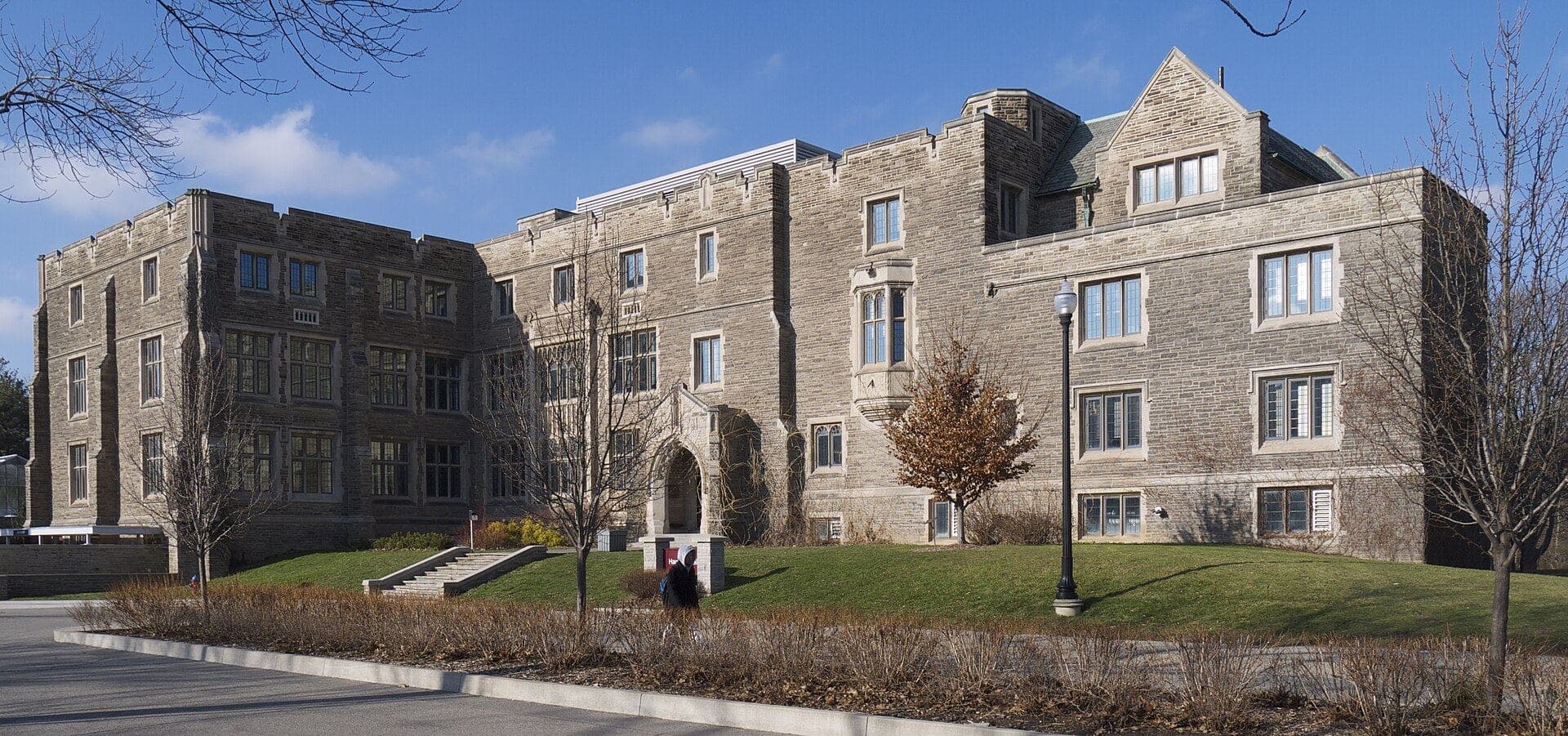

McMaster University Careers & Work Experience
Hamilton, Ontario
Co-op, internships, research, and outcome questions. This focused guide keeps the detailed tables, official sources, and practical next steps in one manageable reading path.
The short answer
- McMaster co-op is paid and optional for Engineering, iBioMed, and Computer Science. You can pick it on OUAC, the Ontario Universities' Application Centre, or opt in later.
- BTech co-op is mandatory. It needs at least 12 months of work in the four-and-a-half-year degree.
- Science students apply in second year for third-year entry. They need SCIENCE 2C00, program prerequisites, and at least a 5.0 GPA, or grade point average.
- Engineering, iBioMed, and Computer Science pay $101.20 a year plus $525 per four-month work term from Fall 2026.
- Social Sciences co-op opens in February 2027. The exact closing date is not yet published.
Reviewed August 31, 2026 · Official university sources · How we review guides
2026–2027 work-integrated learning update
How McMaster University co-op works
Yes, McMaster University offers paid co-op and internship pathways, but there is no single McMaster-wide entry model. Engineering, iBioMed, Computer Science, BTech, Science, DeGroote business, and Social Sciences use different admission timing, preparation courses, work-term sequences, fees, and degree rules.
Engineering applicants can select an optional co-op version through OUAC and eligible students can also opt in later. BTech co-op is mandatory. Science students normally apply during second year, DeGroote introduced a new BCom/IBH co-op model beginning September 2026, and Social Sciences students apply during Level I for selected honours programs. Access to a program provides support and a formal process; it does not guarantee a job.
Engineering designation
12 registered months
BEng, iBioMed, and Computer Science students need at least three approved four-month terms for the co-op designation.
Science sequence
12–16 paid months
Students usually apply in second year, enter in third year, and complete a five-year academic and work sequence.
Social Sciences
February 2027
McMaster says the next Level I application round opens in February 2027; the exact closing date must still be confirmed.
McMaster co-op programs, entry, work terms, and fees
This comparison separates the undergraduate routes commonly combined in one search. Published fees and rules were reviewed July 29, 2026, with the Engineering-family fee schedule re-verified August 13, 2026, and can change by cohort, program, and academic year.
| McMaster pathway | Entry model | Work-term structure | Current fee context |
|---|---|---|---|
| Engineering, iBioMed, and Computer Science | Optional co-op; students can select it through OUAC or opt in before the final academic year while in good standing | At least 12 registered months for the co-op designation; four-year programs can register up to 24 months | $101.20 annual enrolment fee plus $525 per registered four-month work term from Fall 2026 |
| Bachelor of Technology | Mandatory in the four-and-a-half-year BTech degree; Degree Completion students follow a separate requirement | BTech requires at least 12 months; the Degree Completion Program requires at least eight months | $600 per registered four-month term, waived after the applicable required terms are completed |
| Faculty of Science | Apply during second year for third-year entry after completing the required career course and program prerequisites | Normally 12–16 months of paid work across a five-year degree sequence | $3,974.63 total over three years on the currently published Science page, including annual administration fees |
| DeGroote BCom / IBH | New co-op model beginning September 2026; the published BCom process uses a competitive application after first year | Three required paid work terms for 12 months total, with an optional fourth term for 16 months | Program-specific co-op course and work-term charges must be confirmed with DeGroote and the student account |
| Faculty of Social Sciences | Apply during Level I using a supplementary form, video interview, and Level II program ranking | Three paid four-month work terms integrated into a five-year honours degree | Faculty-specific fees apply; the next published application round opens in February 2027 |
Is McMaster Engineering co-op direct entry?
Students can select co-op when applying through OUAC for BEng, iBioMed, and related eligible programs, but Engineering also lets students opt in later while in good academic standing and before their final academic year. The optional designation requires at least 12 months, or three approved terms, of registered co-op. BTech is different: co-op is a mandatory part of the degree.
Engineering and Computer Science students in four-year programs can register from four to 24 months of experience, while five-year programs can reach 28 months. A single continuous placement is capped at 16 months. The mandatory ENGINEER 1EE0 preparation course must be complete before a student can access the co-op job board or register an approved job.
McMaster Science co-op requirements
Science students normally apply in second year for entry in third year. McMaster requires SCIENCE 2C00 before the first work term, program-specific academic prerequisites, and at least a 5.0 GPA, while warning that actual admission standards are usually higher. Admitted students also complete SCIENCE 3C00 before their first work term.
The program normally produces 12 to 16 months of paid, discipline-related experience across a five-year degree. The Science page currently lists a $3,974.63 co-op fee over three years, including a $236.61 annual administration fee. Its January 6, 2026 application date has passed and must not be reused as a 2027 deadline.
McMaster Commerce and IBH co-op
DeGroote is introducing a new BCom/IBH co-op model beginning in September 2026. It uses three required full-time paid work terms for 12 months of experience, with an optional fourth term that can bring the total to 16 months. Each work term must be at least 12 weeks and is registered as a full-time co-op course.
The current BCom access page says full-time students in good standing apply competitively after first year using a resume, essay questions, and virtual interview. Admission decisions consider academics, experience, written work, and interview performance. Students then complete Commerce 2CO0 for career preparation. Applicants should use this new model rather than relying on older Commerce Internship timelines.
McMaster Social Sciences co-op programs
The current Faculty of Social Sciences page lists co-op options in Anthropology, Economics, Environment & Society, Health & Society, Political Science, Social Gerontology, Sociology, and Work & Labour Studies. Students apply during Level I using a supplementary form and video interview, then rank their desired Level II program.
Each option integrates three paid, full-time work terms of about four months into a five-year honours degree. The 2026 round is closed and McMaster says the next application round opens in February 2027. Because the exact deadline is not yet published, students should not carry the older March date forward.
Are McMaster co-op jobs guaranteed?
No. Students receive faculty preparation, coaching, and access to OSCARplus postings, but they still search, apply, interview, and compete for employment. Employers make hiring decisions, and a self-found role must satisfy the faculty's requirements and be registered if it is to count as an official co-op term.
McMaster's Science and Social Sciences pages explicitly state that students are not placed into reserved jobs. Compare the search model, fees, sequence, and fallback plan with the Ontario universities with co-op guide.
How much are McMaster co-op fees?
Engineering, iBioMed, and Computer Science students currently pay a $101.20 annual enrolment fee plus $525 for each registered four-month term beginning Fall 2026. BTech charges $600 for each applicable four-month term. Science currently publishes $3,974.63 over three years. These are not placement fees, and other faculties use their own schedules.
International students and OSAP on co-op
McMaster says that, from April 1, 2026, eligible post-secondary international students no longer need a separate co-op work permit for required placements when the current federal conditions are met. Students must still verify their study-permit conditions and placement eligibility. Engineering students can keep eligible OSAP loans interest-free during a registered work term by submitting the required continuation form; use the current OSAP guide and McMaster's Registrar instructions.
Verified co-op facts by faculty
Each card carries its cycle label, verification status, and the official page it came from, so students can separate the confirmed Fall 2026 fee schedule from cycle-specific application dates.
Engineering, iBioMed, and Computer Science co-op
Current program · Published for this period
Co-op is optional: students can select it on OUAC or opt in before their final academic year while in good standing. The designation requires at least 12 months — three approved four-month terms — of registered co-op; four-year programs can register up to 24 months, one continuous placement is capped at 16 months, and ENGINEER 1EE0 must be completed before accessing the co-op job board.
Applies to: All applicants
McMaster University Faculty of Engineering: How undergraduate Engineering co-op works · Verified July 29, 2026
Engineering-family co-op fees
Fall 2026 fee schedule · Published for this period
Engineering, iBioMed, and Computer Science co-op students pay a $101.20 annual enrolment fee plus $525 for each registered four-month work term beginning Fall 2026. BTech charges $600 per registered term, waived after three completed work terms (two for the Degree Completion Program).
Applies to: All applicants
McMaster University Faculty of Engineering: Engineering, Computer Science, and BTech co-op fees · Verified August 13, 2026
Faculty of Science co-op
Current published cycle · Latest published information; newer cycle not yet confirmed
Science students normally apply in second year for third-year entry. Entry requires SCIENCE 2C00, program prerequisites, and at least a 5.0 GPA, with actual admission usually higher; admitted students complete SCIENCE 3C00 before the first work term. The program targets 12–16 paid months across a five-year sequence, and the page publishes a $3,974.63 co-op fee over three years.
The page's January 6, 2026 application date has passed and must not be reused as a 2027 deadline.
Applies to: All applicants
McMaster University Faculty of Science: Faculty of Science co-op entry, sequence, and fees · Verified July 29, 2026
DeGroote BCom and IBH co-op
From September 2026 · Published for this period
DeGroote's co-op model beginning September 2026 uses three required paid work terms totalling 12 months, with an optional fourth term reaching 16 months. Full-time students in good standing apply competitively after first year with a résumé, essay questions, and a virtual interview, then complete Commerce 2CO0 for career preparation.
Applies to: All applicants
DeGroote School of Business: DeGroote BCom and IBH co-op · Verified July 29, 2026
Official McMaster co-op sources
- Engineering undergraduate co-op structure
- Engineering, Computer Science, and BTech co-op fees
- Science co-op entry, sequence, fees, and hiring
- DeGroote BCom and IBH co-op
- Social Sciences co-op programs and application
- McMaster co-op and internship directory
- McMaster international placement guidance
Reviewed July 29, 2026 · Engineering, Computer Science, and BTech co-op fees re-verified August 13, 2026 · Verify the faculty, cohort, fees, and work authorization before acting
Career Planning
| Experiential Learning | Check whether your target program offers co-op, internships, clinical placements, practicums, studios, field schools, or research terms. |
|---|---|
| Career Services | Compare job boards, employer partnerships, resume support, interview preparation, and alumni mentoring. |
| Research Access | For graduate-school or professional-school pathways, look for undergraduate research assistant roles and lab access. |
| Outcome Questions | Ask where graduates work or study next, and whether outcomes differ by program, co-op stream, or campus. |
Official Sources and Next Steps
Stellar keeps this guide structured for comparison, but official university pages remain the source of truth for program requirements, tuition, residence, scholarships, deadlines, and policy changes.
Prepared by Stellar Advisers Editorial Team · Reviewed August 31, 2026 · Editorial, corrections, and source methodology