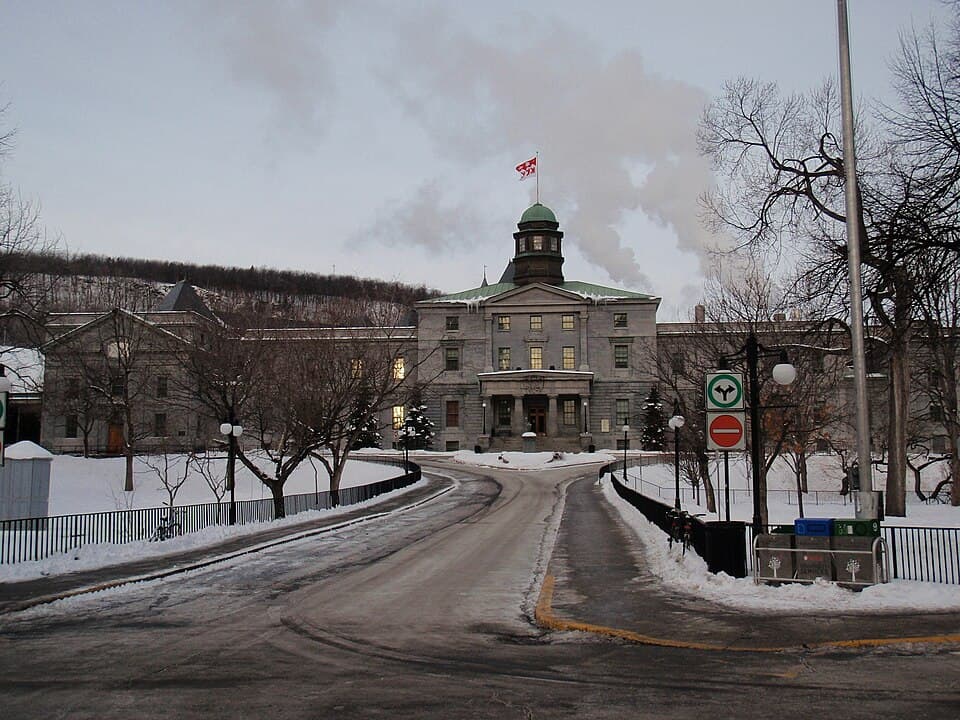

McGill University Admissions & Deadlines
Montreal, Quebec
Core application items, supplements, deadlines, and proof. This focused guide keeps the detailed tables, official sources, and practical next steps in one manageable reading path.
The short answer
- Apply by January 15, 2027 if you study, or last studied, at an overseas or U.S. high school, college or university.
- Ontario and other Canadian high school students outside Quebec apply by February 1, 2027. Quebec CEGEP (Quebec college) applicants should plan for March 1.
- The application fee is $140.16 CAD and is non-refundable. A second application costs nothing extra once the first is paid.
- McGill is in Montreal, Quebec. Ontario applicants apply direct to McGill and do not use OUAC (the Ontario Universities' Application Centre, Ontario's university application site).
- The March 1 CEGEP date has no Fall 2027 year label yet, so check it before you rely on it.
Reviewed August 16, 2026 · Official university sources · How we review guides
Save this to your free account
Keep these dates where you'll see them. Free account; we email you before each saved date; unsubscribe any time. Your account’s email pause still applies. The calendar file needs no account.
- McGill, Canadian high schools outside QuebecFebruary 1, 2027
Free account. No card needed.
Fall 2027 admissions planning
McGill University admission requirements by educational background
McGill does not publish one admission average. It publishes a typical minimum grade range for each program. For Quebec CEGEP (a Quebec college most Quebec students attend before university) applicants, it publishes R-score minimums from the last cycle. These are calculated differently for every school system. Ontario applicants are assessed on a Top 6 average. Quebec CEGEP applicants are assessed on an overall and core R-score. IB (the International Baccalaureate diploma), A-Level, CAPE, and U.S. applicants are assessed on their own curriculum rules. Start from your system, then your exact program.
Fall 2027 deadline in Canada
February 1, 2027
McGill's Important Dates calendar labels this the Fall 2027 deadline for Canadian high schools outside Quebec. Overseas and U.S. applicants: January 15, 2027.
Application fee
$140.16 CAD
Non-refundable. A second application can be submitted at no extra cost once the first is paid.
Application route
Direct to McGill
McGill is in Montreal, Quebec. Ontario applicants do not use OUAC.
Date-label warning
The Quebec CEGEP deadline still has no Fall 2027 label
McGill has published January 15, 2027 as the Fall 2027 deadline for applicants studying or last studying in an overseas or U.S. high school, college, or university, and February 1, 2027 for applicants in a Canadian high school outside Quebec, including Ontario. The March 1 date for Quebec CEGEP applicants is still published without a Fall 2027 year label. Plan to it, but confirm it before relying on it. Checked October 1, 2026.
Ontario prerequisites and typical admission ranges
McGill now publishes typical minimum ranges instead of exact cut-offs. It shows no year for them, labels its Science groups as last year's cut-offs, and says minimum grades change from year to year, so they are evidence of where the bar sits, not a promise about 2027. Checked October 1, 2026. At least four of your six Top 6 courses, plus every prerequisite, must be 4U or DU, and no more than two may be 4M.
| Program | Ontario prerequisites | Top 6 range | Math / science range |
|---|---|---|---|
| Agricultural and Environmental Sciences (all B.Sc.(Ag.Env.Sc.)) | 4U English or French, Calculus and Vectors, plus two of Biology, Chemistry, or Physics | Mid to high 70s | Mid to high 70s |
| Bioresource Engineering | 4U English or French, Calculus and Vectors, plus two of Biology, Chemistry, or Physics | Mid to high 70s | Mid to high 70s |
| Food Science | 4U English or French, Calculus and Vectors, plus two of Biology, Chemistry, or Physics | Mid to high 70s | Mid to high 70s |
| Concurrent B.Sc. (Food Science / Nutritional Science) | 4U English or French, Calculus and Vectors, plus two of Biology, Chemistry, or Physics | Mid to high 70s | Mid to high 70s |
| Nutrition | 4U English or French, Calculus and Vectors, plus two of Biology, Chemistry, or Physics | High 70s to low 80s | High 70s to low 80s |
| Education (all programs) | 4U English or French | Low 80s to low to mid 80s, by program | Low 80s in English or French |
| Nursing | 4U English or French, Calculus and Vectors, plus two of Biology, Chemistry, or Physics | Low 80s | Low 80s |
| Kinesiology | 4U English or French, Calculus and Vectors, plus two of Biology, Chemistry, or Physics | Mid 80s to mid 90s | Mid 80s to low 90s |
| Materials Engineering | 4U English or French, Calculus and Vectors, Physics, Chemistry | High 80s to low 90s | High 80s to low 90s |
| B.A. & Sc. (Interfaculty) | 4U English or French, Calculus and Vectors, plus two of Biology, Chemistry, or Physics | High 80s to low 90s | High 80s to low 90s mathematics/science; mid to high 80s English or French |
| Arts | 4U English or French | High 80s to low 90s | High 80s to low 90s in English or French |
| Mining Engineering | 4U English or French, Calculus and Vectors, Physics, Chemistry | Low to mid 90s | High 80s to mid 90s |
| Software Engineering | 4U English or French, Calculus and Vectors, Physics, Chemistry | Low to mid 90s | Low to mid 90s |
| Chemical, Civil, and Computer Engineering | 4U English or French, Calculus and Vectors, Physics, Chemistry | Low to mid 90s | Low 90s |
| Physical, Environmental, Math and Computer Sciences Group | 4U English or French, Calculus and Vectors, plus two of Biology, Chemistry, or Physics | Low 90s | High 80s to low 90s |
| Earth, Geographic, and Climate Sciences Group | 4U English or French, Calculus and Vectors, plus two of Biology, Chemistry, or Physics | Not yet published (new for Fall 2027) | Not yet published (new for Fall 2027) |
| Biological, Biomedical and Life Sciences Group | 4U English or French, Calculus and Vectors, plus two of Biology, Chemistry, or Physics | Low to mid 90s | Low 90s |
| Management (B.Com.) | 4U English or French, plus Calculus and Vectors | Mid 90s | Low to mid 90s mathematics; high 80s to low 90s English or French |
| Bio-Physical-Computational Sciences Group | 4U English or French, Calculus and Vectors, plus two of Biology, Chemistry, or Physics | Low to mid 90s | Low to mid 90s |
| Electrical Engineering | 4U English or French, Calculus and Vectors, Physics, Chemistry | Mid to high 90s | Mid 90s |
| Architecture | 4U English or French, Calculus and Vectors, Physics | Low to high 90s | Low to high 90s |
| Bioengineering | 4U English or French, Calculus and Vectors, Physics, Chemistry | Mid to high 90s | Mid 90s |
| Mechanical Engineering | 4U English or French, Calculus and Vectors, Physics, Chemistry | Mid to high 90s | Mid 90s |
Quebec CEGEP R-score minimums (September 2026)
McGill assesses both the overall R-score and the core R-score for prerequisite courses. Physical Therapy, Electrical Engineering and Neuroscience publish a core minimum higher than the overall one. McGill says these September 2026 values don't represent the R-score required for future admission.
| Program | Overall R-score | Core R-score |
|---|---|---|
| Education (all programs) | 24.5 | 24.5 |
| Agricultural and Environmental Sciences | 25.0 | 25.0 |
| Bioresource Engineering | 25.0 | 25.0 |
| Food Science | 25.0 | 25.0 |
| Online B.N. Integrated | 25.8 | Not published |
| B.N. Integrated (Nursing) | 26.0 | Not published |
| Concurrent Food Science / Nutritional Science | 27.0 | 27.0 |
| Nutrition | 27.0 | 27.0 |
| Social Work | 27.0 | 25.0 English or French |
| Arts | 27.5 | 26.0 English or French |
| B.Sc. Nursing | 28.0 | 28.0 |
| Dietetics | 28.0 | 28.0 |
| Science: Physical, Environmental, Math and Computer | 28.0 | 28.0 |
| B.A. & Sc. (Interfaculty) | 29.0 | 29.0; 26.0 English or French |
| Science: Bio-Physical-Computational | 29.0 | 29.0 |
| Mining Engineering | 29.1 | 29.1 |
| Kinesiology | 29.5 | 29.5; 26.0 English or French |
| Management (B.Com.) | 29.69 | 29.69 mathematics; 26.0 English or French |
| Materials Engineering | 30.3 | 30.3 |
| Science: Biological, Biomedical and Life | 30.4 | 30.4 |
| Civil Engineering | 30.6 | 30.6 |
| Software Engineering | 31.0 | 31.0 |
| Computer Engineering | 31.3 | 31.3 |
| Architecture | 32.0 | 32.0 |
| Occupational Therapy | 32.0 | 32.0 |
| Chemical Engineering | 32.2 | 32.2 |
| Electrical Engineering | 33.1 | 33.2 |
| Bioengineering | 33.3 | 33.3 |
| Physical Therapy | 34.0 | 34.7 |
| Science: Neuroscience | 34.1 | 34.2 |
| Mechanical Engineering | 34.4 | 34.4 |
| Science: Earth, Geographic, and Climate | Not yet published (new for Fall 2027) | Not yet published |
Current application and scholarship schedule
| Route | Deadline | Status |
|---|---|---|
| Overseas or U.S. school, college, or university — Fall 2027 | January 15, 2027 | McGill's Important Dates calendar gives this a Fall 2027 label. The label is clear. It covers Agricultural & Environmental Sciences, Architecture, Arts, B.A.&Sc., Education, Engineering, Management, Nursing, Occupational Therapy, Physical Therapy, and Science. |
| Ontario and rest-of-Canada high school | February 1, 2027 | Published with an explicit Fall 2027 label on McGill's Important Dates calendar for applicants studying or who last studied in a Canadian high school outside Quebec. The Major Entrance Scholarship deadline for this group is February 7. |
| Quebec CEGEP | March 1 (documents April 15) | The Quebec requirements page lists March 1 for the application and April 15 for supporting documents. It does not have a Fall 2027 year label. |
| Winter 2027 term entry | November 1, 2026 | Explicitly labelled Winter 2027 on Important Dates. Not every program admits for Winter, so verify the program is open before applying. |
| Major Entrance Scholarship application | January 21 / February 7 / March 7 | A separate application opens October 1. The deadline is January 21 for schools outside Canada, February 7 for Ontario and the rest of Canada, and March 7 for Quebec CEGEPs. The deadline does not move even if a late admission application is allowed. |
Application checklist
- 1.Identify your educational background first — Ontario, CEGEP, IB, A-Level or CAPE, or U.S. — because every requirement and deadline is written per system.
- 2.Match your exact program's prerequisites, not the faculty's. McGill publishes ten separate Engineering entries and four Science groupings.
- 3.Apply directly to McGill and pay the $140.16 CAD non-refundable fee; a second program application costs nothing extra.
- 4.Submit the separate Major Entrance Scholarship application within about a week of the admission deadline — it needs two references, an essay, and a school statement of class rank.
- 5.Track the Applicant Portal checklist for program-specific extras: French proficiency, CASPer, a personal statement, the Social Work Written Submission, or an audition.
Current English-test minimums
IELTS Academic
6.5 overall; 6.0 in each component
TOEFL (120-point scale)
90 for most programs; 100 for Education and Management; 79–80 for Music
TOEFL (6-point scale)
4.5 for most programs; 5.0 for Education and Management; 4.0 for Music
Duolingo English Test
125 overall; 130 for B.Ed. (TESL) and B.Com.
CAEL
70 overall; 60 in each component
PTE Academic
65 overall
Cambridge C1 Advanced or C2 Proficiency
C1 Advanced at Grade B or better; C2 Proficiency at Grade C or better
What McGill actually publishes right now
Each card below is a single fact checked against one first-party mcgill.ca page, with the cycle it belongs to and its verification status. Anything McGill has not published for Fall 2027 is marked pending rather than guessed.
How big McGill actually is
Fall 2025 counts · Published for this period
McGill's Quick Facts publish 40,531 students for Fall 2025. This number includes 28,167 undergraduate students, 10,196 graduate students, 649 postdoctoral scholars, and 1,519 residents and fellows. Teaching and research is carried by 1,677 tenured and tenure-stream faculty, 166 Canada Research Chairs, 148 endowed chairs, and 216 Royal Society of Canada Fellows. This is against $749.2M in research funding for FY 2024.
Applies to: All applicants
McGill University: Quick Facts: enrolment, faculties, alumni, research funding · Verified August 16, 2026
Founding, faculties, and campuses
Current institutional structure · Published for this period
McGill states it is a public university founded in 1821. Quick Facts count eleven faculties, including Arts, Science, Engineering, Medicine, Law, and Management. There are also fifteen schools and specialised units. The university runs a downtown Montreal campus and the Macdonald Campus in Sainte-Anne-de-Bellevue. Agricultural and Environmental Sciences, Food Science, Nutritional Science, Bioresource Engineering, and Laird Hall residence sit at the Macdonald Campus.
Choosing a Macdonald Campus program is a location decision, not just a program decision. It is a separate campus roughly 30 kilometres west of downtown Montreal.
Applies to: All applicants
McGill University: Quick Facts: enrolment, faculties, alumni, research funding · Verified August 16, 2026
The international-student share McGill publishes
2023-24 degree-seeking share · Published for this period
McGill's About page states that international students from more than 150 countries make up nearly 30% of McGill's student body. It calls this the highest proportion of any Canadian research university. Quick Facts give the more precise figure: 29.5% international among degree-seeking students in 2023-24. It also says 27% are from international origins overall.
Applies to: All applicants, International
McGill University: About McGill: 1821 charter, international share, research legacy · Verified August 16, 2026
McGill's own selectivity claim
Current institutional positioning · Published for this period
The About page says that 'McGill students have the highest average entering grades in Canada'. It counts 149 Rhodes Scholars. It describes them as nation-leading. It calls the university 'one of the leading universities in the world'. It notes that Ernest Rutherford's Nobel Prize-winning research on radioactivity was conducted at McGill.
This is McGill's own marketing claim about entering grades, not an independently audited statistic. Use the published program-by-program ranges and R-score minimums to plan instead.
Applies to: All applicants
McGill University: About McGill: 1821 charter, international share, research legacy · Verified August 16, 2026
Rankings McGill publishes about itself
Latest published ranking cycle · Latest published information; newer cycle not yet confirmed
Quick Facts list McGill as #1 in Canada in the medical-doctoral category for more than twenty consecutive years and #30 globally in the QS World University Rankings for 2027.
Rankings move annually and McGill selects which ones to publish. They are not admission criteria.
Applies to: All applicants
McGill University: Quick Facts: enrolment, faculties, alumni, research funding · Verified August 16, 2026
McGill does not publish an acceptance rate
Current published evidence · Published for this period
None of the first-party McGill admissions pages verified for this guide publish one undergraduate acceptance percentage. McGill publishes typical minimum grade ranges instead. These are for Ontario and other school systems. It also publishes R-score minimums for Quebec CEGEP applicants, per program. It also publishes prerequisite lists and estimated decision-release windows.
Applies to: All applicants
McGill University: Undergraduate admission requirements by educational background · Verified October 1, 2026
Fall 2027 cycle status
2027 pending · Fall 2027
Fall 2027 is mostly published. McGill's Important Dates calendar labels January 15, 2027 as the Fall 2027 deadline for applicants studying or last studying in an overseas or U.S. school, and February 1, 2027 for applicants studying or last studying in a Canadian high school outside Quebec. The Quebec CEGEP March 1 date still has no year label, the Ontario range tables show no year, and the CEGEP R-score table covers September 2026 admission. The U.S. testing policy is labelled Fall 2027.
Treat January 15, 2027 and February 1, 2027 as firm for their groups. Treat the March 1 CEGEP date, the grade ranges, the R-score minimums and every dollar figure on this page as the latest published values rather than a Fall 2027 commitment.
Applies to: All applicants
McGill University: Important Dates: Fall 2027 overseas and U.S. application deadline · Verified October 1, 2026
The exact Ontario Top 6 rule
Current requirements · Published for this period
McGill states admission is based on its calculation of a Top 6 pre-university (4U, DU, 4M) course average, that a minimum of six such courses is required, that at least four of the six — plus all prerequisite courses — must be at the 4U or DU level, that only two courses at the 4M level are permitted, and that all programs require a core language, English or French, at the 4U level. An Ontario Secondary School Diploma must be obtained before the start of classes.
Applies to: Ontario high school
McGill University: Ontario high-school requirements and previous lowest grades · Verified August 16, 2026
Ontario typical minimum ranges by program
Latest available (no year shown) · Latest published information; newer cycle not yet confirmed
McGill now publishes typical minimum admission grade ranges rather than exact cut-offs. No year is shown. Its Science groups are labelled last year's cut-offs. Top 6 and mathematics/science ranges run mid to high 70s for Agricultural and Environmental Sciences, Bioresource Engineering and Food Science. They run high 70s to low 80s for Nutrition, low 80s for Nursing, and low 80s to low to mid 80s for Education. They run mid 80s to mid 90s for Kinesiology. They run high 80s to low 90s for Arts, the B.A. & Sc. and Materials Engineering. They run low 90s for the Physical, Environmental, Math and Computer Sciences Group. They run low to mid 90s for the Biological, Biomedical and Life and Bio-Physical-Computational groups. They also run low to mid 90s for Chemical, Civil, Computer, Mining and Software Engineering. They run mid 90s for Management, low to high 90s for Architecture, and mid to high 90s for Bioengineering, Electrical and Mechanical Engineering. The new Earth, Geographic, and Climate Sciences Group has no range yet.
McGill says minimum grades for entry fluctuate from year to year and that meeting a listed range does not guarantee admission.
Applies to: Ontario high school
McGill University: Ontario high-school requirements and previous lowest grades · Verified October 1, 2026
How CEGEP applications are assessed
Current requirements · Published for this period
Applicants must have obtained a Diplôme d'études collégiales before the start of classes. McGill assesses both the overall R-score and the core R-score average of any prerequisite courses. So a strong overall CRC does not compensate for weak prerequisite performance in programs that publish a separate core requirement.
Applies to: Other Canadian
McGill University: Quebec CEGEP requirements and previous lowest R-scores · Verified August 16, 2026
CEGEP R-score minimums by program
September 2026 admission · Latest published information; newer cycle not yet confirmed
McGill's R-score minimums for September 2026 admission ran from 24.5 for all Education programs. They also ran from 25.0 for Agricultural and Environmental Sciences, Bioresource Engineering, and Food Science. They ran through 25.8 for the online B.N. Integrated and 26.0 for the B.N. Integrated. They ran 27.0 for Nutrition, Social Work and the concurrent Food Science/Nutritional Science route. They ran 27.5 for Arts (26.0 core English or French). They ran 28.0 for the B.Sc. Nursing, Dietetics, and the Physical, Environmental, Math and Computer Sciences Group. They ran 29.0 for the B.A. & Sc. and the Bio-Physical-Computational group. They ran 29.5 for Kinesiology, 29.69 for Management, and 32.0 for Architecture. They ran up to 34.0 for Physical Therapy, 34.1 for the Neuroscience group, and 34.4 for Mechanical Engineering.
Physical Therapy (34.0 overall, 34.7 core) publishes a core minimum above the overall one. Electrical Engineering (33.1 overall, 33.2 core) and Neuroscience (34.1 overall, 34.2 core) do too. This is easy to miss. McGill says these values don't represent the R-score required for future admission.
Applies to: Other Canadian
McGill University: Quebec CEGEP requirements and previous lowest R-scores · Verified October 1, 2026
The one confirmed Fall 2027 deadline
Fall 2027 · Published for this period
McGill's Important Dates calendar publishes Friday, January 15, 2027 as the application deadline for Fall 2027 admission to undergraduate programs by applicants studying or who last studied in an overseas or U.S. high school, college, or university, covering Agricultural & Environmental Sciences, Architecture, Arts (including Social Work and Religious Studies), B.A.&Sc., Education, Engineering, Management, Nursing, Occupational Therapy, Physical Therapy, and Science.
Applies to: International
McGill University: Important Dates: Fall 2027 overseas and U.S. application deadline · Verified August 16, 2026
Canadian deadlines: Fall 2027 labelled outside Quebec, CEGEP date unlabelled
2027 pending · Fall 2027
McGill's Important Dates calendar labels Monday, February 1, 2027 as the Fall 2027 application deadline. This is for applicants studying or who last studied in a Canadian high school outside Quebec. It covers Agricultural & Environmental Sciences, Architecture, Arts, B.A.&Sc., Education, Engineering, Management, Nursing and Science. The Quebec requirements page still lists March 1 for CEGEP applications. It also lists April 15 for supporting documents. Neither date has a Fall 2027 year label.
Plan to February 1, 2027 outside Quebec. For CEGEP applicants, plan to March 1 but confirm it once McGill year-labels the Quebec date.
Applies to: Ontario high school, Other Canadian
McGill University: Important Dates: Fall 2027 Canadian high school (outside Quebec) application deadline · Verified October 1, 2026
Winter 2027 entry has its own deadline
Winter 2027 · Published for this period
Important Dates publishes Sunday, November 1, 2026. This is the application deadline for admission to undergraduate programs for the Winter 2027 term. It tells applicants to verify which programs are open before applying. It also tells them to verify which applicant pools are eligible.
Applies to: All applicants
McGill University: Important Dates: Winter 2027 undergraduate application deadline · Verified August 16, 2026
The application fee and the second-choice rule
Current process · Published for this period
The undergraduate application fee is $140.16 CAD and is non-refundable. Once the first application is submitted and paid, a second application can be submitted at no extra cost; further applications are charged again. McGill's five published steps are: decide what to study, make sure you're eligible, submit your application, apply for an entrance scholarship, and submit documents and keep in touch.
Applies to: All applicants
McGill University: How to apply: five steps, application fee, Applicant Portal · Verified August 16, 2026
The Applicant Portal is the authoritative checklist
Current process · Published for this period
After applying, students verify the application checklist in the McGill Applicant Portal. They upload required documents there. They also check application status there. Documents required by a specific program are listed on that checklist. All supporting documents are uploaded there. The exceptions are official transcripts, test scores, and, where required, letters of recommendation.
Applies to: All applicants
McGill University: Submit documents: checklist and program-specific extras · Verified August 16, 2026
English proficiency minimums and exemptions
Current requirements · Published for this period
IELTS Academic needs 6.5, with 6.0 in each component. TOEFL needs 90 on the 120-point scale for most programs. Education and Management need 100, and Music needs 79-80. The equal 6-point TOEFL values are 4.5, 5.0, and 4.0. Duolingo needs 125, or 130 for B.Ed. (TESL) and B.Com. CAEL needs 70 overall, with 60 per component. PTE Academic needs 65. Cambridge C1 Advanced needs Grade B or better. Cambridge C2 Proficiency needs Grade C or better. You can be exempt in some cases. One is four or more consecutive years of schooling in an English-primary country. Another is a DEC (Diplôme d'études collégiales) from an English CEGEP. Others are IB Group 1 English at 5 or better, A-Level English at grade C, and GCSE/IGCSE/O-Level English at grade B or 5.
Applies to: International
McGill University: English language proficiency tests, minimums, and exemptions · Verified August 16, 2026
The ACT and SAT are optional for Fall 2027
Fall 2027 · Published for this period
McGill's U.S. requirements page says SAT or ACT scores are optional for Fall 2027 applicants. These programs are Agricultural and Environmental Sciences, Arts, B.A.&Sc., Education, Engineering (including Architecture), Management, Nursing, and Science. Opting out may affect the timing of a decision. But it will not otherwise disadvantage the applicant. Typical ranges are now published by program. For Arts, one example is SAT 670 to 700 in Evidence-Based Reading and Writing and 610 to 640 in Math. For Engineering, one example is 680 to 720 in each section. The U.S. application deadline is January 15. Supporting documents are due by March 1.
Submitting test scores may lead to an earlier decision, so a strong score can still be worth sending.
Applies to: International
McGill University: U.S. high-school requirements and the current ACT/SAT policy · Verified October 1, 2026
Programs that ask for more than transcripts
Current requirements · Published for this period
McGill states that certain programs require additional supporting documents. These could be proof of French proficiency, CASPer results, recommendation letters, a personal statement, or other items. The current guidance names some programs. For school-leavers, they include B.A. Population and Global Health, Education, Global Engineering, Music, Nursing, and Religious Studies. For university applicants, they include Dietetics, Occupational Therapy, Physical Therapy, and Social Work. Social Work applicants upload a completed Social Work Written Submission to the Applicant Portal.
Applies to: All applicants
McGill University: Submit documents: checklist and program-specific extras · Verified August 16, 2026
When decisions are actually released
September 2026 cycle · Latest published information; newer cycle not yet confirmed
McGill gives estimated release windows. For high schools outside the U.S. and Canada, the window is mid-November to mid-May. For U.S. high schools, it is mid-November to end of April. For Canadian high schools outside Ontario and Quebec, it is mid-January to mid-May. For Ontario high schools, it is mid-February to end of May. For CEGEPs, French lycées in Quebec, and designated Quebec high schools, it is end of February to mid-May. For transfer, second-degree, special, and visiting applicants from outside Canada, it is mid-February to mid-July. For mature applicants, it is early May to mid-July.
An Ontario applicant applying February 1 may not hear until the end of May. Budget for a long decision wait rather than assuming an early offer.
Applies to: All applicants, Transfer, Mature
McGill University: Estimated dates for release of admission decisions · Verified August 16, 2026
Official McGill admissions sources
- Admission requirements by educational background
- Ontario requirements and previous lowest grades
- Quebec CEGEP requirements and previous R-scores
- U.S. requirements and the current ACT/SAT policy
- International Baccalaureate requirements
- Advanced Level and CAPE requirements
- How to apply and the $140.16 application fee
- Submit documents and keep in touch
- English language proficiency minimums
- Estimated admission decision release dates
- Important Dates: Fall 2027 overseas and U.S. deadline
- Important Dates: Winter 2027 deadline
Official Sources and Next Steps
Stellar keeps this guide structured for comparison, but official university pages remain the source of truth for program requirements, tuition, residence, scholarships, deadlines, and policy changes.
Prepared by Stellar Advisers Editorial Team · Reviewed August 16, 2026 · Editorial, corrections, and source methodology