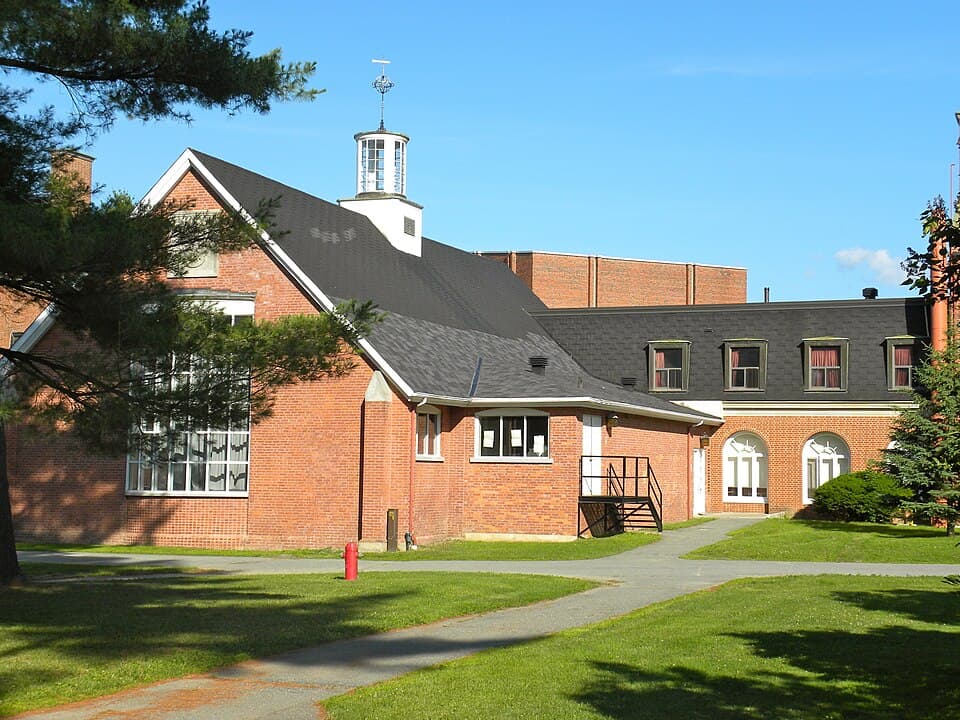

Bishop's University
Sherbrooke, Quebec
Compare Bishop's University programs, admissions, costs, residence, student support, and career pathways in one source-reviewed guide. Jump to the decision section you need below.
The short answer
- Bishop's uses an estimated 80% minimum average for Canadian high-school applicants. This is a guideline, not a guarantee.
- Ontario students need five Grade 12 U/M courses (university or university/college preparation courses), including English 4U.
- Apply direct to Bishop's, not through OUAC (the Ontario Universities' Application Centre). The fee is $75 CAD.
- Fall 2027 deadlines are May 1, 2027 for Canadian and USA citizens, and March 31, 2027 for other international applicants.
- First-year residence is guaranteed if you accept your offer and pay the first $500 deposit by June 15.
Reviewed August 15, 2026 · Official university sources · How we review guides
Save this to your free account
Track Bishop's University with a checklist for how you apply. Free account. Add your dates in the tracker to request reminder emails; unsubscribe any time.
Free account. No card needed.
Overview
Quick Facts
| Location | Sherbrooke, Quebec |
|---|---|
| School Type | Smaller undergraduate-focused environment |
| Directory Size | Small university |
| Campus Setting | Smaller campus or close-knit community setting |
| Ranking Signal | No QS World 2026 position listed in this guide |
| Program Strengths | Business, Education, Arts, Science, Psychology |
Start with campus and program fit. Then check official admissions, residence, and cost details. Do this before you build the final application list.
Admissions Planning
Fall 2027 admissions planning
Bishop's University admission requirements for Ontario students
Bishop's currently uses an estimated 80% minimum admission average for Canadian high-school applicants. Ontario students present five Grade 12 university-preparatory courses, including English 4U. Business and science routes add specific preparation, and Bishop's warns that meeting the guideline does not guarantee admission.
Ontario guideline
80% estimated minimum
A competitive planning threshold, not a guaranteed cut-off or offer.
Ontario course count
Five Grade 12 courses
English 4U, three other 4U courses, and one additional 4U or 4M course.
Application route
Direct to Bishop's
Bishop's is in Quebec and does not use the Ontario OUAC application.
Fall 2027 date status
The Fall 2027 deadlines are published: May 1 Canadian, March 31 international
Bishop's apply page, stamped 3 August 2026, opens the Fall 2027 form and lists the whole sequence. One caution: the separate admission-process page still shows an expired Fall 2026 table, and its own FAQ contradicts the table above it. Plan from the apply page only.
The out-of-province question
No qualifying year: Ontario students enter a 120-credit degree directly
Quebec universities build their degrees around CEGEP, which is why Bishop's three-year figure keeps appearing. It does not apply to you. The 2026/2027 Academic Calendar admits a 12-year-diploma holder to a 120-credit, four-year program, and nowhere in the admission chapter is a qualifying, preparatory, or foundation year mentioned.
Ontario and other out-of-province Canadian high school
120 credits, four years
The 2026/2027 Academic Calendar states admission 'would be to a 120-credit (4-year) program'. There is no qualifying, preparatory, or foundation year.
Quebec CEGEP with a completed DEC
90 credits, three years
A completed DEC (Diplôme d'études collégiales) is 'normally granted 30 credits of advanced standing'. This reduces a 120-credit requirement to 90 credits.
Bachelor of Education, direct entry
150 credits, five years
B.Ed. programs are the published exception at 150 credits, reduced to 120 credits for DEC holders.
Fall 2027 cycle status
Fall 2027 · Published for this period
Published and open. Bishop's apply page is stamped 'Dates and Deadlines (Updated August 3, 2026)'. It states 'We are currently accepting applications for the Winter and Fall 2027 semesters'. It lists the full Fall 2027 undergraduate sequence. The application opens August 2026. Evaluation begins September/October 2026. March 31, 2027 is for international applicants other than USA citizens. April 15, 2027 is for their documents. May 1, 2027 is for Canadian and USA citizens. May 15, 2027 is for their documents.
Applies to: All applicants
Bishop's University: Apply to Bishop's: Fall 2027 and Winter 2027 deadlines (updated August 3, 2026) · Verified August 15, 2026
English-language university, by statute
Current policy · Published for this period
Bishop's own French-language policy says it 'was founded in 1843'. It 'received its Royal Charter in 1853 as an English-language institution'. It is 'designated as an English-language institution under section 194 of Bill 96'. It is 'the only English-language university in Quebec outside of Montreal'. Its 'teaching, research, governance and student life activities are primarily carried out in English'. Section 7.1 says: 'As the University is an English-language educational institution, courses are taught in English'.
Applies to: All applicants
Bishop's University: Policy of the Use and Quality of the French Language · Verified August 15, 2026
Size and academic structure
University-published counts · Published for this period
Bishop's describes itself as 'Founded in 1843, Bishop's is a primarily undergraduate, English-language university with five faculties and over 100 programs'. It is on a 550-acre campus. The campus hosts 'about 2,800 full-time students, many of whom live right on campus'. It has 'a twenty-four to one student to faculty ratio' and 'over 100 programs across twenty-five departments in three faculties and two schools'.
Bishop's own pages do not agree on the details. The prose says 24:1, but the at-a-glance infographic says 23:1. 'Five faculties' and 'three faculties and two schools' describe the same structure in two ways. Treat these as marketing counts, not audited enrolment data.
Applies to: All applicants
Bishop's University: About B.U.: size, faculties, campus, and the Gaiters name · Verified August 15, 2026
Bishop's runs its own application, not OUAC
Current process · Published for this period
Bishop's is in Quebec and uses its own online forms with a non-refundable $75 CAD application fee, separate forms per level and per entry term, and a myBU applicant portal issued within three to five business days. Ontario students are not shut out of OUAC entirely: 'Applicants with an Ontario Universities Application Centre (OUAC) reference number can submit this information in the online application and Bishop's will receive your transcripts directly from OUAC. However, OUAC only begins transmitting transcripts to Bishop's in November.'
Applies to: All applicants
Bishop's University: Apply to Bishop's: Fall 2027 and Winter 2027 deadlines (updated August 3, 2026) · Verified August 15, 2026
Lennoxville, Sherbrooke, and the Eastern Townships
Current campus context · Published for this period
Bishop's describes itself as 'an English-language university located in Lennoxville'. Lennoxville is 'a largely anglophone community within Sherbrooke'. Sherbrooke is 'a predominantly Francophone, mid-sized city rich in culture, history and diversity'. Downtown Sherbrooke is 'just a five-minute drive (and accessible by bus or bike)'. The campus sits on 550 acres between two rivers. The Route Verte bike path runs through campus.
Distance to Montreal is published inconsistently. The directions page says the bus trip and the drive to YUL are 'approximately two hours'. The business-school page says 'only 1,5 hours away from the bustle of Montreal'.
Applies to: All applicants
Bishop's University: Explore the region: Lennoxville, Sherbrooke, and the Townships · Verified August 15, 2026
Ontario requirements by route
| Route | Average guideline | Courses | Planning note |
|---|---|---|---|
| All undergraduate programs | 80% estimated minimum | Five Grade 12 university-preparatory courses: English 4U, three other 4U courses, and one additional 4U or 4M course | Bishop's calls this a competitive guideline; meeting it does not guarantee admission. |
| Business | 80% estimated minimum | General five-course pattern plus any Grade 11 mathematics | Without MHF4U or MCV4U, an additional mathematics course is required in the degree. |
| Bachelor of Science | 80% estimated minimum | General pattern including one Grade 12 mathematics and two of SBI4U, SCH4U, and SPH4U | The required mathematics and sciences must be included among the admission courses. |
| BA Math, Biology, or Computer Science | 80% estimated minimum | General pattern including one approved Grade 12 mathematics | This applies to the science-oriented majors pursued through the BA. |
Current application, funding, and residence dates
| Checkpoint | Date | What it means |
|---|---|---|
| Fall 2027 Canadian and USA application | May 1, 2027 | Published. Supporting documents are due May 15, 2027. Bishop's warns that applicants should check the programs dropdown to see what remains open after May 1. |
| Fall 2027 international application | March 31, 2027 | Published. Supporting documents are due April 15, 2027. USA citizens are carved out and follow the Canadian dates. |
| Fall 2027 Bachelor of Education rounds | December 1, 2026, February 1, 2027, April 1, 2027 | The School of Education runs three separate rounds. Decisions come by December 18, February 19, and April 16 respectively. |
| Winter 2027 international application | September 1, 2026 | Supporting documents are due September 15, 2026. |
| Winter 2027 Canadian application | November 1, 2026 | Supporting documents are due November 15, 2026. |
| Entrance scholarship consideration | Apply by March 1 | Documents are due March 15. Bishop's apply page instead lists March 31, 2027 for both scholarships and the awards-and-bursaries form, so work to the earlier pair. |
| Fall 2027 offer acceptance and deposit | June 1 | Accept in the applicant portal and pay the non-refundable deposit. It is $350 CAD domestic, $1,000 CAD international for Fall 2027 entry. |
| First-year residence guarantee | June 15 | Accept the offer, apply to residence, and pay the first $500 deposit by this standing date for fall entry. |
Application checklist
- 1.Choose the exact degree and intended major before mapping prerequisites.
- 2.Apply directly to Bishop's and pay the current non-refundable $75 CAD fee.
- 3.Send transcripts, identity documents, and any required English evidence by the supporting-document deadline.
- 4.Track admission, scholarship, awards-and-bursaries, residence, and immigration dates separately.
- 5.Treat the 80% figure as a competitive guideline and continue protecting every prerequisite grade.
Current English-test minimums
IELTS Academic
6.5 overall; no component below 6.0
TOEFL
Tests before January 21, 2026: 90 internet-based, no component below 20. Tests on or after that date: 4.5 overall, no score below 4.0
Duolingo English Test
115 overall; no sub-score below 90
PTE Academic
65 overall; no sub-score below 60
Cambridge English
176 overall on B2 First, C1 Advanced, or C2 Proficiency
LanguageCert Academic
70–74 overall; no individual score below 65
Bishop's needs proof from every applicant, no matter your citizenship. But three years of instruction at a recognised secondary school where English or French was the primary language meets this requirement. This covers most Ontario applicants through the transcript alone.
Fall 2027 undergraduate deadlines
Fall 2027 · Published for this period
March 31, 2027 is the application deadline for international students other than USA citizens, with supporting documents due April 15, 2027. May 1, 2027 is the deadline for Canadian and USA citizens, with documents due May 15, 2027. Bishop's adds a footnote for the May 1 group: 'Please check the programs dropdown list on the corresponding form to see what programs remain open for admission consideration after May 1.' Files are assessed on a rolling basis once evaluation opens.
Applies to: Ontario high school, Other Canadian, International
Bishop's University: Apply to Bishop's: Fall 2027 and Winter 2027 deadlines (updated August 3, 2026) · Verified August 15, 2026
Winter 2027 undergraduate deadlines
Winter 2027 · Published for this period
September 1, 2026 is the deadline for international applications. Supporting documents are due September 15, 2026. November 1, 2026 is the deadline for Canadian applications. Supporting documents are due November 15, 2026. The same dates are repeated for graduate and certificate applications on the same page.
Applies to: All applicants
Bishop's University: Apply to Bishop's: Fall 2027 and Winter 2027 deadlines (updated August 3, 2026) · Verified August 15, 2026
The out-of-province 12-year diploma route: no qualifying year
2026/2027 calendar, current rule · Published for this period
Bishop's admits Canadian high school graduates from outside Quebec directly into a full degree with no qualifying, preparatory, or foundation year. The 2026/2027 Academic Calendar states for Canadian high school applicants: 'Admission would be to a 120-credit (4-year) program. (Exception: Bachelor of Education programs are 150-credits (5-years)).' The public page frames the same rule as 'Quebec CEGEP graduates: Complete most degrees in three years (90 credits); Ontario, other Canadian provinces and international students: Typically four years (120 credits).' CEGEP graduates get there by advanced standing: a completed DEC is 'normally granted 30 credits of advanced standing, reducing a 120-credit requirement to 90 credits'.
The words qualifying year, preparatory year, and foundation year appear nowhere in the 2026/2027 admission chapter. Budget four years, not three, and budget five for a B.Ed.
Applies to: Ontario high school, Other Canadian
Bishop's University: Academic Calendar 2026/2027, Admission chapter (PDF) · Verified August 15, 2026
Ontario course pattern
Current requirements · Published for this period
Five Grade 12 university-preparatory courses: 'Grade 12 level English / Three Approved courses / One Approved course OR one Option course', where English means ENG4U, EAE4U, or NBE4U, approved means any 4U course, and the option means any 4M course. Business requires 'Any Grade 11 Level Math' and warns that without Advanced Functions 4U or Calculus and Vectors 4U 'you will be required to do an additional math course as part of your Business degree requirements'. BSc applicants need one Grade 12 math plus two of Biology 4U, Chemistry 4U, and Physics 4U; BA applicants to Math, Biology, or Computer Science need one approved Grade 12 math.
Applies to: Ontario high school
Bishop's University: Canadian high school admission requirements by province · Verified August 15, 2026
Minimum average: two different published numbers
Official-source conflict · Current cycle, both documents live
The admission-requirements page publishes the same line for every province: 'Estimated Minimum Admission Average: All programs: 80%.' The 2026/2027 Academic Calendar publishes a different floor: 'The minimum average normally required for undergraduate admission consideration is 70% (High School), 20 R-Score (CEGEP), or equivalent, as calculated by the Admissions Office. Meeting the minimum average does not guarantee admission to the University.' The CEGEP page separately publishes 25 R-score for Education and 24 R-score for all other programs.
Use the 80% competitive guideline for your plan, not the 70% calendar floor. The framing is different. One number is a competitive estimate. The other is the minimum for consideration. But the numbers really do conflict. Bishop's says meeting the minimum does not guarantee admission either way.
Applies to: Ontario high school, Other Canadian
Bishop's University: Canadian high school admission requirements by province · Verified August 15, 2026
No French requirement to apply, enrol, or graduate
Last updated February 2026 · Published for this period
Bishop's answers this directly: 'Do I need to know French to come and study at Bishop's? No. All students and all languages are welcome on campus.' On graduation: 'Bishop's students do not need to achieve any specific proficiency level by the time they graduate' and 'There will be no exit exam for French proficiency.' The original Quebec mandate that 80% of non-Quebec-resident undergraduates reach level 5 on the Quebec French oral-proficiency scale is gone: 'as of February 2026, Quebec has confirmed that the 33% tuition hike will remain, but the mandatory francization requirement is not returning.'
One narrower obligation survives in the French-language policy: section 7.7 says 'Each department determines the level of proficiency in French required at the end of studies for students domiciled in Quebec.' The per-department levels are not published, and the rule is scoped to Quebec-domiciled students. Ask your department if you intend to settle in Quebec.
Applies to: Ontario high school, Other Canadian, International
Bishop's University: Tuition and language information for Canadian non-Quebec residents (last updated February 2026) · Verified August 15, 2026
English-language evidence applies to everyone
Current requirements · Published for this period
'All applicants must provide proof of English language proficiency regardless of citizenship/immigration status in Canada.' Accepted tests: IELTS Academic 6.5 overall with no component below 6.0; Cambridge English 176 overall on B2 First, C1 Advanced, or C2 Proficient; PTE Academic 65 overall with no sub-score under 60; Duolingo 115 with no sub-score under 90; LanguageCert Academic 70-74 with no individual score below 65. TOEFL is split by date: tests before January 21, 2026 need 90 internet-based with no component below 20; tests on or after that date need 'a minimum overall score of 4.5 with no score below 4.0'.
Ontario applicants are normally exempt through the study route. This means three years of instruction at a recognized secondary school. English or French must be the primary language of instruction there. Your high school transcript proves this. CAEL is not on Bishop's accepted list.
Applies to: All applicants
Bishop's University: Providing proof of English language proficiency · Verified August 15, 2026
Bachelor of Education runs on its own rounds
Fall 2027 · Published for this period
'Applications to the School of Education's Bachelor of Education programs are subject to different timelines and deadlines than the ones listed above.' The Fall 2027 B.Ed. cycle runs in three rounds: Round One closes December 1, 2026 with decisions by December 18, 2026 and confirmation by January 31, 2027; Round Two closes February 1, 2027 with decisions by February 19, 2027 and confirmation by March 31, 2027; Round Three closes April 1, 2027 with decisions by April 16, 2027 and confirmation by June 1, 2027. 'Programs with capacity will remain open for consideration past April 1st and be evaluated on an individual basis.'
Applies to: Ontario high school, Other Canadian, International
Bishop's University: Undergraduate applications to the School of Education · Verified August 15, 2026
Offer acceptance and the Fall 2027 deposit change
Fall 2027 · Published for this period
You must accept offers by June 1 for September entry. For January entry, accept by December 1. Do this through the applicant portal. For Fall 2027, the tuition deposit is $350 CAD for domestic applicants. It is $1,000 CAD for international applicants. This deposit is non-refundable. Bishop's notes that 'All Fall 2026 and Winter 2027 applicants pay a $350 CAD tuition deposit'. So the higher international figure is new for the Fall 2027 cycle. Conditional offers require final official transcripts by September 15 for Fall entry. Ontario applicants who supplied an OUAC reference number do not need to send their own final transcript.
Applies to: All applicants
Bishop's University: Newly admitted students: offer acceptance, deposits, residence guarantee, and key dates · Verified August 15, 2026
One Bishop's page still publishes expired dates
Official-source conflict · Expired Fall 2026 cycle
The admission-process page has its own stamp. It says 'Application Deadlines (Updated February 27th, 2026)'. It still shows only a Fall 2026 and Winter 2026 table. For Quebec, Canadian, and U.S. students, the dates are May 1, 2026 and November 1, 2025. For international students, they are March 31, 2026 and September 1, 2025. Every one of those dates has passed. Its FAQ block also says the international Fall deadline is March 1. That contradicts the March 31 figure in the table directly above it.
Use the apply page, which is dated August 3, 2026 and carries the Fall 2027 dates. Do not plan from the admission-process table.
Applies to: All applicants
Bishop's University: Admission process, degree length, and application fee · Verified August 15, 2026
Mature, college, and university transfer routes
Current requirements · Published for this period
Mature entry requires you to be 21 by September 1 for fall entry. You must have been out of full-time CEGEP, high school, or college study for at least two academic years. If your previous study was at university, the gap must be five academic years. Applicants submit a CV and a letter of intent. College and university transfer applications are 'evaluated on an individual basis'. They normally require good academic standing in the most recent semester. Second-degree applicants are admitted to 'a minimum one-year, 30-credit program plus any additional credits required to complete the selected program'. At least 50% of major requirements must be completed at Bishop's.
Transfer and mature applicants, plus anyone pursuing a second undergraduate degree, are explicitly not eligible for Bishop's entrance scholarships.
Applies to: Transfer, Mature
Bishop's University: Academic Calendar 2026/2027, Admission chapter (PDF) · Verified August 15, 2026
Application Checklist
| Academic Requirements | Verify prerequisite courses, minimum averages, and program-specific requirements on the official admissions pages. |
|---|---|
| Supplementary Review | Competitive programs may ask for essays, portfolios, interviews, experience profiles, or timed video responses. |
| International Applicants | Plan transcript evaluation, English-language proof if required, study permit timing, and proof-of-funds documentation. |
| Deadlines | Confirm application, document, scholarship, residence, and portfolio deadlines every cycle before submitting. |
| Stellar Coaching Use | Bring your target program, transcript, activities, and draft responses to a coaching session. This is for school-specific planning. |
Programs and Pathways
Bishop's University programs and degree pathways
Bishop's is an English-language university in Sherbrooke's Lennoxville borough. It uses a liberal-education model. The practical choice is not only a subject. Compare the degree and major. Compare the concentration and minor. Also compare the honours option and prerequisites. Compare the experiential-learning route too.
Williams School of Business
You can choose a 120-credit BBA with seven concentrations. Or you can choose a flexible 120-credit BA Major Business. Joint programs and business minors can combine disciplines.
Accounting, Business Technology and Analytics, Entrepreneurship, Finance, Human Resources, Management, and Marketing are the current BBA concentrations.
Humanities and Social Sciences
The liberal-education structure supports majors and minors across Arts disciplines. There is room to combine interests.
Compare the exact degree, major, honours, minor, and course-sequencing rules in the current Academic Calendar.
Natural Sciences and Mathematics
Science routes include Biology, Chemistry, Computer Science, Mathematics, Physics, and related interdisciplinary study.
Ontario BSc applicants must plan the specific Grade 12 mathematics and two senior sciences before applying.
School of Education
Bishop's offers undergraduate Education study alongside graduate Education routes.
Check the exact degree structure. Check the teachable-subject requirements. Do not assume every Education route is direct entry.
Three faculties and two schools
Current structure · Published for this period
The undergraduate structure is the Faculty of Humanities. It is also the Faculty of Natural Sciences and Mathematics. It also includes the Faculty of Social Sciences. It also includes the Williams School of Business. It also includes the School of Education. Humanities covers Art History, Arts Administration, and Classical Studies. It also covers Drama, English, Etudes francaises et quebecoises, and Fine Arts. It also covers History and Global Studies, Liberal Arts, and Modern Languages. It also covers Music, Musical Theatre, and Philosophy. It also covers a Pre-Law Program and Religion, Society and Culture. Natural Sciences and Mathematics covers Biology and Biochemistry, Chemistry, and Computer Science. It also covers Mathematics, Pre-Medicine, and Physics and Astronomy. Social Sciences covers Economics and Environment, Agriculture and Geography. It also covers Politics and International Studies, Psychology, Sociology, and Sports Studies.
There is no separate Fine Arts faculty. Music, Drama, Art History, and Fine Arts all sit inside Humanities.
Applies to: All applicants
Bishop's University: A-Z listing of academic programs · Verified August 15, 2026
Williams School of Business: the BBA
Current program · Published for this period
The BBA is a 120-credit degree. It has seven concentrations: Accounting, Business Technology and Analytics, Entrepreneurship, Finance, Human Resources, Management, and Marketing. Accounting is 42 core plus 39 required plus 3 optional plus 36 elective credits. The other six are 42 core plus 21 required plus 21 optional plus 36 elective. Published admission guidance for business is 'a minimum R score of 24 from CEGEP and 80% from high school'.
The only accreditation Bishop's publishes for the school is the Network of International Business Schools (NIBS), plus Quebec CPA accreditation of the Accounting concentration. No AACSB or EQUIS claim appears anywhere on the Williams pages, so do not assume one.
Applies to: All applicants
Bishop's University: Williams School of Business courses and programs · Verified August 15, 2026
BA Major Business as the flexible alternative
Current program · Published for this period
The B.A. Major Business has three components. They total 120 credits. The components are Core curriculum (42 credits), Optional courses (18 credits), and Electives (60 credits). At least 42 credits must be from Non-Business courses. Bishop's positions it as the route where the program structure allows for a second major or two minors. Seven minors are open to business and non-business students. The Minor in Business Administration is restricted to non-business students.
The page says 'six minors' in prose but lists seven. Confirm the current list with an academic adviser before building a plan around a specific minor.
Applies to: All applicants
Bishop's University: Williams School of Business courses and programs · Verified August 15, 2026
Four direct-entry Bachelor of Education routes
Current programs · Published for this period
Bishop's publishes B.Ed. in Teaching and Learning at the Elementary Level. It publishes B.Ed. in Teaching and Learning at the Secondary Level, with specializations in English, Mathematics, Science and Technology, or Social Sciences. It publishes B.Ed. in Teaching and Learning of the Creative Arts, with concentrations in Drama, Fine Arts, or Music. It publishes B.Ed. in Teaching English as a Second Language, plus minor programs in Education. Student teachers complete more than 700 hours of practice teaching, beginning in first year. The degree is required in order to be eligible for a teaching permit or brevet d'enseignement in Quebec.
These are direct-entry degrees. They are not consecutive after-degree routes. The calendar prices them at 150 credits over five years for 12-year-diploma entrants. The Quebec brevet is a Quebec credential. Check your home province's certification transfer rules separately.
Applies to: All applicants
Bishop's University: School of Education undergraduate routes and practicum · Verified August 15, 2026
Musical Theatre: a stated provincial first
Current program · Published for this period
Bishop's University says it is proud to offer the only English language Musical Theatre concentration in the province of Quebec. The concentration totals 30 credits. Bishop's says, We produce a new musical every year and play to full houses in our Centennial Theatre or Turner Studio. Music routes require an audition and letter of musical background. These routes include the Musical Theatre concentration and the B.Ed. Creative Arts music route.
Applies to: All applicants
Bishop's University: Musical Theatre concentration · Verified August 15, 2026
The Universite de Sherbrooke science partnership
Current partnership · Published for this period
Bishop's runs the Interuniversity Partnership for Undergraduate Science Programs with Universite de Sherbrooke. It has run since 2012. Bishop's undergraduates with an average score of 75 percent and more get the same advantages as Universite de Sherbrooke undergraduate students. This applies when they apply at the Faculty of Medicine and Health Sciences. They are eligible for paid summer research training. They can accelerate a master's-to-PhD transition.
This is a published advantage in the application process, not a guaranteed medical-school seat. Sherbrooke's medicine programs are taught in French.
Applies to: All applicants
Bishop's University: Interuniversity Partnership for Undergraduate Science Programs · Verified August 15, 2026
Programs Bishop's does not offer
Current program listing · Published for this period
There is no Nursing program. The A-Z listing of academic programs contains no nursing entry. None of the admission-requirement pages reference a nursing route. Engineering, Law, and Medicine are likewise absent as undergraduate degrees. Bishop's publishes a Pre-Law Program and a Pre-Medicine Program. These are preparation streams, not professional degrees.
Applies to: All applicants
Bishop's University: A-Z listing of academic programs · Verified August 15, 2026
Official Bishop's program sources
Residence and Campus Fit
Bishop's University residence and meal-plan planning
If you are an incoming first-year student, you get a residence-place guarantee. You must accept your offer and submit the application with the first $500 deposit by June 15 for fall entry. The guarantee is for a place, not a preferred building or room. Allocation is first come, first served.
Guarantee checkpoint
June 15
Meet the standing application and first-deposit date for fall entry.
First deposit
$500
An accepted admission offer is required before the residence application.
Meal plan
Mandatory except Paterson
Paterson suites have their own kitchens; every other hall requires a plan.
Published 2026–27 room fees
Leases run eight months. Every rate includes high-speed internet, electricity, furnishings, services, and incidental fees at $70 per month.
| Hall and room type | Monthly | Eight-month total |
|---|---|---|
| Janyne Hodder (single) | $925 | $7,400 |
| Paterson suite (single) | $875 | $7,000 |
| Abbott, Kuehner, Munster (apartment) | $875 | $7,000 |
| Abbott, Kuehner, Munster (single) | $863 | $6,904 |
| Abbott, Kuehner, Munster (double, style 2) | $805 | $6,440 |
| Abbott, Kuehner, Munster (double, style 1) | $766 | $6,128 |
| Mackinnon, Pollack, Bandeen (single in a double room) | $685 | $5,480 |
| Mackinnon, Pollack, Bandeen (single) | $670 | $5,360 |
| Mackinnon, Pollack, Bandeen (double) | $625 | $5,000 |
2026–27 meal plans
Flexible Diner
$6,832
2 guest meal passes; $25 per semester in retail and Co-op credit.
Square Mealer
$6,944
4 guest meal passes; adds $56 per semester at campus venues.
Hearty Eater
$7,000
8 guest meal passes; adds $91 per semester at campus venues.
All three are seven-day, all-you-care-to-eat plans at Dewhurst Dining Hall, open 7:30 a.m. to 9:00 p.m. daily. Note the mismatch on Bishop's own site: the tuition page still estimates housing at about $5,900 and meals at about $6,532 from 2025–26 figures, and publishes its grand totals as “TBD”. Budget from the rates above instead, roughly $11,832 at the low end and $14,400 at the high end.
First-year residence guarantee
Standing rule for fall entry · Published for this period
'as long as the application deadline is met, we will guarantee all first-year students a spot in residence. Residence rooms are allocated on a first-come, first-served basis. You must submit an application with your first deposit of $500 before June 15th for a fall (September) semester entry. In order to submit an application to residence, you must have received and accepted your offer of admission to Bishop's University.' The 2026 key-date list sets September 4 as Residence Move-In Day.
The guarantee is for a place, not a building or room type. The residence application itself runs on an external StarRez portal, not on ubishops.ca.
Applies to: All applicants
Bishop's University: Newly admitted students: offer acceptance, deposits, residence guarantee, and key dates · Verified August 15, 2026
Room fees 2026-2027 by building
2026-2027 · Latest published information; newer cycle not yet confirmed
Published 2026-2027 room fees, monthly and eight-month total: Janyne Hodder single $925 / $7,400; Paterson single $875 / $7,000; Abbott, Kuehner, Munster apartment $875 / $7,000; Abbott, Kuehner, Munster single $863 / $6,904; Abbott, Kuehner, Munster double style 2 $805 / $6,440; Abbott, Kuehner, Munster double style 1 $766 / $6,128; Mackinnon, Pollack, Bandeen single-in-a-double $685 / $5,480; Mackinnon, Pollack, Bandeen single $670 / $5,360; Mackinnon, Pollack, Bandeen double $625 / $5,000. 'Leases are for the academic school year (8 months)' and 'All rooms include high-speed internet, electricity, furnishing, services, and incidental fees at $70/month.'
Applies to: All applicants
Bishop's University: Campus living and dining fees, room fees 2026-2027 · Verified August 15, 2026
Seven halls and three room styles
Current buildings · Published for this period
'You get to pick from 7 different buildings' across three styles. Bog-style means 'Your very own space with a shared bathroom for you and your bogmate'. It covers Kuehner, Abbott, and Munster. Munster has 24/7 quiet hours. Traditional means 'A room to yourself or shared with one other person'. It covers Mackinnon, which 'houses approximately 115 residents', plus Bandeen and Pollack. Bandeen and Pollack are closest to downtown Lennoxville. Suite style is Paterson only. Paterson is 'the only building to offer suite-style accommodation'. Each suite has four bedrooms, a kitchen, a common area, and two bathrooms. Janyne Hodder, completed in 2023, is the newest hall.
Bishop's describes Janyne Hodder as 'traditional style' on the halls index but 'modeled after our bog style residences' on the building's own page. Gender composition of the halls is not published.
Applies to: All applicants
Bishop's University: Campus living halls · Verified August 15, 2026
Meal plans are mandatory except in Paterson
2026-2027 · Latest published information; newer cycle not yet confirmed
'Dining plans are mandatory for students living in residence.' Paterson is the exception, because it includes a shared kitchen. All three 2026-2027 plans are '7 days a week all-you-care-to-eat'. Flexible Diner costs $854 per month, $3,416 per semester, and $6,832 for the year. It has 2 guest passes. Square Mealer costs $868, $3,472, and $6,944. It has 4 guest passes and $56 per semester at campus dining venues. Hearty Eater costs $875, $3,500, and $7,000. It has 8 guest passes and $91 per semester at campus dining venues. All three include a $9.50 late-night credit at The Purple Pod Monday to Thursday. All three also include $25 per semester in retail or Co-op credit. Continuous dining runs 7:30 a.m. to 9:00 p.m. seven days a week at Dewhurst Dining Hall.
Bishop's marks the whole table 'All prices listed are subject to change'. Money attached to a mandatory plan expires at the end of the academic year.
Applies to: All applicants
Bishop's University: Campus living and dining fees, room fees 2026-2027 · Verified August 15, 2026
The tuition page housing estimates contradict the housing page
Official-source conflict · 2026-2027
The cost-of-attendance table on the tuition page lists accommodation at 'Approx. $5,900.00'. It lists meals at 'Approx. $6,532.00'. These are flagged as 'estimated based on 2025-2026 rates and are subject to change'. A second footnote on the same table says the fees are 'estimated based on actual costs for the 2026-2027 academic year'. Neither figure matches any published 2026-2027 rate. The cheapest room is $5,000. The cheapest meal plan is $6,832. The estimated-total row for every residency category is published as 'TBD'.
Budget from the campus living and dining fees page, which carries real 2026-2027 rates, not from the tuition page estimate. A realistic 2026-2027 room-plus-board floor is roughly $11,832 and the ceiling is roughly $14,400.
Applies to: All applicants
Bishop's University: Tuition and fees for the 2026-2027 academic year · Verified August 15, 2026
Fall 2027 residence and dining rates
2027 pending · Fall 2027
Not yet published. The live fee table is headed 'Room Fees 2026-2027' and the meal-plan table 'Students Living on Campus (2026-2027)'. A separate block is explicitly stale: 'Dine Anytime at Dewies (2025-2026, rates for 2026-2027 will be updated shortly)'.
Budget with the labelled 2026-2027 rates and recheck the campus living and dining fees page before treating any figure as a Fall 2027 quote.
Applies to: All applicants
Bishop's University: Campus living and dining fees, room fees 2026-2027 · Verified August 15, 2026
The Gaiters
2024-25 results, 2026 conference change · Latest published information; newer cycle not yet confirmed
'Bishop's supports 326 varsity student-athletes across nine men's and women's teams.' In 2024-25 'our football team captured the Loney Bowl Championship, both basketball teams claimed RSEQ titles, and women's hockey earned the ultimate distinction as U SPORTS National Champions', and '141 student-athletes achieved Academic All-Canadian status, maintaining an average of 80% or higher'. Football, 'after having competed in Atlantic University Sport (AUS) for eight seasons, its football program will transition back to the Reseau du sport etudiant du Quebec (RSEQ) for the 2026 season'. Venues include Coulter Field, the Mitchell Gym, and the Jane and Eric Molson Arena.
Bishop's recruitment page says 'way more than 10 varsity teams'. But the athletics campaign says nine. The full sport-by-sport roster is not published on ubishops.ca. The university has a standing Special Advisory Committee on Athletics Operations Sustainability. So confirm your sport is still funded before committing.
Applies to: All applicants
Bishop's University: The campaign for Bishop's athletics: Gaiters teams and results · Verified August 15, 2026
Student union and clubs
Official-source conflict · Current campus life
'The Bishop's University Students' Representative Council (SRC), is a non-profit student-run organization whose mandate is to represent and amplify the voices of students, not only at the university, but also at the provincial and national level.' The B.U. Experience page says 'We have over 100 clubs at Bishop's! And if you don't see what you're looking for you can start your own club', while the at-a-glance figures say 'there are 21 social and academic clubs'. The SRC also runs The Campus, a bi-weekly student newspaper, and Gaiter Gears, a free bike loan started in 2015.
The 100-versus-21 gap is unresolved on Bishop's own site. Confirm a specific club is currently active before planning around it.
Applies to: All applicants
Bishop's University: The B.U. experience: SRC, clubs, and campus traditions · Verified August 15, 2026
Traditions on a small residential campus
Current campus life · Published for this period
Orientation Week 'is meant to get first-year students situated in their new purple bubble' with the advice 'Be sure to pack as much purple as you can'. Homecoming runs 'five varsity games over three days' followed by a pancake breakfast at the Griffin House. Winterfest has students 'in their retro snow suits (ideally purple)' watching a Rail Jam competition on a ramp built in the quad, followed by an outdoor concert. Residence adds a House Cup competition between buildings. The Gaiters name dates to a 1947 naming competition and refers to ecclesiastical leg coverings worn by bishops.
Applies to: All applicants
Bishop's University: The B.U. experience: SRC, clubs, and campus traditions · Verified August 15, 2026
Living English inside francophone Quebec
Current campus context · Published for this period
Bishop's is an English-language campus in a bilingual town inside a francophone city, and it does not hide the mix: 33% of the student population is francophone, and Bishop's says students 'will be provided with ample opportunities to learn French and deepen their knowledge of Quebec culture if they so choose'. It runs a campus-wide OUI Experience initiative aimed at 'our non-francophone student population', a French placement test, and French-language help centres. Its own FAQ on campus jobs warns that 'depending on the work you want to do, you may be required to speak and understand basic French'.
You can complete a Bishop's degree in English without French. Off campus, in Sherbrooke, and in the part-time job market, French is a practical asset rather than an academic requirement.
Applies to: Ontario high school, Other Canadian, International
Bishop's University: Policy of the Use and Quality of the French Language · Verified August 15, 2026
Transit, cycling, and getting to Montreal
Latest published pass year · Latest published information; newer cycle not yet confirmed
'Societe de transport de Sherbrooke (STS) bus line 11 and bus line 2 both stop on campus'. Tickets are sold at Doolittle's Co-op. Bishop's subsidises 100 monthly bus passes per term. A student aged 21 or under pays $34 against a $68.50 full value. A student 22 or older pays $34 against a $90 full value. Students get 20% off the Montreal-Sherbrooke Limocar line. This cuts a one-way fare from $59.10 to $47.28 and a return from $106.37 to $85.10. Bishop's is a VeloSympathique certified campus. Route verte 1 connects it to downtown Sherbrooke. A secure bike shelter costs $30 per semester.
The subsidised-pass allocation is published for Fall 2025 and Winter 2026 and is capped at 100 passes, so it is not guaranteed. Via Rail does not serve Sherbrooke and its airport has no commercial service.
Applies to: All applicants
Bishop's University: Sustainable transportation: STS bus routes, passes, and Limocar · Verified August 15, 2026
Official Bishop's residence sources
Housing and Location Questions
| Campus Setting | Smaller campus or close-knit community setting |
|---|---|
| Residence | Check the residence guarantee rules. Check first-year room styles. Check meal plans. Check deposit deadlines. Check off-campus housing pressure. |
| City Fit | Students should compare transit, weather, cost of living, safety, and community feel in Sherbrooke. |
| Commuting | If you live off campus, map your commute time to classes. Map it to labs, placements and evening activities. Do this before you commit. |
Tuition, Scholarships, and Aid
Bishop's University tuition and entrance funding
The figures below are Bishop's published 2026–27 rates for 30 credits over fall and winter. Housing and meals are separate. Residency documentation decides your tuition category. For Ontario applicants, the main point is this: Quebec's 33% out-of-province increase for English-language study does not apply here. Bishop's holds a standing exemption. The school says out-of-province students keep it for the duration of their degree, beyond normal indexation.
| Student status | Tuition | Compulsory fees | Tuition + fees |
|---|---|---|---|
| Quebec resident | $3,117.60 | $1,913.85 | $5,031.45 |
| Other Canadian | $9,730.50 | $1,913.85 | $11,644.35 |
| International | $29,510.43 | $1,913.85 | $31,424.28 |
Competitive scholarships
$1,000–$4,000 yearly
Apply for admission by March 1 and complete the admission file by March 15.
Awards and bursaries
$500–$12,000
The separate entering-student application is due March 1.
Goldbloom scholarship
$10,000 per year
It is renewable. It needs a 90% Grade 11 average or a CEGEP R-score of 33. It also needs a separate application.
The 2026-2027 Quebec residency tuition ladder
2026-2027 · Latest published information; newer cycle not yet confirmed
For 30 credits over Fall and Winter, Bishop's publishes these amounts. Quebec Resident: $103.92 per credit, $3,117.60 tuition, $1,913.85 compulsory fees, $5,031.45 total. Out-of-Province Canadian: $324.35 per credit, $9,730.50 tuition, $1,913.85 compulsory fees, $11,644.35 total. International undergraduate Cohort 2026: $983.68 per credit, $29,510.43 tuition, $1,913.85 compulsory fees, $32,221.28 total. So an out-of-province Canadian pays about 3.1 times Quebec-resident tuition. An international student pays about 9.5 times.
The international total is $797.03 higher than tuition plus compulsory fees because the Academic Calendar worked example folds in the 'International Health insurance fee of $797 per year'. The web table does not say so.
Applies to: Ontario high school, Other Canadian, International, Transfer, Mature
Bishop's University: Tuition and fees for the 2026-2027 academic year · Verified August 15, 2026
Bishop's is exempt from the Quebec out-of-province tuition hike
Last updated February 2026 · Published for this period
'In October 2023, Quebec announced that tuition for out-of-province Canadian students studying in English would rise by 33%, pushing the cost to about $12,000... Bishop's was granted an exemption from the tuition hike at the time.' As of February 2026: 'That exemption remains in place, and therefore there is no tuition increase for Canadian non-Quebec residents wanting to study at Bishop's University.' The protection is multi-year: 'Out of province students will receive an exemption on tuition increases (other than normal annual indexation) for the duration of their degree.' Bishop's reason: 'The Quebec government recognized that Bishop's University is not a threat to the French language or culture in the Eastern Townships.'
Bishop's summarises the effective out-of-province rate as 'roughly $9,000 for the upcoming academic year' and adds 'Tuition rates are typically finalized in May'. The live 2026-2027 table says $9,730.50, so use the table, not the round number.
Applies to: Ontario high school, Other Canadian
Bishop's University: Tuition and language information for Canadian non-Quebec residents (last updated February 2026) · Verified August 15, 2026
How Quebec resident status is determined and proved
Current rule · Published for this period
Students who were born in Quebec automatically qualify as Quebec residents. A student born in Canada but outside Quebec may qualify as Quebec Residency. They must meet the Quebec government criteria. If you are eligible for Quebec tuition and were not born in Quebec, you will be required to provide supporting documents. You must provide them within the semester you are eligible. Bishop's supplies two forms. They are an Attestation of Quebec resident status and an Affidavit. The attestation notes that the rules are set by the Quebec higher-education ministry. It notes that institutions apply them. It notes that students must provide documents 'before the end of the current semester'.
An Ontario student who moves to Sherbrooke for school does not become a Quebec resident for tuition. Bishop's warns that 'Delays in submitting documents may result in higher fees that cannot be retroactively corrected'. The ministry attestation says fees are reimbursed if status is confirmed within the semester. Submit early rather than testing which statement wins.
Applies to: Other Canadian, Transfer, Mature
Bishop's University: Quebec provincial residency for tuition purposes · Verified August 15, 2026
International cohort rate lock and health insurance
2026-2027 · Latest published information; newer cycle not yet confirmed
International students admitted in previous academic years are subject to cohort-based tuition rates. In those rates, tuition increases are limited annually. This applies if the student maintains continuous enrolment. It also applies if the student does not change their degree program. Compulsory fees are excluded from the lock. They 'are subject to annual increases like those applied to all students'. Health insurance is billed on top. It costs '$443 in Fall, $358 in Winter ($530 for new students in Winter) and $327 during summer for the students who start in Spring'. A waiver is available to students not living in Canada for the semester. France, Denmark, Sweden, Norway, Finland, Luxembourg, and Portugal have reciprocal Quebec medical coverage.
The semester figures total $801 while the Academic Calendar prices the same coverage at $797 for twelve months. Treat either as an approximate $800 annual line item.
Applies to: International
Bishop's University: Tuition and fees for the 2026-2027 academic year · Verified August 15, 2026
France and francophone-Belgium tuition exemptions
2026-2027 · Published for this period
'Eligible students who are French citizens benefit from reduced tuition rates when studying in Quebec. Undergraduate degree and certificate programs: French citizens pay the Canadian tuition rate. Graduate degree and certificate programs: French citizens pay the Quebec tuition rate.' The same two-tier treatment applies to 'Members of the Francophone Community of Belgium'. French citizens must supply a French passport or national identity card. They must also supply a study permit and CAQ. Belgians must add a membership card of the Francophone Community of Belgium. Dual nationals who do not submit the French passport pay 'regular international tuition rates'.
For an undergraduate, the French or Belgian exemption lands at the out-of-province Canadian rate of $9,730.50. It does not land at the Quebec rate.
Applies to: International
Bishop's University: Tuition and fees for the 2026-2027 academic year · Verified August 15, 2026
Competitive scholarships, awards, and bursaries
Current cycle · Latest published information; newer cycle not yet confirmed
'Our scholarships range in value from $1,000-$4,000 per academic year. Some are renewable for your entire time at Bishop's (renewal conditions apply), while others are one time awards.' Competitive admission scholarships need no separate form. Entrance awards and bursaries 'range from $500-$12,000 per academic year'. They are mostly one-time and non-renewable. They require a separate online application. They may weigh leadership, extracurriculars, and financial need. Bishop's says roughly 55% of the student body receives assistance ranging from $500 to $12,000. This is funded from more than $7 million in endowed support.
The fees-and-funding landing page gives a different pair of numbers, roughly 62% of students and a $500 to $20,000 range. Transfer, mature, and second-degree applicants are not eligible for entrance scholarships at all.
Applies to: Ontario high school, Other Canadian, International
Bishop's University: Scholarships, awards, and bursaries · Verified August 15, 2026
Michael Goldbloom Excellence Scholarship
2026 entry, latest available · Latest published information; newer cycle not yet confirmed
It is valued at $10,000 per year and is renewable. It is for Canadian citizens and permanent residents in their final year of high school or CEGEP. They need 'a minimum cumulative admissions average in their Grade 11 year of 90% or a cumulative CEGEP R-Score of 33'. It needs a separate application with two referees, a 500-word essay, and a video of no more than two minutes. Renewal requires full-time status, 'a cumulative average of 85% in the best 24 credits over the last academic year', and fewer than 120 completed credits. It lasts for up to three further years from high school. Bishop's states it 'cannot be awarded in conjunction with other Bishop's University scholarships'.
The page still shows the 2026 cycle dates, a March 1, 2026 deadline and April 13, 2026 notification. The Fall 2027 equivalents were not published when verified. The legacy Chancellor's Excellence Scholarship URL now redirects here, so that award no longer exists separately.
Applies to: Ontario high school, Other Canadian
Bishop's University: Michael Goldbloom Excellence Scholarships · Verified August 15, 2026
Two published scholarship deadlines for the same cycle
Official-source conflict · Fall 2027
The apply page was updated August 3, 2026. It puts both funding deadlines on March 31, 2027. One is 'Deadline for all applicants to apply and be considered Competitive Entrance Scholarships'. The other is 'Deadline for all applicants to submit an Entrance Awards and Bursaries application'. The scholarships page and the future-student FAQ both publish the older pattern instead. Under that pattern, you apply for admission by March 1. You submit supporting documents by March 15. The entrance awards and bursaries form is also due March 1.
Work to March 1 and have every document in by March 15. That satisfies both readings; the March 31 date only helps if the older pages are the stale ones, which Bishop's has not confirmed.
Applies to: All applicants
Bishop's University: Scholarships, awards, and bursaries · Verified August 15, 2026
OSAP is fully portable to Bishop's
Current rules · Published for this period
The Ontario Student Assistance Program (OSAP) offers loans and grants. They help cover the cost of post-secondary education. Funding is fully portable to Bishop's University. Bishop's OSAP institution code is FUAA. For OSAP purposes, full-time load is 15 credits per semester at 100%. A load of 12 credits counts as 80%. Students with OSAP-recognised disabilities are considered full-time at 6 credits. The OSAP portal may indicate that students should contact their institution. This does not apply to Bishop's students. All changes must be handled through OSAP directly.
Students from other provinces apply through their own ministry. Bishop's says you must submit your application early Spring or Summer. That makes sure your file is ready for the Fall term. Quebec's Perspective Scholarship is worth $2,500 per full-time semester. It is being phased out. It is closed to students who started an eligible program in Spring 2025 or later.
Applies to: Ontario high school, Transfer, Mature
Bishop's University: Ontario Government Student Aid (OSAP) at Bishop's · Verified August 15, 2026
2027-2028 tuition status
2027 pending · 2027-2028
Not yet published. The live page is labelled 'for the 2026-2027 academic year' and the Academic Calendar fee chapter carries the same cycle; no 2027-2028 fee chapter exists. Bishop's states on its out-of-province page that 'Tuition rates are typically finalized in May'.
Budget with the labelled 2026-2027 ladder. Recheck the tuition and fees page after May 2027. Do this before treating any figure as a Fall 2027 quote.
Applies to: All applicants
Bishop's University: Tuition and fees for the 2026-2027 academic year · Verified August 15, 2026
What the $1,913.85 in compulsory fees actually buys
2026-2027 · Latest published information; newer cycle not yet confirmed
The Academic Calendar itemises the per-semester charge: registration $5.35 per credit and administration $3.35 per credit to a 15-credit maximum, student services $36.82 per credit to the same maximum, a Sports Centre access fee of $54.37, copyright $1.01 per credit, technology $1.73 per credit, and a $178.72 student fee covering the SRC activity fee, the Quad yearbook, an environmental levy, an infrastructure contribution, the campus newspaper, refugee sponsorship, a library contribution, the Quebec Students Union, and a student safety fee. New students also pay an SRC orientation fee of $126.86.
The Sports Centre fee is not charged to students taking all their courses online.
Applies to: All applicants
Bishop's University: Academic Calendar 2026/2027, Fees chapter (PDF) · Verified August 15, 2026
Cost Planning
| Tuition | Tuition depends on your program, your student status, and the year. Check domestic and international tuition on the official fee schedule. |
|---|---|
| Scholarships | Check automatic entrance awards, competitive major awards, faculty scholarships, and international-student awards. |
| Living Costs | Budget for residence or rent, food, books, and transit. Also budget for health insurance, winter clothing, and emergency funds. |
| Proof of Funds | International students should confirm current study-permit financial requirements and school-specific cost estimates. |
Student Life and Support
Fit Signals
| Community | This is a small university. Compare the class feel, access to professors, student clubs, and how easy it is to build community. |
|---|---|
| Student Supports | Review academic advising, accessibility services, mental health supports, international student services, and writing centres. |
| Clubs and Leadership | Look for discipline clubs, cultural groups, entrepreneurship programs, varsity/intramural sports, and volunteering. |
| First-Year Transition | Ask how orientation, peer mentorship, residence programming, and advising help students settle in. |
Co-op, Research, and Career Outcomes
Bishop's University co-op and experiential learning
Bishop's offers registered co-op in specified Business, Information Technology, and Computer Science routes. It also embeds internships, live cases, community projects, and other work-integrated learning across programs. Applicants should compare the exact opportunity attached to their degree. They should not assume one campus-wide model.
Eligible degree areas
Co-op registration is limited to the BBA concentrations, BA Major Business, BA Information Technology, and BSc Computer Science. The program has run since 2001.
Entry bar
You need at least 15 credits completed before the placement. You need BMG 191 finished in a previous semester. You need a cumulative average of at least 70% on application.
Work-term structure
Paid terms of 12 to 16 weeks with a minimum of 420 hours, registered as BMG 391, 392, and 393 or CSC 391, 392, and 393. CEGEP entrants need two placements; everyone else needs three.
What it costs
Each placement is a 3-credit course charged at your normal tuition and compulsory-fee rate. Bishop's states there are no additional co-op fees.
Broader experiential learning
Outside those four degrees, the published routes are internships, the Tomlinson Internship Program, community projects, undergraduate research, and exchange. They are not registered co-op.
Who can join co-op
Current program · Published for this period
Admission into the Co-op Program is limited to these degree students. They are Bachelor of Business Administration (BBA). Also Bachelor of Arts (BA), Major Business. Also Bachelor of Arts (BA), Major in Information Technology. Also Bachelor of Science (BSc), Major in Computer Science. Applicants must 'have completed at least 15 credits by the end of the semester previous to your internship'. They must have completed BMG 191. They must 'have a cumulative average of at least 70% upon application to the Program'. The program has run 'Since its conception in 2001'.
Co-op is not campus-wide. If you are applying to Humanities, Social Sciences, Education, or a science other than Computer Science, the published route is internships and experiential learning, not registered co-op.
Applies to: All applicants
Bishop's University: Future co-op students: eligibility and work-term structure · Verified August 15, 2026
Work-term structure and course codes
Current program · Published for this period
BMG 191, 'a one credit lab course' in Fundamentals of Workplace Preparation and Professional Development, is the prerequisite for every placement course. Business students then register BMG 391, 392, and 393; Computer Science and Information Technology students register CSC 391, 392, and 393. Work terms run '12 to 16 weeks with a minimum of 420 total hours', with part-time arrangements of 15 to 20 hours per week accepted provided the 420-hour minimum is met. CEGEP-entry students need two placements for the transcript designation and everyone else needs three. Terms are paid and each carries 3 credits that count toward the 120-credit degree.
Applies to: All applicants
Bishop's University: Co-op registration and tuition · Verified August 15, 2026
Co-op costs regular course tuition, not a co-op fee
Current program · Published for this period
'Co-op placement courses at Bishop's University are 3-credit courses. As such, Co-op students are subject to the current tuition rates of the University at the time of course registration... These Co-op placements will be subject to all Tuition and Compulsory fees for a 3-credit course.' Bishop's adds that 'Other than the regular course fees for BMG 391-392-393, there are no additional fees.' Registration for summer work terms opens with spring registration, and 'All tuition, fees and outstanding balances on your student account must be paid BEFORE the start of your work term.'
At the 2026-2027 per-credit rates that is roughly $312 per work term for a Quebec resident, $973 for an out-of-province Canadian, and $2,951 for an international student, plus compulsory fees. Bishop's does not publish those totals.
Applies to: All applicants
Bishop's University: Co-op registration and tuition · Verified August 15, 2026
The only outcome statistics Bishop's publishes
Undated business-school figures · Latest published information; newer cycle not yet confirmed
The Williams School of Business page publishes '94% recent grads working or pursuing post-graduate studies'. It publishes '97% of those in the workforce are working fulltime'. It publishes '88% of career-seekers landed first job in less than six months post-graduation'. It publishes '97% of career-seekers landed first job in less than twelve months post-graduation'. It publishes '90% courses include experiential learning'. It also publishes a '100% pass rate for 2019 and 2020 accounting grads writing the provincial CPA exam'. That is against a '76% actual pass rate for all provincial CPA exam takers'.
None of these carry a survey year, sample size, or methodology, and they cover the business school only. Bishop's publishes no university-wide employment outcome statistics. Treat them as marketing figures, not verified outcomes.
Applies to: All applicants
Bishop's University: Williams School of Business overview and outcome claims · Verified August 15, 2026
Internships, research, and career services
Current offerings · Published for this period
The Experiential Learning office lists co-operative education, 'Internships and Funding Opportunities', community service and volunteering, and tutoring. Named programs include the Tomlinson Internship Program, the Turtle Island Internship, and the Desjardins Estrie-preneur Internship Program. Bishop's states 'Over 50 per cent of our research personnel are undergraduate students'. Published undergraduate research funding includes NSERC Undergraduate Student Research Awards at '$6,000 plus organization contribution'. It also includes FRQSC Undergraduate Introduction to Research Scholarships at '$5,000' for 200-hour summer assistantships. Career and Transition Services covers resume and cover letter review, job-search support, LinkedIn support, interview preparation, and grad-school support. The Williams School runs a SEED portfolio 'worth over half a million dollars'.
The undergraduate research scholarships page still shows a Winter 2024 competition cycle for internal deadlines. So confirm current dates with the Research Office.
Applies to: All applicants
Bishop's University: Experiential learning, internships, and funded opportunities · Verified August 15, 2026
Staying in Canada after graduation
Current immigration guidance · Published for this period
Bishop's publishes that the post-graduation work permit 'is an open work permit, meaning that it can be used to work anywhere in Canada', that programs of two years or more yield a three-year permit, and that applications must be submitted 'within 180 days' of program completion with a valid study permit during that window. Since November 1, 2024 a French or English test result less than two years old is required, and 'As of June 21, 2024, it is no longer possible to apply for the post graduation work permit at the border.' For placements, 'As of April 1, 2026, international students enrolled in post-secondary study programs that include a mandatory internship, practicum, co-op, clinical placement... are no longer required to obtain a separate co-op/intern work permit.'
Bishop's states its guidance is drawn from IRCC and Quebec immigration sources and 'does not constitute a legal opinion'. Quebec permanent-residence streams are not described on Bishop's pages. Bishop's designated learning institution number is O19359010995 and it does not issue a Provincial Attestation Letter, because the CAQ serves that role.
Applies to: International
Bishop's University: After your studies: post-graduation work permit · Verified August 15, 2026
Career Planning
| Experiential Learning | Check whether your target program offers co-op, internships, clinical placements, practicums, studios, field schools, or research terms. |
|---|---|
| Career Services | Compare job boards, employer partnerships, resume support, interview preparation, and alumni mentoring. |
| Research Access | For graduate-school or professional-school pathways, look for undergraduate research assistant roles and lab access. |
| Outcome Questions | Ask where graduates work or study next, and whether outcomes differ by program, co-op stream, or campus. |
If you apply to Bishop's University, you need to match the Ontario five-course pattern. You also need the exact program prerequisites. The 80% estimated minimum is a competitive guideline, not a guarantee. Wait for the confirmed Fall 2027 deadline. Compare current tuition, scholarships, residence, English evidence, and program-specific co-op. This guide keeps those decisions on one page. The page uses official sources.
Bishop's University requirements, deadlines, programs, tuition, scholarships, residence, English, and co-op questions
Direct answers to Bishop's University's Ontario five-course pattern, 80% competitive guideline, pending Fall 2027 deadline, Winter 2027 dates, current tuition, entrance funding, residence guarantee, English tests, application fee, and program-specific co-op.
Official Sources and Next Steps
Stellar keeps this guide structured so you can compare. But official university pages are still the source of truth. They are the source of truth for program requirements, tuition, residence, scholarships, deadlines, and policy changes.
Prepared by Stellar Advisers Editorial Team · Reviewed August 15, 2026 · Editorial, corrections, and source methodology
Related Canadian universities
Compare 3 other Quebec records, then continue through the national directory.