University guides
On this page
UBC Vancouver vs Okanagan: Choosing a Campus, Getting There and U-Pass
Choose the campus that keeps your academic route open and fits how you'll live each day. You apply to a degree on a specific campus, and later programs must sit within that degree. Vancouver is a 400-hectare campus at Point Grey with no SkyTrain station, so transit riders arrive by bus. Okanagan is a smaller campus in Kelowna with its own programs and housing. At Vancouver, the U-Pass BC transit pass costs $191.40 a term and comes with your student fees.
Sources checked September 29, 2026. View sources
Check the degree and later specialization first
UBC lets you choose two degrees when you apply, and they can be on different campuses and in different faculties. That makes a cross-campus first and second choice possible, but it doesn't guarantee a later campus change. Order the choices by your real preferences: UBC says the degree you enter decides the programs you can choose in second or third year.
Search UBC's program directory with the campus filter, then check the entry degree for every specialization you'd seriously consider. Similar names don't prove identical pathways. Most students choose a specialization after first year, but UBC lists exceptions that need a specific program application.
- Write down two or three acceptable specializations for each campus and the degree that contains them.
- Drop a campus if it doesn't offer the degree you need or its later specialization process doesn't fit your plan.
- Use both application choices on degree-campus combinations you'd actually accept.
Compare the environments you'll actually use
UBC Okanagan reports 10,523 undergraduate students, 12 primary buildings and 2,120 residence beds, using September 2025 enrolment data and its current campus inventory. Its library lists 566 seats, and The Commons adds 415 collaborative study spaces and 128 quiet study areas. These figures describe the campus without indicating class size.
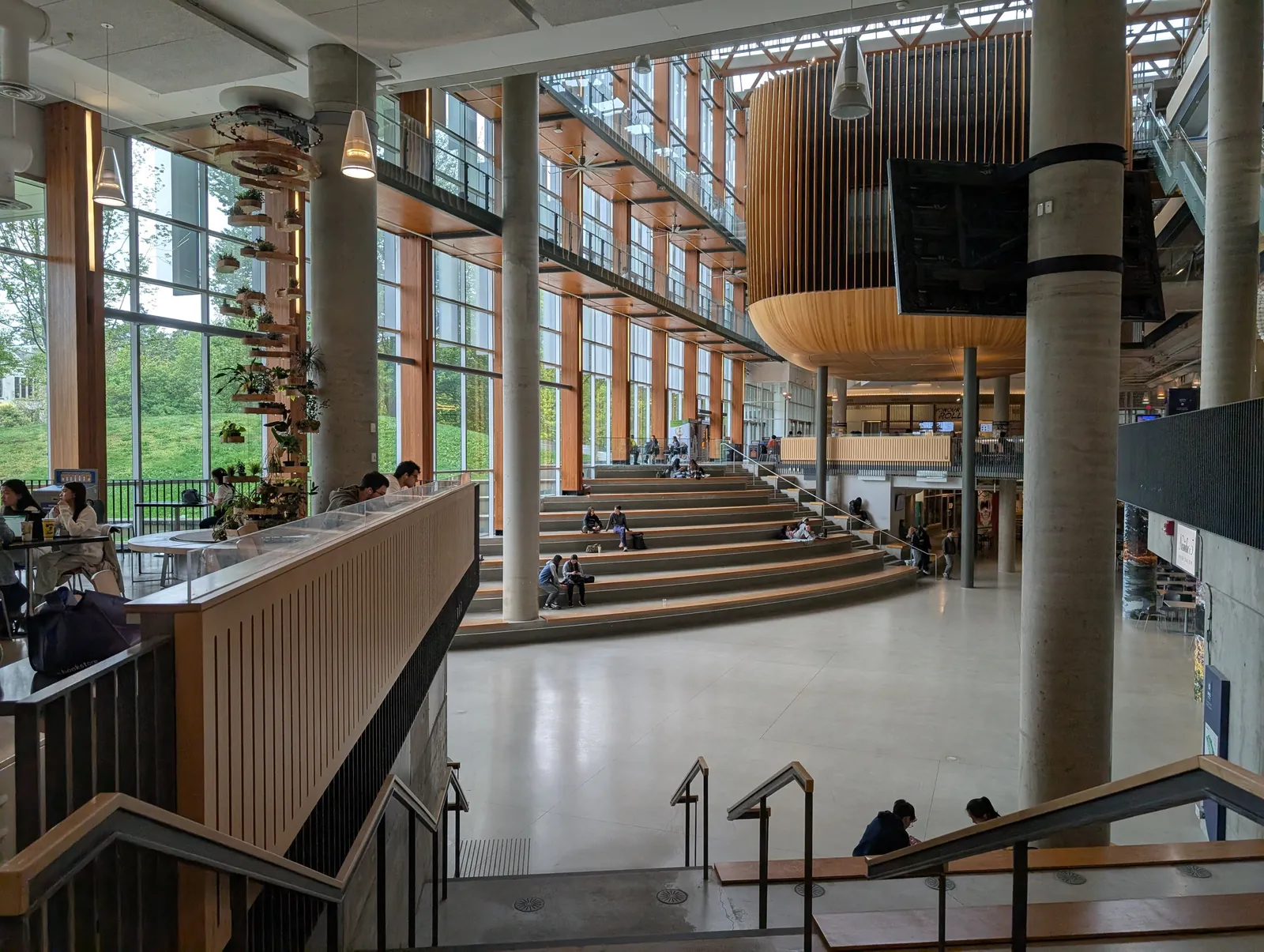
UBC Student Housing describes Vancouver as a 400-hectare campus. Its residences span first-year, upper-year, graduate and family housing. The 400-hectare setting can mean longer walks and more planning between classes, housing and activities. The AMS Nest student union building combines food, study space, shops and a three-storey climbing wall.
| Planning fact | Vancouver | Okanagan | What to check |
|---|---|---|---|
| Campus size (different measures) | 400-hectare Point Grey campus | 12 primary buildings in the current inventory | Walk or virtually tour the route between likely classes, housing and services |
| On-campus housing | First-year, upper-year, graduate and family residences | 2,120 beds in 10 residences | Read each campus's application and guarantee rules |
| Commuter home base | First Year UBC Collegia for students not living in residence | Collegia with kitchens, study and lounge space | Check eligibility, hours and location |
| Getting there | Ten regional bus routes, including the 99 B-Line and R4 | More than 250 weekday bus arrivals, September to April | Test your own route at the time you'd travel |

Getting to the Vancouver campus
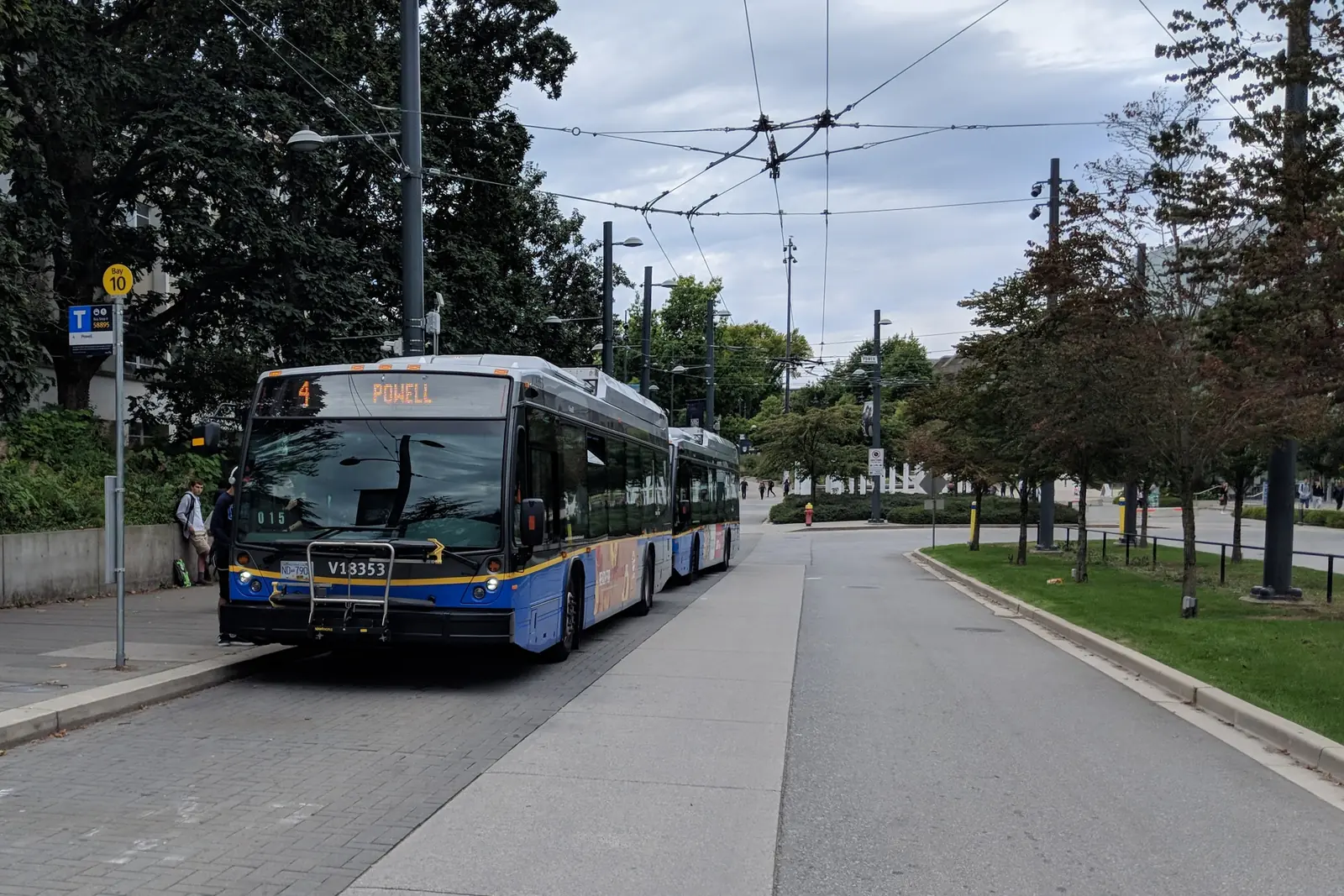
Transit is the most common way to reach UBC Vancouver, with more than 80,000 transit trips to and from campus each day. Ten regional bus routes run directly to UBC. The 99 B-Line runs along Broadway and the R4 Rapid Bus along 41st Avenue. Once you're on campus, route 68 loops to key spots every 15 to 20 minutes, starting at 8 AM on weekends.
SkyTrain doesn't reach campus. UBC is advocating for the Broadway Subway to continue to UBC, but for now your trip ends on a bus. UBC also runs a free Accessibility Shuttle in the core of campus for people whose conditions affect their mobility. If you drive, UBC Parking runs six parkades and many surface lots, and you pay for parking.
.jpg)
U-Pass BC: your transit pass at Vancouver
U-Pass BC gives you unlimited transit across Metro Vancouver. It's mandatory for members of UBC's student society (AMS), except students taking only distance courses. It costs $191.40 a term, or $47.85 a month, and it's included in your AMS student fees. UBC says the price can change.
The pass doesn't load itself. Each month, request it on or after the 16th for the following month at upassbc.translink.ca. Choose UBC and sign in with your CWL. Activation can take up to 24 hours. You'll need a Compass Card, which costs $6 from a TransLink retailer if you don't have one, and you must carry a UBCcard that's valid for the whole term.
- You're eligible if you're registered in at least three credits, or pay more than a set tuition amount, and you pay AMS fees.
- Eligibility is checked each term. Paying AMS fees in Term 1 doesn't guarantee a Term 2 pass.
- You can apply for an exemption only in limited cases, such as holding another Metro Vancouver U-Pass or not living or studying in Metro Vancouver.
Model a weekday, not a postcard
Okanagan's campus reports more than 250 weekday bus arrivals from September to April, 11 places to eat and 450 seats in Pritchard Dining Hall. Test the trip from your likely address with current schedules; a campus-wide count doesn't describe the frequency of your route.
At Vancouver, compare a residence day with a commuter day. First Year UBC Collegia is open to first-year undergraduates who don't live in residence and finished high school in the last two years. If you'll live off campus, test the exact bus trip at the hour you'd travel. If you'll live in residence, compare each campus's contract, meal plan and winter-break rules before you treat housing as settled.
Use the same decision test for both campuses
Score each campus against the same personal limits: academic route, housing plan, monthly budget, travel home, transportation and support needs. Keep evidence beside each score. Campus reputation alone can't tell you whether the degree path, daily trip or housing contract works for you.
UBC runs in-person and live virtual tours of both campuses. Live virtual tours of Okanagan last 75 minutes and Vancouver tours run 90 minutes, each ending with a question panel. In-person tours visit a residence, a library and recreational or social spaces.
- Confirm the campus and degree for every specialization you'd consider.
- Build one realistic eight-month budget for each campus, including housing, food, transit and travel home.
- Map a sample weekday from your likely home to class, food, study space and a support service.
- Tour both campuses in the same format when you can, and ask the same questions.
- Order your two application choices only after these checks.
Keep exploring
Sources and updates
This independent guide summarizes the official information linked below. Availability, access rules and application cycles can change; check the relevant university page before making a decision.
- UBC Undergraduate Admissions: choose what to study
- UBC Undergraduate Admissions: programs
- UBC Okanagan: facts and figures
- UBC Vancouver Student Housing: residence map
- UBC Undergraduate Admissions: campus community
- UBC Okanagan Student Services: Collegia spaces
- UBC Vancouver Student Services: UBC Collegia
- UBC Campus and Community Planning: transit
- UBC Campus and Community Planning: rapid transit to UBC
- UBC Campus and Community Planning: parking
- UBC Campus and Community Planning: U-Pass BC and Compass Card
- UBC Student Services: new to UBC checklist
- UBC Undergraduate Admissions: campus tours