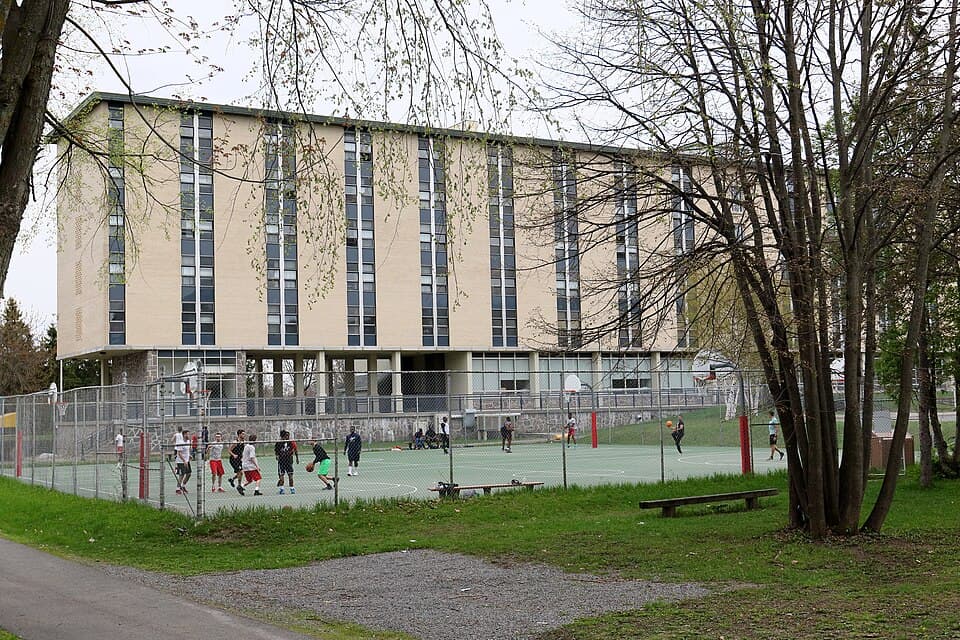

Université Laval
Quebec City, Quebec
For 2027 planning, an Ontario or other Canadian provincial diploma with 12 years of schooling requires a 30-credit qualifying year for Laval's non-limited bachelor route. Compare applicant routes, French evidence and program exceptions below. The tuition figures are labelled 2026–27.
The short answer
- For 2026–27, tuition for 30 undergraduate credits is C$4,256.06 for a Québec student and C$28,232.96 for an international student.
- A single residence room costs C$443 per month from May 1, 2026 to April 30, 2027.
- There is no compulsory meal plan, and each residence has a shared kitchen.
- Fall 2027 residence rates are not yet published, so budget with the May 2026 to April 2027 rate.
- Out-of-province Canadians can pay the Québec rate through an exemption scholarship if they study in French in an eligible program.
Reviewed August 14, 2026 · Official university sources · How we review guides
Save this to your free account
Track Université Laval with a checklist for how you apply. Free account. Add your dates in the tracker to request reminder emails; unsubscribe any time.
Free account. No card needed.
Overview
Current applicant answer
Université Laval admission depends on applicant route, French readiness, and the exact program
Université Laval is a French-language university in Québec City. You apply directly to the university, not through OUAC (Ontario's university application site). You must use the right route. The routes are Québec, Canadian, international, or mature. You must also meet program prerequisites. You must have adequate French. Limited programs can add ranking, interviews, tests, portfolios, or other selection.
C$101.49
Current new-applicant fee
February 1
Standing Fall international deadline
C$443
2026–27 residence room per month
No official university-wide acceptance rate
Université Laval publishes route eligibility, prerequisites, capacity, R-score ranking, and program-specific selection—not one current undergraduate acceptance percentage. Medicine and other professional health programs also have distinct undergraduate or professional-entry rules; they should not be labelled generically as postgraduate programs.
Fall 2027 cycle status
Fall 2027 · Published for this period
Université Laval has published its 2027-2028 limited enrolment table with Fall 2027 places and dates. Most programs list March 1 for Québec and Canadian applicants and February 1 for international applicants. University applicants to medicine, pharmacy, occupational therapy, physiotherapy, sexology, and biomedical science use November 1 of the preceding year. Unlimited-enrolment bachelor's deadlines come from a standing, unlabelled framework rather than a dated Fall 2027 page.
Laval states the deadline in the program description prevails. Confirm the live program page before treating any date as final.
Applies to: All applicants
Université Laval: 2027-2028 limited enrolment programs: Fall 2027 places and dates · Verified August 14, 2026
Language of instruction — the decision an anglophone makes first
Current rule · Published for this period
Laval states that most courses are taught in French and that adequate French is required to attend. It is North America's oldest French-language university, its official program descriptions are published in French, and there is no English-language undergraduate degree route. A Caribbean or Canadian anglophone applying here is choosing to complete a degree in French.
The Business Administration degree publishes the widest English exposure Laval documents. This is a set of common and concentration courses offered in both languages. But the degree itself is still delivered in French.
Applies to: All applicants
Université Laval: Support for French language learning · Verified August 14, 2026
Size and academic structure
University-published counts · Published for this period
Laval publishes 17 faculties, over 60 departments, schools and institutes, and 600 programs. More than 47,000 students were enrolled in fall 2024. More than 56,000 were enrolled for at least one semester in 2024–2025, with 28% in graduate programs. The alumni network is described as more than 359,000 graduates worldwide. More than 6,000 international or permanent-resident students were enrolled in 2024–2025.
These are Laval's own institutional counts. Treat them as directional, not as audited enrolment data.
Applies to: All applicants
Université Laval: Université Laval at a glance: scale, campus, and sport · Verified August 14, 2026
Québec City campus in one place
Current campus context · Published for this period
Laval publishes a 1.8 km² campus with 60% green space and trees. It lists 40 buildings linked by footpaths, 8 km of bike paths, more than 5 km of underground tunnels, and two campus buildings in Old Québec. Québec City is a UNESCO World Heritage site and the first francophone UNESCO City of Literature. Laval describes the local cost of living as moderate and housing as very reasonable compared with most North American cities.
Applies to: All applicants
Université Laval: Université Laval at a glance: scale, campus, and sport · Verified August 14, 2026
University-wide acceptance rate
Current disclosure practice · Not published
Laval does not publish one undergraduate acceptance-rate percentage. What it publishes instead is capacity per limited-enrolment program, R-score or CRU ranking, program-specific selection steps, and — on some program pages — the R score of the last CEGEP applicant to receive an offer. Use that evidence rather than an unsourced campus-wide percentage.
Applies to: All applicants
Université Laval: Admission requirements and the French-language rule · Verified August 14, 2026
Official Université Laval overview sources
Detailed application guides
Admissions Planning
Université Laval requirements and Fall 2027 planning
Start with the credential route, then check the target program’s prerequisites, capacity, French evidence, and applicant-specific selection. A 12-year secondary diploma can mean direct Canadian eligibility but a qualifying year for many international applicants.
| Applicant route | Current requirement | Planning note |
|---|---|---|
| Québec secondary and CEGEP applicant | A Diploma of College Studies (DCS or DEC) plus the prerequisites published for the target program. | Limited-enrolment and limited-space programs can rank applicants by R score. They may add an interview, portfolio, aptitude test, or another selection step. |
| Canadian applicant from outside Québec | A provincial secondary-school diploma represents 12 years of education. So it supports admission to a non-limited bachelor's program. But it requires a qualifying year on campus. That is 30 credits, with up to six credits in the chosen program, spread over two semesters. | Program pages state the alternative directly. Computer Science and Business Administration require a secondary diploma plus one year of university study. If not, the preparatory pathway applies. Budget the extra year. |
| International applicant with 13 years of education | A pre-university diploma equivalent to the Québec DCS. Examples include the French baccalaureate, Belgian CESS, many francophone African baccalaureates, or a GCE with three relevant A Levels. | Country equivalence and program prerequisites both matter. Université Laval's country tool and the live program description should be checked together. |
| International applicant with 12 years of education | A 30-credit qualifying year is normally required before or alongside entry planning. | The required qualifying courses depend on the program you plan to take. They come with the offer. Some credentials and faculties have specific exceptions. |
| Mature applicant | This route is for eligible Canadian citizens or permanent residents. You must be at least 21. You must not hold a DCS equivalent. You must have been away from school for the required period. You must meet the prior-university-study limits. | Mature status does not waive academic prerequisites. You should confirm all six current criteria. You should also confirm the target program's requirements. |
Standing deadlines are not a substitute for the program page
The official deadline page says its dates are reference points. It says the program description prevails. Confirm application, fee, document, test, interview, and portfolio checkpoints separately. This guide labels current standing dates. It does not present every one as a newly confirmed Fall 2027 deadline.
| Route | Current date | Status |
|---|---|---|
| Limited-enrolment bachelor's programs — Fall 2027 | March 1, 2027 (Québec and Canadian); February 1, 2027 (international) | Published for Fall 2027 in Université Laval's 2027-2028 limited enrolment table, alongside the places available in each program. |
| Fall application opening | August 15 of the previous year | Standing opening date for most programs. The doctor of medicine application opens September 1 of the previous year. |
| Québec and other Canadian applicants — unlimited bachelor's | March 1 regular; August 15 late admission | Current standing Fall framework. Late choice is narrower, and program exceptions can use earlier dates. |
| International applicants — Fall undergraduate study | February 1 | This is the current standing deadline for unlimited and limited-space undergraduate programs. Limited-enrolment programs can publish a different date. |
| University applicants — medicine, pharmacy, occupational therapy, physiotherapy, sexology, or biomedical science | November 1 of the year before admission | Current special deadline. The exact program page and applicant category control. |
| Limited-enrolment or limited-space program | Program-specific | The date in the official program description prevails over the general deadline page. Confirm the application, document, test, interview, and portfolio checkpoints separately. |
French evidence is program-specific
TCF is the main proficiency test. Recent DELF, TFI, or TEF results may be accepted when written expression is included. Computer Science currently publishes TCF-TP 331/699 and written expression 8/20 as one concrete non-francophone example; do not reuse that score as a universal threshold.
Direct application, choices, and documents
Apply in Université Laval’s online system. Two choices are allowed for one semester, with a third unlimited-enrolment choice when a selected program is limited. The C$101.49 new-applicant fee is non-refundable. Upload the documents requested in the admission file by its assigned deadline.
International applicants can use the credential-evaluation guide to distinguish university admission review from WES and immigration ECAs. Applicants returning after time away should compare the mature-student route guide.
Direct application and program choices
Current process · Published for this period
Laval uses its own online application, not OUAC. You may name up to two program choices for the same semester. You may add a third unlimited-enrolment choice when one program you picked has limited enrolment or limited space. Each choice is processed on its own and gets a separate answer. An extra choice added later for the same semester has no extra application fee.
Applies to: All applicants
Université Laval: Apply for admission: online application and program choices · Verified August 14, 2026
Application fee
Current fee schedule · Published for this period
The fee is C$101.49 for a new applicant who has never attended Université Laval. It is C$23.46 for an applicant who has already attended. The fee is non-refundable. It applies to the targeted semester only, no matter how many program choices you make. The application is not processed until it is paid. Applicants to a limited-enrolment or limited-space program must pay within 5 calendar days after the admission deadline.
Applies to: All applicants
Université Laval: Application fee by applicant category · Verified August 14, 2026
Two different application-fee figures on Laval's own pages
Official-source conflict · Current published pages
The application-fee page publishes C$101.49 for a new applicant. The 2026–2027 budgeting page instead budgets $104.53 for Québec students and $475 for international, French, and francophone Belgian students. Laval does not reconcile the figures on either page.
Budget with the higher figure. Confirm the amount actually charged in monPortail before paying. Do not quote either number as the single official fee.
Applies to: All applicants
Université Laval: 2026–2027 fees and budgeting by student profile · Verified August 14, 2026
Standing deadline framework for unlimited programs
Current standing framework · Published for this period
Fall applications open August 15 of the previous year. The doctor of medicine is the exception and opens September 1. Québec and Canadian applicants to unlimited undergraduate programs apply by March 1. Late admission runs until August 15. International applicants use February 1 for Fall, July 1 for Winter, and December 1 for Summer. Winter unlimited programs close November 1. Late admission runs until December 1. Summer closes April 1.
The deadline page carries no cycle year. It states that the deadline in the program description prevails. So treat these as recurring reference dates. Verify the program page for Fall 2027.
Applies to: All applicants
Université Laval: Admission application deadlines by applicant category · Verified August 14, 2026
Canadian applicants from outside Québec need a qualifying year
Current requirement · Published for this period
A secondary-school diploma from another Canadian province counts as 12 years of education. Laval admits these applicants to a non-limited-enrolment bachelor's program. It requires a qualifying year of 30 credits on campus. Up to 6 credits can be in the chosen university program. The year spans two semesters. Computer Science and Business Administration state the alternative directly. It is a secondary diploma plus one year of university study. Otherwise the preparatory pathway applies.
This is the fact most often missed by out-of-province applicants: a Canadian high-school diploma alone does not start the degree clock at Laval. Budget the extra year.
Applies to: Other Canadian, Ontario high school
Université Laval: Admission requirements for each type of applicant · Verified August 14, 2026
International credential routes and the faculty exceptions
Current requirement · Published for this period
International applicants normally need a 13-year pre-university diploma. It must be equal to the Québec DCS. Examples include the French baccalaureate, Belgian CESS, many francophone African baccalaureates, or a GCE with three relevant A Levels. A 12-year diploma leads to the 30-credit qualifying year. French and Belgian baccalaureate holders are normally directly eligible. The Forestry, Agricultural and Food Sciences, and Science and Engineering faculties are exceptions. They need a qualifying year.
Applies to: International
Université Laval: Admission requirements for each type of applicant · Verified August 14, 2026
What the qualifying year does not buy you
Current rule · Published for this period
Admission subject to qualifying coursework is not permitted for most limited-enrolment or limited-space undergraduate programs. A 12-year-diploma applicant who wants one of those programs must first be admitted to an unlimited program, complete the qualifying year including every prerequisite, then apply separately during that year. Laval states plainly that completing the qualifying year and prerequisites does not guarantee admission to the limited program.
Applies to: International, Other Canadian, Ontario high school
Université Laval: Qualifying courses and the 30-credit qualifying year · Verified August 14, 2026
French-language evidence
Current requirement · Published for this period
Laval defines a non-francophone as someone who completed elementary and high school in a language other than French. Successful completion of the Test de connaissance du français (TCF) is an admission requirement for non-francophones in all programs. Recent DELF, TFI, and TEF results may be accepted when they include written expression. Results must reach Laval before arrival through the Educational Testing Service. Applicants without TCF evidence are classified as beginners until they present proof.
Applies to: All applicants
Université Laval: Admission requirements and the French-language rule · Verified August 14, 2026
TCF thresholds are set by the program, not the university
Current program requirements · Published for this period
Computer Science publishes a minimum of 331/699 on the compulsory TCF-TP papers plus 8/20 in written expression. Architecture publishes 400/699 plus 14/20 in written expression for the same test. There is no single university-wide TCF cut-off, and a score that clears one program can fall short in another by a wide margin.
Applies to: International, Other Canadian, Ontario high school
Université Laval: Baccalauréat en architecture: places, R score, and French threshold · Verified August 14, 2026
Programs closed to non-Québec applicants
Fall 2027 · Published for this period
For Fall 2027 the doctorate in dental medicine (48 places) and the undergraduate doctorate in pharmacy (224 places) reserve their places for applicants who hold Canadian citizenship or permanent residence AND Québec resident status. Kinesiology and initial-training nursing accept Québec and Canadian applications until capacity is reached rather than to a fixed date, and the master's in speech-language pathology closes January 15 for every category.
Applies to: International, Other Canadian, Ontario high school
Université Laval: 2027-2028 limited enrolment programs: Fall 2027 places and dates · Verified August 14, 2026
Programs and Pathways
Université Laval programs and entry structures
Program choice changes the academic route. It changes French evidence and capacity. It changes duration and accreditation. It changes the professional pathway and work experience. Compare the current program description. Do not compare only the faculty name.
Business Administration (B.A.A.)
The program is 90 credits. It takes an estimated three years. Admission is in Fall, Winter, and Summer. The program combines common management courses and concentrations. It also combines experiential courses and optional study profiles.
Computer Science
You need 90 credits, over an estimated three years. Admission is in Fall and Winter. Two practical internships are required to graduate. The faculty describes both as paid placements of 12 to 15 weeks. It offers two additional internships that are optional.
Software Engineering
This program has 120 credits. It takes an estimated four years. The accredited engineering degree requires one practical internship. It permits three more internships that are optional.
Architecture
A 96-credit, three-year pre-professional BScArch with 95 published places. The later MArch is the professional degree required for access to the architect pathway.
Medicine and other health-professional routes
Université Laval offers undergraduate or professional-entry health programs with limited enrolment and applicant-specific selection. These are not safely summarized as ordinary postgraduate programs; use the exact program and applicant-category rules.
Compare related Canadian pathways in the Business, Computer Science, Engineering, and Health Sciences guides.
The 17 faculties
Current structure · Published for this period
Laval lists Agriculture and Food Sciences, Arts and Humanities, Business Administration, Dental Medicine, Education, Forestry, Geography and Geomatics, Law, and Music. It also lists Medicine, Nursing, Pharmacy, Philosophy, Planning, Architecture, Art and Design, Science and Engineering, Social Sciences, and Theology and Religious Sciences. Graduate and Postdoctoral Studies and the Graduate School of International Studies complete the published structure. Laval notes that most faculty websites are in French only.
Applies to: All applicants
Université Laval: Faculties directory · Verified August 14, 2026
Computer Science (B. Sc. A.)
Current program · Published for this period
The program has 90 credits over an estimated three years. Admission is in Fall and Winter. Laval may recognize up to 45 credits of prior learning. It has eight concentrations. These include bio-informatics, software engineering, cybersecurity, multimedia and video-game development, intelligent systems, and big-data processing. To graduate, you must do the practical internships IFT-2580 and IFT-3580. Their credits are counted in addition to the 90 program credits. IFT-3591 and IFT-3592 are optional.
Applies to: All applicants
Université Laval: Baccalauréat en informatique official program description · Verified August 14, 2026
Software Engineering (B. Ing.)
Current program · Published for this period
The degree has 120 credits over an estimated four years, with Fall and Winter admission and four concentrations. Engineers Canada recognizes the degree, which gives access to the Ordre des ingénieurs du Québec. Laval also cites the Washington Accord and the France–Québec qualifications agreement. These support practice in Québec, elsewhere in Canada, Australia, the United States, France, India, Japan, and the United Kingdom.
Applies to: All applicants
Université Laval: Baccalauréat en génie logiciel official program description · Verified August 14, 2026
Architecture: the clearest published selection evidence at Laval
Fall 2025 selection data, latest available · Latest published information; newer cycle not yet confirmed
This is a 96-credit, three-year pre-professional BScArch limited to 95 places and Fall entry. As of August 15, 2025, the published R score for the last CEGEP applicant to receive an offer was 29.587. The program requires TCF-TP 400/699 with 14/20 in written expression. Admitted students must buy a laptop meeting the school's specification. Two out-of-quota places are reserved for Québec First Nations or Inuit diploma holders with an R score above 27, and one for a Techniques de l'architecture DEC holder with at least five years of experience.
Laval publishes no conversion from an R score to an Ontario or Caribbean percentage. Do not invent one. The BScArch is pre-professional. The later MArch is the professional degree on the architect pathway.
Applies to: All applicants
Université Laval: Baccalauréat en architecture: places, R score, and French threshold · Verified August 14, 2026
Business Administration (B.A.A.) and its English-language courses
Current program · Published for this period
This program has 90 credits over an estimated three years. Admission is in Fall, Winter, and Summer. It has one 12-course concentration or two 6-course concentrations. It has three experiential courses and four optional study profiles. CEGEP applicants need a minimum R score of 25. University applicants with 24 or more credits need a 2.00/4.33 progression average. Twelve common courses plus some concentration courses are offered in both English and French. This is the most explicit English provision Laval publishes for an undergraduate degree.
Applies to: All applicants
Université Laval: Baccalauréat en administration des affaires program description · Verified August 14, 2026
Six 12-credit study profiles
Current structure · Published for this period
Sustainable development, entrepreneurial, honor, research, distinction, and international profiles each add 12 credits without extending the normal length of the degree and appear as a mention on the diploma. Full-time enrolment is required, and the entrepreneurial profile alone is offered in some 60 bachelor's programs. Availability is set by the individual bachelor's program, so a profile in one degree is not evidence of a university-wide option.
Applies to: All applicants
Université Laval: Six 12-credit study profiles · Verified August 14, 2026
Université Laval Residence Costs & Buildings
2026–27 Université Laval residence costs
A full-time-student single room is C$443 per month from May 1, 2026 through April 30, 2027. Basic furnishings are included; bedding is not. Confirm availability and contract dates before using the monthly rate in a full-year budget.
| Residence | Rooms | Published detail |
|---|---|---|
| Agathe-Lacerte Pavilion | 484 | Women-only during the academic year |
| Alphonse-Marie-Parent Pavilion | 996 | Co-ed single-occupancy rooms |
| Ernest-Lemieux Pavilion | 436 | 431 standard rooms and 5 adapted rooms |
| H.-Biermans-L.-Moraud Pavilion | 391 | Co-ed single-occupancy rooms |
2026–2027 residence room rates
May 1, 2026 – April 30, 2027 · Latest published information; newer cycle not yet confirmed
A full-time student's single room is C$443 per month from May 1, 2026 to April 30, 2027. Visiting students and interns pay C$164.50 per week with bedding or C$140 without. Furnishings include a twin bed and mattress, sink, work table, chair, armchair, bookshelf, dresser, closet, telephone, lights, and bulletin board. Bedding costs $120 to buy or $50 for a one-month loan.
Applies to: All applicants
Service des résidences, Université Laval: Residence buildings and 2026–2027 room rates · Verified August 14, 2026
The four residence pavilions
Current buildings · Published for this period
Agathe-Lacerte has 484 single rooms reserved for women from September to April across four wings. Alphonse-Marie-Parent is co-ed, with 996 single rooms over five linked buildings. Ernest-Lemieux is co-ed, with 431 standard and 5 adapted rooms across seven floors. Each floor has a gender-neutral bathroom. H.-Biermans-L.-Moraud is co-ed, with 391 single rooms over four floors. Laval describes about 2,300 rooms in its sustainable student residences in total.
Applies to: All applicants
Service des résidences, Université Laval: Residence buildings and 2026–2027 room rates · Verified August 14, 2026
No mandatory meal plan
Current terms · Published for this period
Laval publishes no compulsory residence meal plan. Each residence has a fully equipped shared kitchen and dining areas. Rooms may hold only a refrigerator, microwave, toaster, and coffeemaker. No other cooking or reheating appliance is allowed. Washrooms and showers are shared on every floor. Laundry is in each pavilion basement. Summer storage of personal effects is free. Campus food services are separate paid options.
This is a real budget difference from Ontario residences, where an All-Access meal plan of C$6,000 or more is often mandatory. Laval students buy their own groceries — the university budgets $6,160 a year for them.
Applies to: All applicants
Service des résidences, Université Laval: Residence services, shared kitchens, and supplementary rates · Verified August 14, 2026
How rooms are actually allocated
Current process · Published for this period
Applications are accepted at any time of year. You can apply before or after an offer of admission. Applying does not guarantee a room. Most rental offers are emailed from April for the Fall session. Most are emailed from November for the Winter session. To accept an offer, you must pay a deposit equal to the first month's rent within the stated window. If you miss it, the room goes to someone else. Laval says availability is subject to change. Laval says it is difficult to predict from one year to the next.
Applies to: All applicants
Service des résidences, Université Laval: Reserving a residence room: full-time students · Verified August 14, 2026
Fall 2027 residence rates
2027 pending · Fall 2027
Not yet published. The current rate schedule runs to April 30, 2027, so a student starting in Fall 2027 will be charged a rate Laval has not posted.
Budget with the labelled May 2026 to April 2027 rate. Re-check the Service des résidences rate page before you treat any figure as a Fall 2027 quote.
Applies to: All applicants
Service des résidences, Université Laval: Residence buildings and 2026–2027 room rates · Verified August 14, 2026
Official residence sources
Tuition, Scholarships, and Aid
2026–27 tuition, deposits, and scholarships
Université Laval publishes profile-specific estimates rather than one tuition number. The ranges below use 30 undergraduate credits. They also use the university’s own 2026–27 living-cost assumptions. These include housing C$5,400–C$9,640, groceries C$6,160, study, health-care and personal expenses C$6,170, and C$900 group health insurance for international and agreement students. The Québec City and Lévis transit pass is included in tuition. Rates can change.
| Student profile | Tuition and fees | Estimated annual total |
|---|---|---|
| Québec undergraduate — 30 credits | C$4,256.06 | C$21,986 to C$26,226 |
| Canadian undergraduate from outside Québec — 30 credits | C$10,868.96 | C$28,599 to C$32,839 |
| French or francophone Belgian undergraduate — 30 credits | C$10,868.96 | C$29,499 to C$33,739 |
| International undergraduate — 30 credits | C$28,232.96 | C$46,863 to C$51,103 |
Offer-acceptance deposit
For Winter 2026 and later, the deposit is C$300 for Canadian citizens and permanent residents. It is C$1,000 for students who need Canadian immigration documents. It is applied to tuition.
Scholarship scope matters
The directory covers more than 3,000 awards with varied criteria. Undergraduate and master’s international exemptions are limited. Citizens of the World awards are for research master’s and doctoral applicants—not undergraduate admission.
2026–2027 undergraduate tuition by residency category
2026–2027 · Latest published information; newer cycle not yet confirmed
Laval publishes four tuition figures for 30 undergraduate credits. They are C$4,256.06 for a Québec student and C$10,868.96 for a Canadian student from outside Québec. A French or francophone Belgian student covered by the Québec agreements also pays C$10,868.96, while an international student pays C$28,232.96. Per three-credit course that is C$402.90, C$1,064.19, C$1,064.19, and C$2,800.59 respectively. Each annual figure includes the tuition deposit paid on acceptance of the offer.
Laval states it and the Government of Québec reserve the right to change these fees without notice.
Applies to: All applicants
Université Laval: 2026–2027 fees and budgeting by student profile · Verified August 14, 2026
2026–2027 full-year budget by profile
2026–2027 · Latest published information; newer cycle not yet confirmed
Laval's undergraduate estimate is C$21,986–C$26,226 for a Québec student and C$28,599–C$32,839 for a Canadian student from outside Québec. It is C$29,499–C$33,739 for a French or francophone Belgian student and C$46,863–C$51,103 for an international student. The shared components are housing C$5,400–C$9,640, groceries C$6,160, study, health-care and personal expenses C$6,170, and C$900 group health insurance for international and agreement students. The Québec City and Lévis transit pass is included in tuition rather than budgeted separately.
Laval labels these a modest lifestyle for reference only. First-year one-time costs are budgeted at up to C$2,285 for Québec students and up to C$3,275 for international, French, and francophone Belgian students.
Applies to: All applicants
Université Laval: 2026–2027 fees and budgeting by student profile · Verified August 14, 2026
Canadians outside Québec can pay the Québec rate
Fall 2023 onward, 2026–2027 exclusion list published · Published for this period
Since Fall 2023 an exemption scholarship has cut supplemental tuition fees. It is for eligible Canadian citizens and permanent residents who are not Québec residents. It lets them pay the Québec rate when they study in French in an eligible program at Laval. Laval states that most first- and second-cycle programs qualify. These include certificates, bachelor's degrees, graduate diplomas, and master's. Laval publishes a per-year list of excluded programs, including a 2026–2027 list. To be eligible, you need Canadian citizenship or permanent residence without Québec resident status. You also need enrolment in a French-language program offered only in Québec. You need a level of French sufficient to succeed. Doctoral students are exempt automatically.
This is the single largest cost lever for an out-of-province Canadian at Laval. It is roughly the difference between C$10,868.96 and C$4,256.06 for 30 credits. Check your exact program against the 2026–2027 exclusion list. Expect to prove out-of-province residence with a health card, driver's licence, pay slip, or similar document.
Applies to: Other Canadian, Ontario high school, Transfer, Mature
Université Laval Bureau du registraire: Canadian students outside Québec: tuition and supplemental-fee exemption scholarships · Verified August 14, 2026
International exemption scholarships are limited and conditional
Current exemptions · Published for this period
Québec's tuition policy for international students has nine exemption categories, including holders of a CSQ, protected persons, dependants of closed-work-permit holders in Québec, and diplomatic staff and their families. French and francophone Belgian students under the Québec mobility agreements pay the Canadian non-Québec undergraduate rate. Since Fall 2023 Laval may award a limited number of differential-fee exemption scholarships to outstanding international applicants in programs tied to Québec government priority employment sectors. Laval states plainly that first- and second-cycle exemptions are offered to a limited number of students while doctoral exemptions are available to all international PhD students.
Do not budget an undergraduate international exemption as though it were automatic. Laval also warns that only the university itself may award scholarships to international applicants and that no external body is authorised to do so on its behalf.
Applies to: International
Université Laval Bureau du registraire: International students: tuition and exemption categories · Verified August 14, 2026
Tuition deposit and the immigration refund window
Winter 2026 onward · Published for this period
Since May 28, 2025 every offer accepted for Winter 2026 and later requires a deposit. It is CAN$300 for students from Québec and Canada. It is CAN$1,000 for international students. It is paid once per admission semester, even if you accept more than one offer. It is deducted from that semester's tuition. It is otherwise non-refundable. A rejected CAQ or study permit can qualify for a full refund. The complete CAQ application must have been submitted within 15 days of the official offer. The complete study-permit application must then have been submitted within 15 days of receiving the CAQ.
Applies to: All applicants
Université Laval: Tuition deposit rules and immigration refund conditions · Verified August 14, 2026
2026–2027 mandatory international health insurance
2026–2027 · Latest published information; newer cycle not yet confirmed
International students join Laval's compulsory Desjardins group health and hospitalization plan automatically. They cannot use a private policy instead. For 2026–2027, the plan costs C$900 from September 1, C$600 from January 1, or C$300 from May 1. Exchange students pay C$300 per semester. Training or research interns pay C$75 per month. Coverage starts no earlier than August 15 for the Fall semester. So earlier arrivals must buy their own travel-health cover. Students from eleven countries with Québec social-security agreements may qualify for RAMQ instead. These countries are Belgium, Denmark, Finland, France, Greece, Luxembourg, Norway, Portugal, Romania, Serbia, and Sweden.
Applies to: International
Université Laval: Mandatory health and hospitalization insurance for international students · Verified August 14, 2026
What the 3,000-scholarship figure actually covers
Current awards · Published for this period
Laval's Student Awards and Financial Aid Office lists over 3,000 scholarships a year. These are for full-time undergraduate and graduate students. Criteria range from admission and excellence to leadership, mobility, and financial need. The headline Citizens of the World awards are for international graduate students. They are C$20,000 at research-master's level and C$30,000 at doctoral level. Leadership and engagement awards are C$10,000 at master's level and C$30,000 at doctoral level. Undergraduate entrance awards exist but are departmental. For example, the Department of Computer Science and Software Engineering publishes C$5,000 admission scholarships for outstanding new entrants.
Do not present Citizens of the World as an undergraduate entrance scholarship. Laval lists it under graduate research funding.
Applies to: All applicants
Université Laval: Scholarships and financial aid overview · Verified August 14, 2026
2027–2028 tuition, insurance, and award values
2027 pending · 2027–2028
Not yet published. A student entering in Fall 2027 will pay 2027–2028 rates; the 2026–2027 figures above are the latest available evidence for provisional budgeting only.
Re-check the fees and budgeting page, the residence rate page, and the insurance page before relying on a Fall 2027 budget.
Applies to: All applicants
Université Laval: 2026–2027 fees and budgeting by student profile · Verified August 14, 2026
Student Life and Support
Plan for a French-language Québec City campus
Academic language is a core fit question, not an afterthought. Applicants should test whether their French level supports lectures, writing, teamwork, placements, and daily life. Then they should budget housing, food, health coverage, and transportation using their own profile.
International arrival
Programs longer than six months generally require a CAQ. Then they require a study permit. Start after you receive the official offer. Allow several months. Avoid non-government application portals or unauthorized representatives.
Budget and insurance
The university’s 2026–27 international undergraduate estimate includes C$900 for health and hospitalization insurance. Some French and francophone Belgian students can qualify for reciprocal coverage exemptions with the required proof.
French Immersion Pathway — the honest route for an anglophone
Current pathway · Published for this period
The pathway puts French-as-a-second-language courses inside an undergraduate program. It is for non-francophones with at least 12 years of pre-university study. They must be admitted to an open-enrolment program. Laval publishes a degree length of four to six years. This depends on the program and the student's French level on admission. Laval also publishes reduced tuition for FLS courses. It lists more than 65 eligible programs across seven faculties. Those faculties are Forestry, Geography and Geomatics; Arts and Human Sciences; Philosophy; Business Administration; Science and Engineering; Social Sciences; and Agriculture and Food Sciences.
Four to six years is the number to plan around. An anglophone entering with weak French should assume the long end, not the three years printed on the program page.
Applies to: International, Other Canadian, Ontario high school
Université Laval: French Immersion Pathway for non-francophone undergraduates · Verified August 14, 2026
Language support once you are on campus
Current services · Published for this period
École de langues offers 12-credit short programs and 30-credit certificates in French as a second language. Its intensive summer sessions start in mid-June and mid-July. They are worth up to 12 credits. It also offers 15-week for-credit fall and winter courses. Their credits may count toward a bachelor's degree. Enrolled students get individual tutoring and free library writing workshops. They also get a French writing consulting service. There are multilingual meetups pairing non-francophone and francophone students. There are also annual École de langues scholarships covering FLS tuition and ancillary fees.
Applies to: All applicants
Université Laval: Support for French language learning · Verified August 14, 2026
Québec City is a French-first city, not a bilingual one
Current description · Published for this period
Laval states that the vast majority of people in Québec City live and work in French and describes the city as the cradle of French civilisation in North America. Its own material frames this as immersion rather than as a bilingual campus. The city is a UNESCO World Heritage site. Nearby attractions include the Québec City Summer Festival, Québec Winter Carnival, Plains of Abraham, and Montmorency Falls. Laval calls the cost of living moderate and the housing reasonable.
Everyday life off campus — housing, banking, health care, part-time work — will be conducted in French. Test that honestly before committing.
Applies to: All applicants
Université Laval: Living in Québec City · Verified August 14, 2026
Winter, transit, and the tunnels
2026–2027 budget and current campus · Published for this period
Laval budgets C$620 for winter clothing as a first-year one-time cost for international, French, and francophone Belgian students, and C$520 for arrival transport and temporary housing. The university travel pass is called the LPU and is included in tuition. It gives unlimited access to Québec City and Lévis public transit. Buses between campus and the city centre run every five minutes at peak times. More than 5 km of underground tunnels link the campus buildings.
The winter-clothing line is Laval's own honesty about the climate. Québec City winters are colder and longer than anything a Caribbean applicant has experienced. The tunnels are a real mitigation, not a marketing line.
Applies to: All applicants
Université Laval: 2026–2027 fees and budgeting by student profile · Verified August 14, 2026
Rouge et Or, PEPS, and campus facilities
Current campus life · Published for this period
Laval describes the Rouge et Or as one of the best university sports programs in the country. It has more than 500 student athletes. Laval describes PEPS as one of Canada's largest modern sports complexes. The campus also has a library holding 3 million documents. It has the Centre Apprentiss interdisciplinary healthcare learning centre. It also has the Forêt Montmorency, which Laval calls the largest teaching and research forest in the world. Laval states it is Canada's first voluntary carbon-neutral university. It was ranked 19th in the world and top francophone university in the 2024 Times Higher Education Impact Rankings.
Applies to: All applicants
Université Laval: Université Laval at a glance: scale, campus, and sport · Verified August 14, 2026
CAQ and study permit sequence
Fall 2026 onward · Published for this period
A study program longer than six months requires a Québec Acceptance Certificate. Then it requires an IRCC study permit. The CAQ starts with a C$135 application for temporary selection through MIFI and Arrima. Laval says the stated 25-business-day processing target is often exceeded by several weeks. From Fall 2026, an applicant to a regular program first receives a notice of admission. They must accept it and pay the tuition deposit in monPortail. Then they receive the official offer of admission. Only that official offer can be used for immigration. Laval states its government CAQ quota is enough for all new international students holding an offer.
Laval directs applicants to the official Québec and Canadian government sites and warns about immigration fraud and unauthorised representatives.
Applies to: International
Université Laval: CAQ and study permit steps for programs longer than six months · Verified August 14, 2026
Université Laval Internships & Career Experience
Internships and experiential study are program-specific
Université Laval has substantial work-integrated options, but the number, timing, pay, academic status, and requirement differ by degree. Confirm the program map before comparing “co-op” across universities.
Computer Science
Two required paid internships of 12 to 15 weeks, with the first possible after first year, plus two optional paid internships.
Software Engineering
One required practical internship, with three additional optional internships available through the program.
Business Administration
Three experiential courses are built into the degree, and optional study profiles can add international, entrepreneurial, distinction, or other structured experience.
University-wide study profiles
Université Laval publishes six 12-credit study profiles. But availability depends on the bachelor's program. A profile or internship in one degree does not mean co-op is available in all degrees.
Use the co-op comparison guide to compare direct-entry, later-entry, internship, and work-term models. Do not treat them as equivalent.
How Laval describes work-integrated learning
Current description · Published for this period
Laval publishes that over 90% of its undergraduate programs include internships, often paid. Laval does not run a single university-wide co-op program. The term co-op applies to specific named baccalauréats coopératifs. Most degrees instead use credited or non-credited stages arranged by the faculty and the Service du développement professionnel.
Do not compare Laval's number against an Ontario co-op program without checking whether the specific degree requires internships, permits them, or pays for them.
Applies to: All applicants
Université Laval: Université Laval at a glance: scale, campus, and sport · Verified August 14, 2026
Computer Science internships
Current program · Published for this period
Two mandatory paid internships of 12 to 15 weeks plus two optional paid internships. According to Laval, the first mandatory internship can be completed from the end of first year. Each completed internship earns an attestation of studies. The Service du développement professionnel en sciences et génie supports the search alongside faculty career days.
Applies to: All applicants
Faculté des sciences et de génie, Université Laval: Faculty page for Computer Science internships and admission scholarships · Verified August 14, 2026
The Science and Engineering flexible internship formula
Current program · Published for this period
The Faculty of Science and Engineering lets every bachelor's student complete 1 to 4 paid company internships. This applies whether or not their program requires them. Each internship runs for 12 to 16 weeks full-time. Students choose the timing. The faculty publishes more than 1,400 internships each year and close to 40 undergraduate programs. Of these, 12 are accredited by Engineers Canada. Two are genuinely co-operative bachelor's degrees: materials and metallurgical engineering, and mining and mineral engineering. Each has three paid four-month industrial placements. These are jointly supervised by a company engineer and a faculty member.
Applies to: All applicants
Faculté des sciences et de génie, Université Laval: Faculty of Science and Engineering internships and job prospects · Verified August 14, 2026
Software Engineering internship count is inconsistent on Laval's own pages
Official-source conflict · Current program pages
The Software Engineering page's summary badge reports two mandatory paid internships and two optional internships. That is two to four total. Its detailed panel instead states one mandatory paid internship of 12 to 15 weeks plus three optional paid internships. Both describe up to four paid internships. But they disagree on how many are mandatory.
Plan on at least one paid internship that is mandatory. Confirm the requirement with the program direction. Do this before you treat the second as compulsory.
Applies to: All applicants
Faculté des sciences et de génie, Université Laval: Faculty page for Software Engineering internships · Verified August 14, 2026
Service du développement professionnel
Current services · Published for this period
Laval's Service du développement professionnel runs the job and internship board. It serves students and graduates. It gives personalised employment advising. It publishes labour-market portraits with hiring statistics and trends by program. The service also manages internship agreements and employer recruitment. Laval states that more than 4,000 students work on campus each year.
Applies to: All applicants
Université Laval: Université Laval at a glance: scale, campus, and sport · Verified August 14, 2026
Official internship and experience sources
Université Laval applicants need to choose the correct route. The routes are Québec, Canadian, international, or mature. They should tell 12-year direct Canadian eligibility apart from the international qualifying-year rule. They should confirm French evidence and the program-specific deadline. They can then compare current costs, residence, scholarships, deposits, internships, and CAQ and study-permit steps. This guide keeps those decisions on one canonical page backed by official sources. It does not invent a university-wide acceptance rate.
Université Laval requirements, French tests, deadlines, programs, tuition, residence, scholarships, internships, and international-student questions
Direct answers to Université Laval's Québec, other-Canadian, international, qualifying-year, and mature routes; direct application; French tests; standing Fall deadlines; program structures; 2026–27 costs; residence; scholarships; deposits; internships; CAQ; and study permits.
Official Sources and Next Steps
Stellar keeps this guide structured for comparison. But official university pages remain the source of truth. They are the source of truth for program requirements, tuition, residence, scholarships, deadlines, and policy changes.
Prepared by Stellar Advisers Editorial Team · Reviewed August 14, 2026 · Editorial, corrections, and source methodology
Related Canadian universities
Compare 3 other Quebec records, then continue through the national directory.