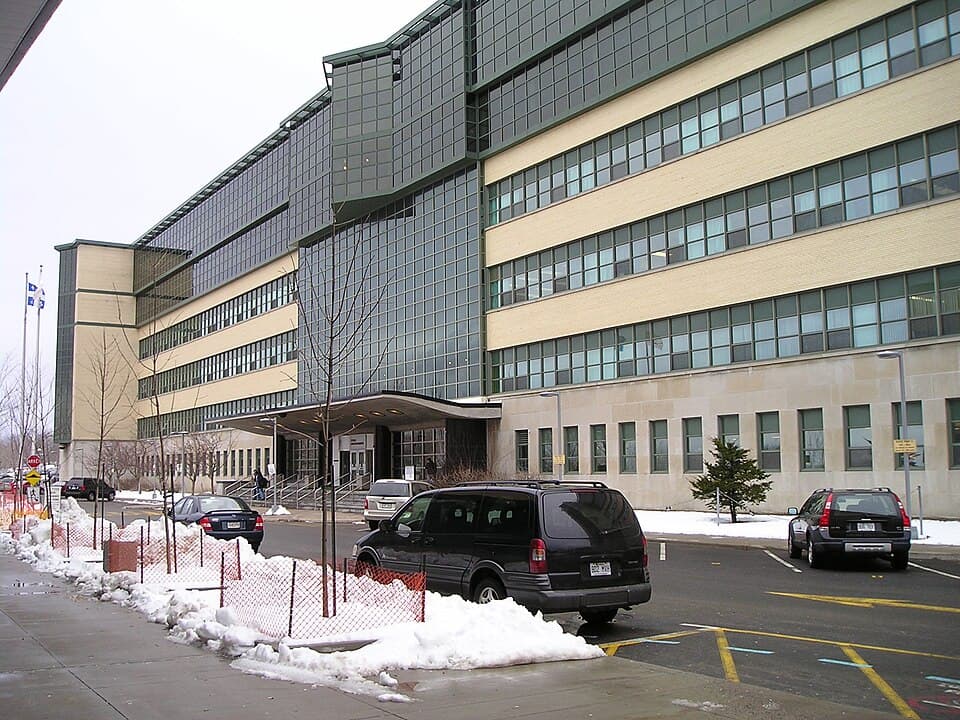

Polytechnique Montréal
Montréal, Quebec
Compare Polytechnique Montréal programs, admissions, costs, residence, student support, and career pathways in one source-reviewed guide. Jump to the decision section you need below.
The short answer
- Apply at admission.polymtl.ca, not through OUAC (the Ontario Universities' Application Centre).
- Fall 2027 dates are not published yet. The standing table says February 1 for international applicants and March 1 for Canadians.
- Ontario OSSD (Ontario Secondary School Diploma) holders need 75% in MHF4U, MCV4U, SPH4U and SCH4U. Each course counts on its own.
- Most out-of-Quebec students do a 30-credit preparatory year first. That makes the degree five years and 150 credits.
- Tuition for 2026–27 is $103.92 per credit for Quebec residents, $324.35 for other Canadians and $1,127.57 for international students.
Reviewed August 14, 2026 · Official university sources · How we review guides
Save this to your free account
Track Polytechnique Montréal with a checklist for how you apply. Free account. Add your dates in the tracker to request reminder emails; unsubscribe any time.
Free account. No card needed.
Overview
Entity answer
A French-language engineering school affiliated with Université de Montréal
Polytechnique Montréal has been affiliated with Université de Montréal since 1920 while retaining autonomous status. Applicants use Polytechnique's own application, requirements, French-language rules, engineering programs, and student services.
75%
Minimum in each required Ontario prerequisite
12
Accredited Bachelor of Engineering programs
5 years
Typical Ontario route including preparatory year
Ontario applicants normally begin with a preparatory year
The 30-credit integrated year covers mathematics, physics, chemistry, and engineering foundations before the four-year BEng. Ontario applicants cannot enter Aerospace or Biomedical Engineering directly; a later change request is reviewed after satisfactory preparatory-year completion and is not guaranteed.
Fall 2027 cycle status
2027 pending · Fall 2027
Not yet published as a dated cycle. Polytechnique's baccalauréat deadline table carries no cycle year at all — its columns are only Trimestre d'automne, Trimestre d'hiver, and Trimestre d'été, and the page footer reads Dernière mise à jour le 03/09/2025. The only year-stamped dates on it belong to Fall 2026: an exceptional extension to April 1, 2026 for applications and April 10, 2026 for documents. There is no occurrence of 2027 anywhere on the deadline page.
Treat February 1, 2027 (international) and March 1, 2027 (Canadian) as working planning dates. The framework is standing rather than dated. But re-check the deadline table before submitting. Polytechnique has already shown it will extend a cycle without changing the standing table.
Applies to: All applicants
Polytechnique Montréal: Baccalauréat application and document deadlines by status · Verified August 14, 2026
Language of instruction — the decision an anglophone makes first
Current rule · Published for this period
Polytechnique states plainly: « Polytechnique Montréal est un établissement universitaire francophone. La langue d'enseignement étant le français, une connaissance minimale de cette langue est requise pour être en mesure d'y entreprendre vos études. » There is no English-taught undergraduate engineering degree. The study regulations require evaluation activities to be presented in French except in courses explicitly flagged « cours offert en anglais » or under a specific agreement. A Caribbean or anglophone Canadian applicant choosing Polytechnique is choosing to complete a four- or five-year engineering degree in French.
The one published English route is at the research-graduate level. Doctorate and research master's applicants may sit their language test in English. But they must then satisfy a French requirement as a condition of graduation. That option is not extended to the B.Ing.
Applies to: All applicants
Polytechnique Montréal: Exigences linguistiques: accepted French tests, thresholds, exemptions · Verified August 14, 2026
Affiliated with Université de Montréal — and UdeM grants the diploma
Current status · Published for this period
Polytechnique was founded in 1873 as the École des sciences appliquées aux arts et à l'industrie, the first francophone engineering school in North America, and was annexed to Université Laval's Arts Faculty in 1887. A provincial charter incorporated it with administrative and financial autonomy, and when Université de Montréal obtained its own charter in 1920 Polytechnique was affiliated with it « without relinquishing its autonomous status ». The study regulations state the consequence directly: the B.Ing. diplomas « sont décernés par l'Université de Montréal, à laquelle Polytechnique Montréal est affiliée ».
Both halves matter. The parchment carries Université de Montréal. But Polytechnique runs its own application, admission conditions, French rules, deadlines, tuition billing, and student services. Do not apply to Polytechnique through Université de Montréal.
Applies to: All applicants
Polytechnique Montréal: History: founding, Université Laval annexation, UdeM affiliation · Verified August 14, 2026
Size and institutional scale
July 2026 institutional data · Published for this period
Polytechnique's facts-and-figures block is labelled data as of July 2026. It publishes more than 10,000 students. It publishes nearly 67,000 alumni worldwide. It publishes nearly 25% international students. It publishes 22% graduate students. It publishes 29.7% women among bachelor's graduates. It publishes more than 120 programs across all cycles. It publishes nearly 300 professors, nearly 20% women. It publishes over 1,500 full-time-equivalent employees. It publishes an annual budget of $235 million. Research: a $102.3 million annual research budget. Research: 141 research units. Research: 23 Canada Research Chairs. Research: 128 patents granted. Research: more than 15 active spin-offs.
These are Polytechnique's own institutional counts. They are not audited enrolment returns. The recruitment page separately publishes « plus de 10 300 étudiants et étudiantes ». That is the same order of magnitude, differently rounded.
Applies to: All applicants
Polytechnique Montréal: About Polytechnique: facts and figures (data as of July 2026) · Verified August 14, 2026
One campus, shared with Université de Montréal and HEC Montréal
Current campus · Published for this period
Polytechnique sits at 2500, chemin de Polytechnique, Montréal (Québec) H3T 1J4. The university itself labels this the « University of Montréal Campus », in the heart of Mount Royal. It comprises the pavillon principal (1958, 71,650 m²). It comprises the pavillon J.-Armand-Bombardier (2004, 13,803 m²). It comprises the pavillons Lassonde (2005, 32,700 m²). Polytechnique describes itself as part, with HEC Montréal, of the Université de Montréal campus. That campus hosts more than 67,000 students in total.
Applies to: All applicants
Polytechnique Montréal: Contact information and access: campus address and métro stations · Verified August 14, 2026
An engineering-only school — with one published exception
Current structure · Published for this period
Every direct-entry undergraduate program at Polytechnique is an engineering degree. There are 12 baccalauréats en ingénierie leading to the B.Ing. There is no arts, business, science, or nursing faculty. The one published exception is not a direct-entry degree. Polytechnique also confers a Baccalauréat ès Sciences (par cumul) and a Baccalauréat ès Sciences en cybersécurité (par cumul). Each is awarded on completion of three certificates totalling at least 90 distinct credits. At least two of the three must be issued by Polytechnique. There is a maximum of ten years between the first and last certificate.
The B.Sc. par cumul is not applied for through the online admission system. It is not an engineering credential. If you want a school-leaver route into a non-engineering degree, Polytechnique is not it.
Applies to: All applicants
Polytechnique Montréal: Baccalauréats ès Sciences (par cumul) · Verified August 14, 2026
University-wide acceptance rate
Current disclosure practice · Not applicable
Polytechnique does not publish an institution-wide undergraduate acceptance-rate percentage. Instead, it publishes things that are far more useful. It publishes a cote R floor of 27 for DEC (Diplôme d'études collégiales) holders. It names place limits for the two contingent programs. It gives five years of applications-received and offers-made counts for those two programs. It also gives explicit course-by-course minimums for out-of-Québec routes. Use that evidence rather than an unsourced campus-wide percentage.
Applies to: All applicants
Polytechnique Montréal: Statistiques d'admission: cote R floor and contingent program cutoffs · Verified August 14, 2026
Official overview sources
Detailed application guides
Best Engineering Programs in Canada
Compare Polytechnique Montréal's 12 BEng degrees, prerequisites, paid stages, and French-language environment with other Canadian engineering schools.
Best Computer Science Programs in Canada
Compare Polytechnique's Computer and Software Engineering BEng routes with standalone Canadian Computer Science degrees.
Canadian Credential Evaluation Guide
Plan how non-Ontario secondary credentials map to Canadian university admission before checking Polytechnique's country-specific rules.
Admissions Planning
Polytechnique Montréal Ontario requirements, French tests, and deadlines
The published Ontario threshold is course-specific. You need at least 75% in every required mathematics and science prerequisite. A higher overall average does not replace a missing or below-minimum course.
| Ontario requirement | Published rule |
|---|---|
| Ontario Secondary School Diploma | Ontario applicants complete the OSSD and normally enter Polytechnique's integrated preparatory year before the four-year engineering degree. |
| Advanced Functions | MHF4U with a minimum grade of 75%. The minimum applies to this course individually, not only to a calculated overall average. |
| Calculus and Vectors | MCV4U with a minimum grade of 75%. Applicants must meet the published minimum in every required mathematics and science course. |
| Physics | SPH4U with a minimum grade of 75%. A high overall average does not replace a missing or below-minimum prerequisite. |
| Chemistry | SCH4U with a minimum grade of 75%. Polytechnique evaluates the complete prerequisite pattern. |
| French-language evidence | Your prior studies may not meet a recognized French-language exemption. If so, you must submit an accepted French test with the application. |
Accepted French results
- • DALF tout public: level C1 or C2, valid for life
- • DELF tout public: level B2, valid for life
- • TCF Canada: 400 (B2) in each of the four papers, valid two years
- • TCF Québec: 400 (B2) in each of the four papers, valid two years
- • TCF tout public: 400 (B2) in each of the five papers, valid two years
- • TEF Canada: 400 (B2) in each of the four papers, valid two years
- • TEF Québec (TEFAQ): 400 (B2) in each of the four papers, valid two years
The TFI is not on the accepted list. Polytechnique does not run test sessions at its own locations. It looks at only one result per application. It handles its language evidence on its own, separately from Université de Montréal.
Recognized exemptions
Examples include Ontario secondary study completed entirely in French in Canada, without reception or francisation classes, and other recognized Francophone credentials. Applicants should match their exact educational history to the official exemption list.
| Applicant status | Fall | Winter | Summer | Planning note |
|---|---|---|---|---|
| International applicant needing a CAQ and study permit | February 1 | June 1 | No admission | Documents are due ten days later—February 10 for Fall, June 10 for Winter. The published table carries no cycle year, so confirm the applicable Fall 2027 cycle before submitting. |
| Canadian citizen, permanent resident, or refugee | March 1 | November 1 | No admission | Documents are due March 10 for Fall in most programs, but March 1 for the contingent programs, and November 10 for Winter. Confirm the applicable Fall 2027 cycle before submitting. |
What the deadline table does not show in its columns
- • There is no summer intake at the baccalauréat level: every summer cell reads “Aucune admission”.
- Winter entry is closed for the two contingent programs. These are génie aérospatial and génie biomédical.
- Applications received after a deadline are rolled to the next available term automatically. There is no refund.
- For Fall 2026, the Canadian deadline was extended to April 1, 2026. This was an exception. The documents deadline was April 10, 2026. This applied to nine programs: civil, chemical, mining, electrical, geological, computer, industrial, software, and engineering physics.
Polytechnique's own application — there is no OUAC here
Current process · Published for this period
Applications are submitted directly at admission.polymtl.ca. Polytechnique publishes no centralised provincial equivalent to OUAC, and the only documented route is its own portal. The rule on multiple applications is strict: « Une seule demande par trimestre est acceptée. Les demandes supplémentaires ne seront ni traitées ni remboursées. » Payment by Visa or Mastercard is required to complete the application, and the fee is the same for baccalauréat, graduate, and certificate programs.
One application per term means you pick one program per term in practice. This is not like OUAC. You cannot spread a Polytechnique application across ranked alternates. But Polytechnique says it may offer you a second or third choice of program if you meet the minimum requirements.
Applies to: All applicants
Polytechnique Montréal: Remplir ma demande: Polytechnique's own application portal · Verified August 14, 2026
Two different application fees on Polytechnique's own pages
Official-source conflict · Current published pages
The registrar's administrative fee schedule lists « Étude d'une demande d'admission ou de réadmission 106,91 $ ». The English admission portal states an application fee of C$106.91, non-refundable. The recruitment page for French education-system candidates for Fall 2026 states « Ces frais de 103,80 $CA (environ 64€) ne sont pas remboursables ». The how-to-apply page confirms a non-refundable fee exists but publishes no amount at all. Neither figure carries a cycle label.
Budget the higher figure and confirm the exact amount in the portal before paying. Do not quote either number as the single official application fee.
Applies to: All applicants
Polytechnique Montréal — Bureau du registraire: Frais administratifs: application file study fee · Verified August 14, 2026
The standing deadline table — and no summer intake
Current standing framework · Published for this period
Applications: February 1 for Fall and June 1 for Winter for international applicants needing a CAQ and study permit; March 1 for Fall and November 1 for Winter for Canadian citizens, permanent residents, and refugees. Summer reads « Aucune admission » for every status. Winter is closed entirely for the two contingent programs, génie aérospatial and génie biomédical. Applications received after a deadline are automatically rolled to the next available term with no refund.
This is the single most-corrected fact about Polytechnique. The June 1 / October 1 / February 1 sequence that circulates widely belongs to the études supérieures deadline table, not the baccalauréat. Undergraduate applicants use February 1 or March 1. There is no summer entry.
Applies to: All applicants
Polytechnique Montréal: Baccalauréat application and document deadlines by status · Verified August 14, 2026
Documents are due days after the application, not weeks
Current standing framework · Published for this period
The general rule is that documents must reach the Bureau du registraire no later than ten consecutive days after the application deadline. In practice, that is February 10 for Fall and June 10 for Winter for international applicants. For Canadian applicants in most programs, it is March 10 for Fall. But for the contingent programs, it is March 1, the same day as the application. For Winter, it is November 10. An incomplete file after the document deadline is refused outright. It requires a fresh application for a later term.
Applicants completing university courses as required prerequisites for Fall entry must submit Winter-term transcripts by June 1 — and Polytechnique states those applicants are not eligible for the contingent programs.
Applies to: All applicants
Polytechnique Montréal: Baccalauréat application and document deadlines by status · Verified August 14, 2026
The Fall 2026 extension shows the table can move
Fall 2026, latest available · Latest published information; newer cycle not yet confirmed
For Canadian citizens, permanent residents, and refugees, the Fall 2026 application deadline was exceptionally extended to April 1, 2026, and the document deadline to April 10, 2026, for nine baccalauréat programs: génie civil, chimique, des mines, électrique, géologique, informatique, industriel, logiciel, and physique. The extension excluded génie mécanique and both contingent programs, and did not apply to international applicants.
Do not plan on an extension. It is evidence that late capacity sometimes exists in the uncontingented programs, not a published policy you can rely on for Fall 2027.
Applies to: Ontario high school, Other Canadian, Transfer, Mature
Polytechnique Montréal: Baccalauréat application and document deadlines by status · Verified August 14, 2026
Ontario OSSD holders: 75% in four named courses
Current requirements · Published for this period
Holders of a twelfth-year Ontario Secondary School Diploma are « admissibles aux programmes de baccalauréat en ingénierie de Polytechnique Montréal avec une année préparatoire intégrée ». They must have passed, with a mark of at least 75%, all four of MHF4U Fonctions avancées, MCV4U Calcul différentiel et vecteurs, SPH4U Physique, and SCH4U Chimie — each mandatory. If secondary studies were not completed in French, a recognised French test is required.
The 75% is per course, not an average. A 92% overall average with a 71% in SCH4U does not satisfy this requirement.
Applies to: Ontario high school
Polytechnique Montréal: 2.7 Secondaire de l'Ontario (DESO): prerequisites and prep year · Verified August 14, 2026
Other Canadian provinces and the United States
Current requirements · Published for this period
You may be admitted with the integrated preparatory year if you hold a twelfth-grade science-profile secondary diploma. The diploma must be from a Canadian province other than Québec and Ontario. You must have passed mathematics, physics, and chemistry with at least 75%. Polytechnique publishes no course codes for these provinces. It publishes only the subject list. US twelfth-grade science-profile graduates are treated under identical wording. Both routes carry the same French-test condition. Both routes have the same exclusion from the contingent programs.
No course codes are named. So applicants from BC, Alberta, the Prairies, and Atlantic Canada should write to the Bureau du registraire before applying. They should include their exact course list. They should keep the answer.
Applies to: Other Canadian, International
Polytechnique Montréal: 2.8 Secondary school in a Canadian province other than Ontario or Québec · Verified August 14, 2026
A 12-year diploma means a mandatory preparatory year — this is a regulation
Current regulation · Published for this period
The Règlements des études du baccalauréat en ingénierie 2025-2026, article 4.4, states it without qualification: candidates holding a secondary diploma from outside Québec, if admitted, must complete a 30-credit année préparatoire, committing them to a total of 150 credits — and the 30 preparatory credits do not count toward the baccalauréat. Polytechnique's own FAQ answers the obvious question directly: asked whether the preparatory year means five years rather than four, the published answer is « Oui! »
This is the fact most often missed by applicants from Ontario, the Caribbean, and West Africa. A Québec CEGEP student arrives with a DEC and starts the 120-credit degree; you arrive with a 12-year diploma and pay for and study 30 additional credits that do not appear on your degree. Budget five years and five years of tuition.
Applies to: Ontario high school, Other Canadian, International
Polytechnique Montréal: Règlements des études du baccalauréat en ingénierie 2025-2026 (PDF) · Verified August 14, 2026
What the preparatory year actually contains
Current program · Published for this period
Students with out-of-Québec secondary schooling are « admis directement au baccalauréat dans leur spécialité, mais avec une année préparatoire de 30 crédits à faire ». The published twelve courses are CHE0501 Chimie générale and INF0101 Introduction aux outils informatiques. They also include INF0102 Introduction à la programmation pour ingénieur and MTH0101 Calcul différentiel. Next are MTH0102 Algèbre vectorielle, MTH0103 Calcul intégral, MTH0104 Probabilités et statistique and PHS0101 Dynamique. The list also has PHS0102 Électricité et magnétisme, SSH0330 Rédaction et communication orale and SSH0340 Intégration, réussite et orientation en génie. It ends with SSH0345 Pratique du français écrit. The last is imposed only after failure of the writing exam.
There is no separate « Baccalauréat en ingénierie - année préparatoire » program to apply to. You apply to génie civil or génie logiciel. The preparatory year is attached to that admission.
Applies to: Ontario high school, Other Canadian, International
Polytechnique Montréal: Année préparatoire: the 30-credit integrated preparatory year · Verified August 14, 2026
Passing the preparatory year is not guaranteed
Current regulation · Published for this period
All imposed preparatory courses must be passed within a maximum of three consecutive trimesters, excluding summer, after first registration. A student carrying 12 or more preparatory credits must reach a minimum cumulative average of 2.00 by the end of that authorised period. Mastery of French must be satisfied before 24 credits. Polytechnique states the consequence in one sentence: « Le non-respect de l'un ou l'autre de ces règlements entraînera l'exclusion du programme. »
An out-of-Québec applicant is therefore taking on a mandatory extra year. That year has a hard deadline, a minimum GPA (grade point average), and a French-mastery gate. It is in a second language. Plan the French before arrival, not during first term.
Applies to: Ontario high school, Other Canadian, International
Polytechnique Montréal: Règlements des études du baccalauréat en ingénierie 2025-2026 (PDF) · Verified August 14, 2026
Aerospace and biomedical are closed to school-leavers from outside Québec
Current rule · Published for this period
Every out-of-Québec route page carries the same particularité: applicants are « pas directement admissibles aux programmes de génie biomédical et génie aérospatial ». To become admissible, Polytechnique's integrated preparatory year must be completed with satisfactory results before a selection committee will even study the candidacy. Holders of an unlisted or generic Québec DEC are likewise excluded from both, and génie aérospatial admits DEC technique holders only from Techniques de génie aérospatial (280.B0).
If aerospace or biomedical engineering is the reason you are considering Polytechnique, understand that as an Ontario or Caribbean school-leaver you cannot apply to it directly, and the later transfer is a committee decision that is explicitly not guaranteed.
Applies to: Ontario high school, Other Canadian, International
Polytechnique Montréal: 2.7 Secondaire de l'Ontario (DESO): prerequisites and prep year · Verified August 14, 2026
The Québec CEGEP route: cote R 27 and named course numbers
Current requirements · Published for this period
Holders of a DEC in sciences de la nature (200.B0/B1, 200.D0/D1), sciences de la nature double cheminement (200.1X), sciences informatiques et mathématiques (200.C0/C1), sciences, lettres et arts (700.A0/A1), or the DEC-IB stream (200.Z0/Z1) need a cote R of at least 27. Any other DEC additionally requires six named CEGEP courses — Calcul différentiel, Calcul intégral, Algèbre linéaire et géométrie vectorielle, Mécanique, Électricité et magnétisme, and Chimie générale — with an average of at least 75% across the six, and is not admissible to the two contingent programs. DEC technique holders draw from a published list of about 21 eligible technical diplomas, with the same six bridging courses added to the 120 credits.
Polytechnique publishes CEGEP course numbers (201-NYA, 203-NYB, 202-NYA and so on), not the ministerial competency codes. Match the course number, not a code you were given elsewhere.
Applies to: All applicants
Polytechnique Montréal: 1.1 DEC préuniversitaires: eligible profiles and cote R · Verified August 14, 2026
International Baccalaureate outside Québec
Current requirements · Published for this period
IB (the International Baccalaureate diploma) holders are admissible with the integrated preparatory year. They must pass the IB with an overall score of 30/42. They must obtain at least 5/7 in mathematics and sciences taken at Higher Level. If taken at Standard Level, they must obtain at least 6/7. The diploma must include mathematics, physics, and chemistry. Secondary diplomas in economics, humanities, or letters are published as « Non admissible ». Those applicants must first complete a science preparatory class or a complément de formation.
Applies to: International, Ontario high school, Other Canadian
Polytechnique Montréal: 2.4 International Baccalaureate (outside Québec) requirements · Verified August 14, 2026
The French tests Polytechnique actually accepts, and the thresholds
Current requirements · Published for this period
Polytechnique accepts these results. DALF at level C1 or C2, and DELF at level B2. These are valid for life. It also accepts TCF Canada, TCF Québec, TEF Canada, and TEF Québec (TEFAQ). You need 400 (B2) in each of the four papers. TCF tout public needs 400 (B2) in each of its five papers. These are valid two years. Only one result counts per application. You cannot use a new score for the same application or term. Polytechnique does not run test sessions on its premises. Applicants must register for a public session.
The TFI is not on Polytechnique's accepted list, and TCF Québec, TEF Canada, and TEFAQ are accepted. Any guidance saying the reverse is stale — check the live table before booking a test, because the wrong test is a wasted fee and a wasted cycle.
Applies to: International, Ontario high school, Other Canadian
Polytechnique Montréal: Exigences linguistiques: accepted French tests, thresholds, exemptions · Verified August 14, 2026
French is the first gate, and there is no conditional admission
Current rule · Published for this period
Polytechnique states that where language requirements apply they are « la première étape de l'évaluation du dossier », and that if they are not met « votre dossier académique sera rejeté ». The file stays flagged as en suspens — documents manquants until a language result arrives, and the university states directly: « Une admission conditionnelle à la réception d'un test linguistique n'est donc pas possible. »
Your grades are not read until the French is settled. Book the test early enough that the result is in the file before the February 1 or March 1 deadline, not after it.
Applies to: International, Ontario high school, Other Canadian
Polytechnique Montréal: Exigences linguistiques: accepted French tests, thresholds, exemptions · Verified August 14, 2026
Who is exempt from the admission French test
Current rule · Published for this period
No test is required for holders of a Québec DEC from a francophone or an anglophone CEGEP; a Canadian secondary diploma earned in French without reception or francisation classes; a university degree from a francophone Canadian university; or a secondary diploma from an education system Polytechnique recognises as francophone. The recognised list is published in full: Belgique, Bénin, Burkina Faso, Burundi, Cameroun, Haïti, République Centrafricaine, Union des Comores, République démocratique du Congo, République populaire du Congo, Côte d'Ivoire, Djibouti, France, Gabon, Guinée, Luxembourg, Madagascar, Mali, Niger, Rwanda, Sénégal, Suisse, Tchad, and Togo. Morocco's Baccalauréat international option français (BIOF) and any secondary school in the AEFE network are also exempt.
Two things Caribbean and Canadian applicants should read carefully. Haïti is on the exemption list, so a Haitian francophone-system diploma needs no admission French test — but it is still a 12-year diploma and still triggers the preparatory year. Anglophone Caribbean qualifications such as CAPE and CSEC appear nowhere on this list, so plan on a test.
Applies to: International, Ontario high school, Other Canadian
Polytechnique Montréal: Exigences linguistiques: accepted French tests, thresholds, exemptions · Verified August 14, 2026
Published cote R cutoffs for the two contingent programs
Automne 2025, latest available · Latest published information; newer cycle not yet confirmed
Génie aérospatial for Automne 2025: 462 applications and 229 offers. The last cote R admitted was 30.597 as at June 1, 2025. That is against 32.924 in 2024, 33.307 in 2023, 33.103 in 2022, and 31.994 in 2021. Génie biomédical for Automne 2025: 390 applications and 222 offers. The last cote R admitted was 30.669. That is against 31.172 in 2024, 33.176 in 2023, 34.620 in 2022, and 33.747 in 2021. Polytechnique adds that a cote R equal to or above last year's final admit « ne garantit en rien une admission l'année suivante ».
No Automne 2026 or Automne 2027 statistics are published. These figures describe Québec CEGEP applicants assessed on the cote de rendement collégiale. There is no equivalent published cutoff for OSSD or international applicants. Their pages publish only the 75% and IB thresholds.
Applies to: All applicants
Polytechnique Montréal: Statistiques d'admission: cote R floor and contingent program cutoffs · Verified August 14, 2026
The deposit due when you accept an offer
Current rules · Published for this period
Accepting a baccalauréat, DESS, or professional master's offer requires an acompte. It is $1,000 for study-permit holders. It is $300 for Canadian citizens, permanent residents, and people with refugee status. Payment is by Visa or Mastercard only. It must be made in full at the moment of acceptance. The amount is deducted from tuition for the first term of registration. No deposit is required for research master's, doctorate, certificate, microprogramme, or études libres admissions.
Polytechnique reserves the right to close a file if the offer is not accepted by the deadline. That deadline is shown in the online application. It is calculated per file rather than published as a single date.
Applies to: All applicants
Polytechnique Montréal: Accepter l'offre d'admission: acompte à l'admission · Verified August 14, 2026
Programs and Pathways
Polytechnique Montréal engineering programs and degree choices
All 12 undergraduate programs lead to the Bachelor of Engineering. Compare the curriculum, specialization, admission capacity, and paid stages. Do not compare only the program name.
Aerospace, Biomedical, and Chemical Engineering
Aerospace Engineering, Biomedical Engineering, and Chemical Engineering.
Civil, Geological, Mining, and Engineering Physics
Civil Engineering, Geological Engineering, Mining Engineering, and Engineering Physics.
Electrical, Computer, and Software Engineering
Electrical Engineering, Computer Engineering, and Software Engineering. Computer Engineering is a BEng and is not a standalone Computer Science degree.
Industrial and Mechanical Engineering
Industrial Engineering and Mechanical Engineering.
Compare Canadian Engineering
Compare prerequisites, degree structure, accreditation, and work-integrated learning across Canadian engineering schools.
Computer Engineering or CS?
Compare Polytechnique's Computer and Software Engineering BEng routes with standalone Computer Science degrees.
Evaluate international credentials
Understand Canadian credential evaluation before matching non-Ontario study to Polytechnique's official country rules.
Twelve accredited engineering programs, named
Current programs · Published for this period
Polytechnique publishes « 12 programmes de baccalauréat en ingénierie offrant une formation d'ingénieur agréée par le Bureau d'agrément d'Ingénieurs Canada »: génie aérospatial, biomédical, chimique, civil, des mines, électrique, géologique, industriel, informatique, logiciel, mécanique, and physique. Génie énergétique and génie des matériaux exist only at the graduate level — there is no bachelor's degree in either.
English program names are not published. Even Polytechnique's English-language program directory lists all twelve under their French titles.
Applies to: All applicants
Polytechnique Montréal: Programmes d'études au baccalauréat: the 12 programs and place limits · Verified August 14, 2026
Place limits, intake terms, and selection dates by program
Current intake structure · Published for this period
Génie aérospatial is contingenté with a limit of 50 places. It admits in Fall only and selects in the second week of March. Génie biomédical is contingenté with 45 places, Fall only, second week of March. The other ten programs publish « Limite de places : aucune (selon la capacité d'accueil maximale) ». They admit in both Fall and Winter and select on a rolling basis. Polytechnique warns it may set a maximum capacity for any program without notice. So meeting the conditions does not guarantee admission to the program applied for.
Applies to: All applicants
Polytechnique Montréal: Programmes d'études au baccalauréat: the 12 programs and place limits · Verified August 14, 2026
120 credits, four years — five with the preparatory year
Current structure · Published for this period
Polytechnique publishes 120 credits and « 4 ans, stage(s) obligatoire(s) compris (5 ans si année préparatoire requise) ». Fall and Winter admission depend on the program. The regulations confirm the programs are accredited by the Bureau canadien d'agrément des programmes de génie of Engineers Canada. The programs must include mathematics, natural sciences, engineering sciences, engineering design, and complementary studies. Graduates receive the grade of bachelier en ingénierie (B.Ing.). The specialty is noted. This gives direct access to the Ordre des ingénieurs du Québec.
Applies to: All applicants
Polytechnique Montréal: Survol de la formation d'ingénieur: credits, duration, specialisation · Verified August 14, 2026
Concentrations, orientations, and how specialisation actually works
Current structure · Published for this period
Polytechnique publishes three ways to specialise: a concentration of 27 to 30 credits related to the specialty, an orientation de spécialité or orientation personnalisée of 12 to 18 credits related to the specialty, or an orientation thématique of 12 credits complementary to it. The regulations add that some concentrations are themselves contingentées, and that a double orientation requires at least 21 credits and pushes the transcript to a minimum of 129 credits. Génie mécanique alone publishes 12 orientations de spécialité, one orientation personnalisée, and six orientations thématiques.
Polytechnique does not use minors. The words used are concentration, orientation, and certificat. If you search for a minor, you will find nothing.
Applies to: All applicants
Polytechnique Montréal: Survol de la formation d'ingénieur: credits, duration, specialisation · Verified August 14, 2026
Only two programs are cooperative
Current structure · Published for this period
The program directory flags « Particularité : coopératif » for exactly two baccalauréats: génie géologique and génie des mines. Every other program runs the regular flexible-stage structure. Polytechnique is therefore a mandatory-internship school rather than a co-op school, and describing the whole institution as co-op misrepresents ten of its twelve programs.
Applies to: All applicants
Polytechnique Montréal: Programmes d'études au baccalauréat: the 12 programs and place limits · Verified August 14, 2026
Computer and software engineering — not computer science
Current programs · Published for this period
Polytechnique offers génie informatique and génie logiciel as B.Ing. degrees within the twelve. Neither is a standalone computer science degree. No baccalauréat en informatique appears in the undergraduate directory. Both admit in Fall and Winter. Both publish no fixed place limit. Both select on a rolling basis. If you weigh algorithms-and-theory careers against engineering practice, compare the curriculum. Compare the credential too, not the program name.
The B.Ing. route gives direct access to the Ordre des ingénieurs du Québec. A computer science bachelor's elsewhere does not. That professional-licence difference is usually the deciding factor.
Applies to: All applicants
Polytechnique Montréal: Programmes d'études au baccalauréat: the 12 programs and place limits · Verified August 14, 2026
Where the B.Ing. is recognised, and the HEC double degree
Current recognition · Published for this period
Polytechnique publishes that B.Ing. graduates are automatically admissible to the Ordre des ingénieurs du Québec and may practise in Québec, elsewhere in Canada, and in Afrique du Sud, Australie, Chine, Corée, Costa Rica, États-Unis, France, Hong Kong, Inde, Irlande, Japon, Malaisie, Nouvelle-Zélande, Pakistan, Pérou, Royaume-Uni, Russie, Singapour, Sri Lanka, Taïwan, and Turquie. A double diplôme with HEC Montréal is published separately, alongside international exchange and double-degree options.
Recognition through mobility agreements is not automatic licensure abroad. Each jurisdiction still uses its own registration process. Check with the destination regulator first. Only then treat this list as a work permit.
Applies to: All applicants
Polytechnique Montréal: Survol de la formation d'ingénieur: credits, duration, specialisation · Verified August 14, 2026
Polytechnique Montréal Residence & Off-Campus Housing
Polytechnique Montréal residence and Montreal housing
Polytechnique says it is not responsible for student housing. It runs no residence and guarantees no first-year room. It sends students to Université de Montréal's ZUM residences on the shared campus. There, places are described as very limited.
No
Polytechnique-operated residence
1,120+
ZUM student units two minutes from Poly
March 1
ZUM and UTILE registration opens
Do not plan around a residence guarantee
Compare ZUM availability with private rentals, lease terms, transit, furnishings, utilities, insurance, and move-in dates. Polytechnique provides housing resources and workshops, but applicants remain responsible for securing accommodation.
Polytechnique operates no residence and disclaims responsibility
Current arrangement · Published for this period
Polytechnique's housing pages state it directly: « Il est important de savoir que Polytechnique Montréal n'est pas responsable du logement de ses étudiants et étudiantes. » There is no Polytechnique-operated residence, no first-year room guarantee, and no published residence rate table. The recruitment page describes places as « très limité ».
This is the largest practical difference from an Ontario or Atlantic university. There, a guaranteed first-year room is standard. Arriving in Montréal in late August without a signed lease is a real risk. Polytechnique says so.
Applies to: All applicants
Polytechnique Montréal — Étudiants internationaux: Logement: how Polytechnique students find housing in Montréal · Verified August 14, 2026
ZUM: the Université de Montréal residences, two minutes away
Current arrangement · Published for this period
Polytechnique directs students to the ZUM – Résidences étudiantes de l'Université de Montréal. It publishes « plus de 1 120 logements étudiants » on the shared campus. It describes them as « situées à seulement deux minutes de marche de Poly ». The residences offer single rooms and studios. Full-term students at Polytechnique, Université de Montréal, and HEC Montréal may use them. Polytechnique states the number of rooms available is very limited. It states Université de Montréal manages the residences, not Polytechnique.
ZUM is the brand name of the UdeM residences, not a formal inter-university housing zone. Polytechnique publishes no ZUM rates on its own pages — it links out.
Applies to: All applicants
Polytechnique Montréal: Environnement d'études et de vie: campus, ZUM, transit, buildings · Verified August 14, 2026
Register from March 1, and have a backup
Current process · Published for this period
Polytechnique publishes registration opening « dès le 1er mars » for ZUM and UTILE. It adds that you should complete registration well ahead of time. It names UTILE as an alternative. UTILE is a social-economy student housing developer. Its leases run twelve months, generally starting in July. It also names the Résidence Maria-Goretti. That residence offers rooms for single women within walking distance. It names the ZUM Hôtel within the UdeM residences. That hotel is open May to August for temporary stays only. It warns that late August and early September are a very busy tourist season for temporary lodging.
Applies to: All applicants
Polytechnique Montréal — GO-Poly: Recherche de logement et installation à Montréal (GO-Poly) · Verified August 14, 2026
What Montréal housing actually costs on Polytechnique's own numbers
2024-2025 budget table and current housing pages · Latest published information; newer cycle not yet confirmed
The housing pages price a small solo apartment at « environ 1 280 $ » a month, excluding utilities. They price home insurance at « aussi peu que 20 $ ou 30 $ » a month. The recruitment budget table is labelled 2024-2025. It gives yearly figures including furniture, utilities, and internet. The figures are $5,000 in university residence, $8,400 in a shared apartment, and $12,000 in an apartment without roommates. It adds $1,300 for furniture if the unit is unfurnished.
The $5,000 residence line is a Polytechnique estimate for UdeM residence, not a published ZUM rate, and the table is two years old. Verify current rates with ZUM before budgeting.
Applies to: All applicants
Polytechnique Montréal: Coût des études et aide financière: 2024-2025 budget estimate · Verified August 14, 2026
Fall 2027 housing rates and dates
2027 pending · Fall 2027
This is not yet published, and Polytechnique is not the publisher. Its pages publish the March 1 registration opening and a market rent estimate. They do not publish a dated calendar or a rate table. They direct students to Université de Montréal's ZUM service for both.
Budget with the labelled 2024-2025 estimates and the current market rent figure. Re-check ZUM and the Polytechnique housing pages before you treat any figure or date as a Fall 2027 commitment.
Applies to: All applicants
Polytechnique Montréal — Étudiants internationaux: Logement: how Polytechnique students find housing in Montréal · Verified August 14, 2026
Official housing sources
Tuition, Scholarships, and Aid
Polytechnique Montréal tuition, scholarships, and cost planning
Polytechnique calculates tuition by credit and by legal status. Registrar rates are in force for the Fall 2026, Winter 2027, and Summer 2027 trimesters. No annual total is published alongside them. The only published annual roll-up is a separate budget page still labelled 2024–2025. So compulsory fees, insurance, and living costs must be added separately.
| Student status | Fall 2026–Summer 2027 tuition | Planning note |
|---|---|---|
| Quebec resident | $103.92 per credit | Base amount only, with no additional surcharge. Compulsory fees are extra. For a full-time student, they are $200.35 student services, $98.83 technology, and $103.92 general fees per trimester. |
| Canadian outside Quebec, and French or francophone Belgian students | $324.35 per credit | The $103.92 base plus a $220.43 forfaitaire additionnel. Canadians studying in French may qualify for the Quebec tariff in aerospace, biomedical, geological, industrial, mining, and engineering physics after submitting the required documents. |
| International student | $1,127.57 per credit | The base is $103.92. Add a forfaitaire additionnel of $1,023.65. This is before compulsory fees. It is also before the $900 mandatory annual health plan, housing, food, books, and personal costs. |
Scholarship eligibility is specific
Polytechnique lists awards from inside and outside the school. They include selected admission, women-in-engineering, regional, French-system, and Mining Engineering awards. Some depend on Quebec CEGEP results or program status. They do not automatically apply to Ontario students.
Build a complete Montreal budget
Add compulsory fees and health insurance where applicable. Also add housing, food, books, equipment, transit, travel, and personal costs. Recheck the live registrar and calculator before you accept an offer.
Per-credit tuition by residency status, Fall 2026 to Summer 2027
Fall 2026 / Winter 2027 / Summer 2027 · Latest published information; newer cycle not yet confirmed
The registrar's page is labelled for « les trimestres d'automne 2026, d'hiver 2027 et d'été 2027 » and charges by credit. Québec residents: a base of $103.92 per credit with no surcharge, $103.92 total. Canadians who are not Québec residents, and French and francophone Belgian students: $103.92 base plus a $220.43 forfaitaire additionnel, $324.35 total. International students: $103.92 base plus a $1,023.65 forfaitaire, $1,127.57 total per credit. No annual total is published on this page.
These are the rates that will be in force for a student entering in Fall 2026. Fall 2027 rates are not published; Québec sets them annually and they are revised upward each year.
Applies to: All applicants
Polytechnique Montréal — Bureau du registraire: Coût des études au baccalauréat: Fall 2026, Winter 2027, Summer 2027 rates · Verified August 14, 2026
Out-of-province Canadians can sometimes pay the Québec rate — in six named programs
Current agreement terms · Published for this period
Under the Guide sur les droits de scolarité de la population étudiante canadienne poursuivant des études en français au Québec and the Loi sur la langue officielle, a person residing in Canada without Québec resident status may, under certain conditions, benefit from the Québec tariff. Polytechnique's recruitment page names the eligible baccalauréats: aérospatial, biomédical, géologique, industriel, des mines, and physique. The registrar adds that the tariff is conditional on submitting official documents, that a status change applies only from the trimester the documents are received with no retroactivity, and that failing to supply them in time leaves the non-resident rate in force.
This is the single largest lever available to an Ontario or Atlantic Canadian applicant. It is roughly $220 per credit. But it is limited to six of the twelve programs. Two of those six are the contingent programs you cannot enter directly from a 12-year diploma. Confirm eligibility in writing with the Registrariat before budgeting on it.
Applies to: Ontario high school, Other Canadian, Transfer, Mature
Polytechnique Montréal — Bureau du registraire: Coût des études au baccalauréat: Fall 2026, Winter 2027, Summer 2027 rates · Verified August 14, 2026
France and francophone Belgium pay the Canadian non-resident rate
Current agreement terms · Published for this period
Under the Québec–France and Québec–Communauté française de Belgique agreements, French nationals pay the Canadian non-Québec-resident rate. They must present a valid French passport. Francophone Belgians must present a valid Belgian passport with francophone identification. The identification can be an identity card, a CESS, or a diploma from a Communauté française de Belgique institution. The rate is $324.35 per credit, not the international rate. Since Summer 2024, both groups must be enrolled full time in their program. This keeps the exemption from the foreign surcharge.
Applies to: International
Polytechnique Montréal — Bureau du registraire: Coût des études au baccalauréat: Fall 2026, Winter 2027, Summer 2027 rates · Verified August 14, 2026
Polytechnique does not administer undergraduate fee exemptions
Current process · Published for this period
For international students the registrar states that a forfaitaire is added to tuition, and that to obtain the restricted exemption an applicant must file with the organization responsible for exemptions in their own country; the list of exempt students is transmitted to Polytechnique by Québec's ministry at the start of each trimester. At the undergraduate level Polytechnique runs no exemption scheme of its own — doctoral exemptions and a limited number of research-master's exemptions are the only ones it administers directly.
At this check, Polytechnique's own detail page on differential-fee exemption returned Accès refusé. So the ministry's programme page is the only working description right now. Apply through your home country. Do not apply through Polytechnique.
Applies to: International
Polytechnique Montréal — Bureau du registraire: Coût des études au baccalauréat: Fall 2026, Winter 2027, Summer 2027 rates · Verified August 14, 2026
Compulsory fees on top of tuition, per trimester
Fall 2026 / Winter 2027 / Summer 2027 · Latest published information; newer cycle not yet confirmed
This is for a full-time student carrying more than 12 credits. Services aux étudiants is $200.35 per trimester. Polytechnique states this covers CEPSUM and the medical clinic. AEP student association is $35.00. Union étudiante du Québec is $5.98. CISM student radio is $2.00. Technology fees are $98.83. General administrative fees are $103.92. A professional development fee of $1.57 per credit starts from Winter 2026. A wellbeing levy is $4.74 in Fall and $9.47 in Winter and Summer. CRÉIQ is $2.00 in Fall only. A student-initiatives contribution of $10.00 is optional in Fall and Winter. Part-time students pay services aux étudiants at $13.35 per credit instead. They pay technology fees at $7.94 per credit instead.
Fees are billed in two instalments, in October and February. Tuition alone is never the bill.
Applies to: All applicants
Polytechnique Montréal — Bureau du registraire: Coût des études au baccalauréat: Fall 2026, Winter 2027, Summer 2027 rates · Verified August 14, 2026
Mandatory international health insurance and the optional AEP plan
Fall 2026 / Winter 2027 / Summer 2027 · Latest published information; newer cycle not yet confirmed
International students must join a group health plan that Polytechnique contracts on their behalf. The cost is $900 per year. It is added automatically to tuition at the first term of registration and renewed annually. Separately, all students are auto-enrolled in the AEP health and dental plan. This includes international students and RAMQ card holders. The cost is $117.44 for Fall and $236.35 for Winter and Summer, which is $353.79 a year. Opt-out windows are September 15 to October 16, 2026 and January 15 to February 16, 2027. Students starting in Summer 2027 cannot access the AEP plan.
Exemption from the mandatory $900 plan is published for students covered by another Canadian public plan, asylum seekers, recognised refugees, holders of a scholarship that explicitly includes medical coverage, and nationals of Belgium, Denmark, Finland, France, Greece, Luxembourg, Norway, Portugal, Romania, Serbia, and Sweden under Québec social-security agreements.
Applies to: All applicants
Polytechnique Montréal — Bureau du registraire: Coût des études au baccalauréat: Fall 2026, Winter 2027, Summer 2027 rates · Verified August 14, 2026
Two different mandatory-insurance figures on Polytechnique's own pages
Official-source conflict · Current published pages
The registrar's page is labelled Fall 2026 to Summer 2027. It states the compulsory international health plan costs « 900 $/par année ». The recruitment budget page is labelled 2024-2025. It lists « Assurance maladie obligatoire pour étudiantes et étudiants internationaux 975 $ ». Polytechnique does not reconcile the two figures on either page.
The registrar page is newer and it is the authoritative one. So plan on $900. But budget the higher figure. Confirm the amount billed on your first statement of account.
Applies to: International
Polytechnique Montréal: Coût des études et aide financière: 2024-2025 budget estimate · Verified August 14, 2026
The only published annual totals are two years old
2024-2025, latest available · Latest published information; newer cycle not yet confirmed
Polytechnique's recruitment page publishes annual approximate costs for two 15-credit terms. These cover tuition plus compulsory fees. They are clearly labelled 2024-2025. The cost is $3,740 for a Canadian citizen or permanent resident with Québec resident status. It is $10,035 for a Canadian without Québec resident status and for French and francophone Belgian students. It is $30,645 for an international student. The same table prices living costs. Food and hygiene cost $5,600. Student-rate STM transit costs $678. Books and supplies cost $1,000. Leisure and contingencies cost $2,500. A mobile phone costs $650. Home internet costs $650. First-year arrival costs are also listed. Immigration costs $500. Arrival travel costs $800. Winter clothing costs $900.
These totals are two academic years behind the registrar's per-credit rates. Polytechnique states tuition and fees are revised upward every year. Use the per-credit table for tuition. Use this table only for the living-cost lines.
Applies to: All applicants
Polytechnique Montréal: Coût des études et aide financière: 2024-2025 budget estimate · Verified August 14, 2026
Entrance scholarships and what each is actually worth
Current published awards · Latest published information; newer cycle not yet confirmed
Bourses d'excellence à l'admission are $2,000. They pay $1,000 at first registration and $1,000 at the second full-time term. They are for CEGEP finishers with a cote R of 35 or more. They are also for a cote R of 34 or more with a DEC in sciences, lettres et arts. A double DEC in sciences de la nature, or the IB, also counts. No form is required. The offer comes with the admission letter. Bourses d'admission are for French education-system candidates. They are $2,000 on the same split. They are for a mention Très bien at the French baccalauréat. Bourses d'engagement et de persévérance are $4,000. There is one per eligible cégep. They are restricted to applicants recommended by named cégeps. Those cégeps are in Bas-Saint-Laurent, Saguenay–Lac-Saint-Jean, Abitibi-Témiscamingue, Côte-Nord, and Gaspésie–Îles-de-la-Madeleine. Bourses d'admission au féminin are $4,000. They split $2,000 in Fall and $2,000 in Winter. They require Canadian citizenship or permanent residence. They also require a cote R of at least 28. Polytechnique also publishes entrance awards of $3,000 for génie des mines.
The published deadlines are cycle-specific. Several have already passed at this verification. The excellence awards deadline is October 5, 2026. The French-system awards deadline is October 3, 2026. The engagement et persévérance deadline is June 1, 2026. The women-in-engineering award deadline is October 16, 2025. Confirm the current deadline on each award page. Do not carry these forward.
Applies to: All applicants
Polytechnique Montréal: Bourses d'excellence à l'admission de la Fondation et de la direction générale · Verified August 14, 2026
Most entrance awards are written for Québec CEGEP finishers
Current published criteria · Published for this period
Polytechnique states that students receive « près de trois millions de dollars en bourses internes et externes » each year. But the entrance awards are keyed to the cote de rendement collégiale. They are keyed to a named list of Québec cégeps. They are keyed to the French baccalauréat. They are keyed to Canadian citizenship. An Ontario or Caribbean school-leaver holds none of these. Polytechnique also tells international students that none of its awards covers the full cost of tuition.
Read the citizenship rules carefully. The two $2,000 excellence awards do not require Canadian citizenship or permanent residence. Both $4,000 women-in-engineering awards do require one of these. If you have a study permit, plan around the excellence awards and the government exemption route. Do not plan around the $4,000 tables.
Applies to: Ontario high school, Other Canadian, International
Polytechnique Montréal: Aide financière et bourses: services and award directory · Verified August 14, 2026
Internships are billed, with a compensating bursary
From Winter 2026 · Latest published information; newer cycle not yet confirmed
From the Winter 2026 trimester, optional stages carry tuition charges. The second and third mandatory stages in the cooperative programs also carry tuition charges. A bourse compensatoire of six credits offsets these charges. It applies to Québec students and to Canadian non-residents, French, and francophone Belgian students. A 50% reduction of the total optional-stage cost is available if you found the placement yourself. Student association dues are excluded. You must submit a proactive-search attestation form before the stage registration deadline and before the stage begins. From January 1, 2026, the optional-stage charge for international students was set equal to the full mandatory-stage cost for the Canadian non-resident category. This is without the compensating bursary.
Polytechnique labels the January 2026 adjustment conditional on Québec maintaining its 2025-2026 funding structure for international students. Treat the international optional-stage charge as the least stable number in this guide.
Applies to: All applicants
Polytechnique Montréal — Bureau du registraire: Coût des études au baccalauréat: Fall 2026, Winter 2027, Summer 2027 rates · Verified August 14, 2026
2027-2028 tuition and award values
2027 pending · 2027-2028
Not yet published. Polytechnique bills by credit and by trimester. The Québec government sets the rates according to legal status. The current registrar page covers Fall 2026, Winter 2027, and Summer 2027 only. The university states directly that tuition and compulsory fees are revised upward each year. It also states that amounts may be modified without notice.
Re-check the registrar's per-credit table. Re-check the insurance figures. Re-check each award page. Do this before relying on a Fall 2027 budget.
Applies to: All applicants
Polytechnique Montréal — Bureau du registraire: Coût des études au baccalauréat: Fall 2026, Winter 2027, Summer 2027 rates · Verified August 14, 2026
Official cost and scholarship sources
Student Life and Support
French engineering campus fit, student life, and support
Polytechnique shares the Université de Montréal campus environment near three métro stations. Students can join the AEP student association, technical societies, and more than 40 committees, use CEPSUM facilities under the applicable access rules, and seek academic, accessibility, psychological, career, and housing support.
Language fit
See whether French suits the student for lectures, teamwork, labs, technical writing, and daily tasks.
Engineering community
Compare technical societies, design projects, PolyFab, committees, competitions, and peer mentoring.
Support fit
Review tutoring, mentoring, accessibility, psychological support, GO-Poly transition services, and career resources.
Montreal fit
Look at housing and transit. Visit the shared campus. Compare a large urban French-language setting with other engineering schools.
Two student associations and a committee for every program
Current structure · Published for this period
Polytechnique publishes two associations. The AEP, Association étudiante de Polytechnique, is for the first cycle, in office C-215. The AÉCSP is for the second and third cycles, in office C-419. It describes itself as « reconnue pour la force de sa vie étudiante et pour le dynamisme de ses deux associations étudiantes ». The AEP runs « un comité à l'éducation pour chaque programme de génie ». The AÉCSP runs an education council with one delegate per department.
Applies to: All applicants
Polytechnique Montréal: Associations étudiantes: AEP and AÉCSP · Verified August 14, 2026
The sociétés techniques, named
Current societies · Published for this period
Polytechnique publishes its competition teams by name: AquaPoly, Archimède, Avion Cargo, Canoë de Béton, Esteban, EXOCET, Formule Polytechnique Montréal, HÉKA, Machine PM, Oronos, Polybroue, PolyCyber, Poly Games, PolyHX, PolyLoop, PolyOrbite, PolySTAR, VITALIS, and Zenith. It describes them as building projects for provincial, national, and international competitions « se déroulant sur terre, sur mer et dans les airs ». The campus also hosts PolyFab Normand Brais, an open creation and entrepreneurship space.
Society rosters change between years. Confirm a specific team is still active before choosing Polytechnique for it.
Applies to: All applicants
Polytechnique Montréal: Sociétés techniques: the published competition teams · Verified August 14, 2026
GO-Poly is a first-year program, not a welcome week
Current services · Published for this period
Polytechnique publishes GO-Poly as « le programme d'accueil et d'intégration » that guides students « au cours de votre première année d'études ». Its published components are welcome webinars and activities beginning in July, a structured parcours du nouvel étudiant, and a discussion forum. The Bureau des étudiants internationaux, in office C-240, separately publishes support for « adaptation académique, sociale, personnelle et interculturelle », immigration steps, study permits, post-graduation work permits, and mandatory stage and cooperative program questions.
Applies to: All applicants
Polytechnique Montréal — GO-Poly: GO-Poly: first-year welcome and integration program · Verified August 14, 2026
What studying in French actually looks like after you arrive
Current requirements · Published for this period
Polytechnique publishes Z-620 Perfectionnement en français langue seconde. It is a 3-credit course with three hours of theory and six hours of personal study a week. It is aimed at people whose first language is not French. It covers syntax, verb systems, agreement, vocabulary, and style. Separately, the study regulations impose an examen de rédaction complémentaire in the first term of registration for students who have not already demonstrated French mastery. A pass is 60% or more. Below 60%, the Registrariat automatically deregisters the student from SSH0330 and enrols them in SSH0345 Pratique du français écrit in the same trimester. A no-show counts as a failure.
The rule is blunt. A student who has not met the French mastery requirement by 24 credits gets a mention. That mention is « N'EST PLUS AUTORISÉ À POURSUIVRE SES ÉTUDES À L'ÉCOLE ». Passing the admission test starts the French requirement. It does not end it.
Applies to: International, Ontario high school, Other Canadian
Polytechnique Montréal: Z-620 Perfectionnement en français langue seconde · Verified August 14, 2026
Facilities — most of them shared with Université de Montréal
Current campus · Published for this period
Polytechnique publishes classrooms with current audiovisual technology, research infrastructure, collaborative workspaces, computer rooms, the Bibliothèque Louise-Lalonde-Lamarre — which it describes as holding one of the largest science and engineering collections in Québec — the Coopoly cooperative bookstore, and AEP-run food counters. The shared Université de Montréal campus adds the CEPSUM sports centre and a medical clinic, both covered by the $200.35 per trimester services aux étudiants fee, plus a diversified social and cultural program.
Polytechnique publishes no varsity athletics program of its own. Sport runs through the shared UdeM infrastructure at CEPSUM. Do not expect a Badgers- or Gaels-style institutional team identity.
Applies to: All applicants
Polytechnique Montréal: Environnement d'études et de vie: campus, ZUM, transit, buildings · Verified August 14, 2026
Three métro stations, and a REM station coming
Current access · Published for this period
Polytechnique publishes that the campus is served by three blue-line métro stations. They are Université-de-Montréal, Édouard-Montpetit, and Côte-des-Neiges. It is also served by several bus routes. It will also be served by a REM station at Édouard-Montpetit. That station gives access to downtown Montréal in under five minutes. In its budget table, it prices student-rate STM transit at $678 a year. It notes the city's BIXI bike-share network and 32 kilometres of underground pedestrian passages.
Unlike Sherbrooke, Polytechnique publishes no free-transit agreement. The STM student fare is a separate purchase. It is not a compulsory levy folded into fees.
Applies to: All applicants
Polytechnique Montréal: Environnement d'études et de vie: campus, ZUM, transit, buildings · Verified August 14, 2026
Official campus sources
Polytechnique Montréal Paid Stages & Engineering Experience
Polytechnique Montréal paid stages and engineering experience
Work experience depends on the program. Regular non-cooperative BEng programs require one paid engineering stage. Geological and Mining Engineering use a cooperative structure. That structure has three mandatory stages.
360 hours
Minimum full-time stage duration
4 months
Typical stage length within one term
55 credits
Threshold before the regular mandatory stage
3 stages
Required in Geological and Mining Engineering
“Paid stages” does not mean every program is co-op
A stage counts as qualifying only if it relates to engineering. It must be full time and paid at least the applicable minimum wage. Regular programs allow optional stages under published credit rules. However, employer selection and a particular placement are not guaranteed.
One mandatory stage, up to four in total
Current program · Published for this period
In the ten regular programs, one stage is mandatory. Up to three optional stages may be added. The mandatory stage requires 55 credits completed at the start date. The first optional stage requires a minimum of 24 credits. Each bachelor's stage is at least 360 hours full time. It runs over a four-month period or one trimester. It carries a value of 9 credits counted hors programme. Consecutive stages may run a maximum of three consecutive trimesters. Students may choose the number of stages, from a minimum of one to a maximum of four. They may choose the duration: four, eight, or twelve continuous months. They may choose the location and the type. They may revise those choices at any time.
Interns must be paid at least the minimum wage applicable in Québec. Or they must be paid under the law of the country where the stage takes place. A confirmed finishing student cannot register a stage in a later trimester. The final trimester of the degree must be a course session. A stage cannot be the last activity of the program.
Applies to: All applicants
Polytechnique Montréal — Service des stages et emplois: Stage au baccalauréat: hours, credits, and credit thresholds · Verified August 14, 2026
The cooperative sequence in mining and geological engineering
Current program · Published for this period
Génie des mines and génie géologique each require three mandatory stages of four months. The first mandatory stage may be taken after a single trimester of study. The mandatory stage must be completed before the student has passed 60 credits. Only after completing all three mandatory stages may a student add an optional fourth.
These are the only two programs where a co-op sequence is guaranteed by structure. In the other ten, one stage is required and the rest are optional.
Applies to: All applicants
Polytechnique Montréal — Service des stages et emplois: Stage au baccalauréat: hours, credits, and credit thresholds · Verified August 14, 2026
The Service des stages et emplois and its published scale
Current program · Published for this period
Polytechnique publishes that the Service des stages et emplois « encadre plus de 2 000 stages étudiants par année » and maintains privileged relationships with hundreds of companies. The published employer list names Airbus, Bombardier Aviation, CAE, Hydro-Québec, Pratt & Whitney Canada, Thales Canada, Ubisoft, Genetec, WSP, SNC-Lavalin, Bell Canada, Desjardins, Banque Nationale, L'Oréal Canada, Morgan Stanley, and the STM among many others. Placements are posted and consolidated through the LA RUCHE platform, and the service also runs career-management counselling, CV workshops, and employer networking events.
For international stages, Polytechnique publishes the 2021-2022 destination split. 60% are in Europe. 14% are in Africa. 12% are in Asia. 11% are elsewhere in the Americas. 3% are in Oceania.
Applies to: All applicants
Polytechnique Montréal: Stages: flexible internship program, SSE scale, and employers · Verified August 14, 2026
Published internship salaries, updated Automne 2025
Automne 2025, latest available · Latest published information; newer cycle not yet confirmed
Polytechnique states the average hourly wage of its interns ranges between $18.50 and $25. This depends on year of study. It also publishes the detail by credits completed. Up to 59 credits: 389 interns averaged $24.11 an hour, with a median of $24.00. 60 to 89 credits: 581 interns averaged $24.70, with a median of $24.50. 90 credits or more: 354 interns averaged $25.48, with a median of $25.34. Professional master's interns averaged $28.98 an hour. Every table is labelled « mise à jour : Automne 2025 ».
These are Polytechnique's own survey figures. They have published sample sizes. This is unusually good evidence by Canadian standards. The per-program hourly table on the same page should be read directly. Do not quote it second-hand.
Applies to: All applicants
Polytechnique Montréal — Service des stages et emplois: Statistiques salariales des stages et des diplômés (Automne 2025) · Verified August 14, 2026
Published starting salaries for new graduates
Fall 2023 and Winter 2024 graduates, latest available · Latest published information; newer cycle not yet confirmed
Polytechnique publishes annual base starting salary at first employment after graduation. This is for graduates of Fall 2023 and Winter 2024. Per-program averages span roughly $65,500 to $101,500. Named examples include génie logiciel at $75,000 from 46 respondents. Génie industriel is at $71,000 from 19. Génie mécanique is at $70,500 from 40. Génie chimique is at $70,000 from 15. Génie civil is at $67,600 from 16.
Sample sizes are small. They are 15 to 46 respondents per program. So treat individual program averages as indicative. Do not treat them as a market rate.
Applies to: All applicants
Polytechnique Montréal — Service des stages et emplois: Statistiques salariales des stages et des diplômés (Automne 2025) · Verified August 14, 2026
Employment and placement rates
Current disclosure practice · Not applicable
Polytechnique publishes no employment rate or placement rate percentage. Its career evidence is stage volume. It is also employer relationships. It is salary tables with sample sizes. It states only one thing. Employers' recognition of intern quality « mène très souvent à leur embauche une fois leur diplôme en poche ». That is a qualitative claim. It is not a measured rate.
Do not repeat a Polytechnique employment-rate figure from a third-party ranking. Do not present it as though the university published it.
Applies to: All applicants
Polytechnique Montréal — Service des stages et emplois: Services offerts: career counselling and LA RUCHE · Verified August 14, 2026
The co-op work permit requirement was removed on April 1, 2026
From April 1, 2026 · Published for this period
Polytechnique publishes that « Depuis le 1 avril 2026, vous n'avez plus besoin de détenir un permis de travail coop pour réaliser un stage obligatoire prévu dans votre cursus à Polytechnique Montréal », and that pending co-op work permit applications will be withdrawn by IRCC. International students now rely on the on-campus work authorisation printed on the study permit, which must carry one of two specific published mentions, even where the stage takes place off campus. The study permit must be valid from the first day of the stage and throughout, and a maintained status does not permit a stage.
Advice telling an international Polytechnique applicant to obtain a co-op work permit is now stale. Work not recognised as an integral part of the program still falls under the separate on-campus or off-campus work exemptions. These have their own hourly limits.
Applies to: International
Polytechnique Montréal — Étudiants internationaux: Stage obligatoire et programme coopératif: work authorisation rules · Verified August 14, 2026
Study-permit holders face extra timing rules on stages
Current rules · Published for this period
For students holding a study permit, Polytechnique publishes additional constraints. In an eight-month sequence of two consecutive stages, the mandatory stage must fall in Winter and the optional stage in Summer. The mandatory stage may be taken in Summer, Fall, or Winter. An optional stage may only be taken in Summer. The final trimester before graduation must still be a course session.
This narrows an international student's optional-stage options to Summer only. Summer is exactly when competition for placements is heaviest. Plan the sequence in first year, not third.
Applies to: International
Polytechnique Montréal — Service des stages et emplois: Stage au baccalauréat: hours, credits, and credit thresholds · Verified August 14, 2026
Official experiential-learning sources
Polytechnique Montréal applicants need to meet 75% in each Ontario mathematics and science prerequisite. They need to verify French-language evidence. They need to plan the integrated preparatory year. They need to distinguish conditional access to Aerospace and Biomedical Engineering from direct entry. They need to confirm the live deadline cycle. They need to compare per-credit tuition, external housing, and program-specific paid stages. This guide keeps those decisions on one canonical, official-source-backed page.
Polytechnique Montréal requirements, French tests, programs, tuition, housing, and paid-stage questions
Direct answers to Polytechnique Montréal's four Ontario prerequisites, 75% course minimums, French tests, preparatory year, Aerospace and Biomedical access, standing deadlines, 12 BEng programs, tuition, scholarships, housing, stages, UdeM affiliation, and acceptance-rate evidence.
Official Sources and Next Steps
Stellar keeps this guide structured for comparison. But official university pages remain the source of truth. This covers program requirements and tuition. It covers residence and scholarships. It also covers deadlines and policy changes.
Prepared by Stellar Advisers Editorial Team · Reviewed August 14, 2026 · Editorial, corrections, and source methodology
Related Canadian universities
Compare 3 other Quebec records, then continue through the national directory.