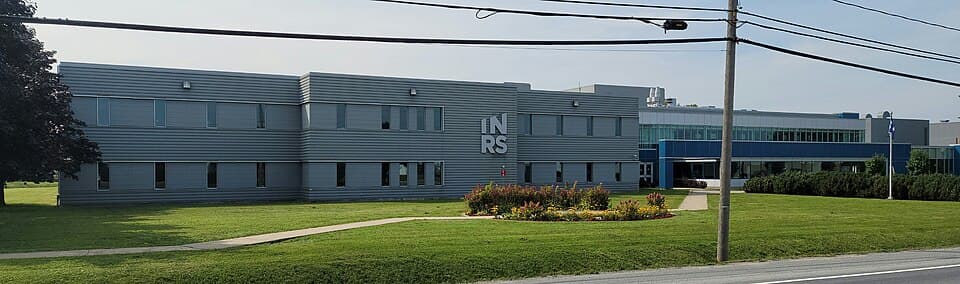
-Campus_de_l'INRS-2023-09-23.jpg)
Institut national de la recherche scientifique
Quebec City, Quebec
Compare Institut national de la recherche scientifique programs, admissions, costs, residence, student support, and career pathways in one source-reviewed guide. Jump to the decision section you need below.
Reviewed August 16, 2026 · Official university sources · How we review guides
Save this to your free account
Track Institut national de la recherche scientifique with a checklist for how you apply. Free account. Add your dates in the tracker to request reminder emails; unsubscribe any time.
Free account. No card needed.
Overview
Quick Facts
| Location | Quebec City, Quebec |
|---|---|
| School Type | Smaller undergraduate-focused environment |
| Directory Size | Small university |
| Campus Setting | Major-city campus environment |
| Ranking Signal | No QS World 2026 position listed in this guide |
| Program Strengths | Science, Research, Engineering, Health, Environment |
Start with campus and program fit, then verify official admissions, residence, and cost details before building the final application list.
Admissions Planning
Fall 2027 graduate admissions
Start with the program, supervisor, and graduate cycle
INRS is not an ordinary undergraduate university. Its current degree admission is for second- and third-cycle programs. Most research master’s and doctorates require a professor’s agreement before the application, while professional and selected social-science routes can follow a different process.
Fall 2027 general date
March 30, 2027
Confirmed for second- and third-cycle admission.
Water Science exception
February 15
International professional-master’s applicants.
Urban Studies
March 1
Master’s and doctoral Fall 2027 applications.
Fall 2027 confirmed
INRS has published the target-cycle calendar
The academic calendar also confirms an August 30, 2027 term start. Joint Urban Studies, Indigenous Studies, and Earth Sciences programs can follow partner-calendar rules for specified dates, so the exact program still controls.
Graduate admission requirements
| Route | Published base | Boundary |
|---|---|---|
| Research master’s | Relevant bachelor’s degree; program-specific GPA | Most research routes require a professor’s motivated agreement before application; published examples commonly use 3.2/4.3, while Experimental Health Sciences uses 3.0/4.3. |
| Professional master’s | Relevant bachelor’s degree or equivalent preparation | Supervisor pre-approval generally does not apply to professional programs without a thesis, but exact prerequisites and deadlines remain program-specific. |
| Doctorate | Relevant master’s degree; program-specific GPA | Published examples commonly require 3.2/4.3 and a research supervisor; exceptional direct or accelerated routes belong only to named programs. |
| Custom graduate program | 3.2/4.3 or relevant knowledge and experience | Available only where no existing INRS program fits and INRS has the expertise and capacity; the proposed supervisor must approve the plan. |
| Bachelor-level research visitor | Current undergraduate study at another institution | This is an internship route, not admission to an INRS bachelor’s degree; supervisor availability and project fit control. |
Application dates
Fall 2027 general graduate admission
March 30, 2027
Confirmed by the published 2027–2028 INRS academic calendar for second- and third-cycle study.
International professional Water Science master’s
February 15, 2027
Confirmed program/applicant exception for Fall 2027.
Urban Studies master’s and doctorate
March 1, 2027
Confirmed program exception for Fall 2027.
Fall 2027 term begins
August 30, 2027
Confirmed by the 2027–2028 academic calendar.
Winter 2028 general graduate admission
November 1, 2027
Confirmed; international Urban Studies master’s applicants use August 1.
Language requirements
French-language institution
INRS describes itself as a francophone graduate and research institution and encourages French learning for academic success and integration.
Program-specific proof
The admission file asks for proof of language proficiency where required; the exact program and INRS language policy control.
French instruction
Telecommunications and custom-program pages state that courses are offered in French, with language courses available to non-francophone students.
English documents
Application documents in French or English are accepted without translation; documents in other languages need an accredited translation.
No universal public test score
INRS's general admission material does not publish one TOEFL, IELTS, TEF, or TCF score that applies to every graduate program.
Fall 2027 general deadline is March 30, 2027
Fall 2027 · Published for this period
The published 2027–2028 calendar confirms this date for second- and third-cycle admission and program changes, subject to named exceptions.
Applies to: All graduate applicants, International, Prior university study, Experience / alternative
Institut national de la recherche scientifique: 2027–2028 academic calendar · Verified August 16, 2026
Most research applicants need supervisor agreement
Current graduate admission · Published for this period
INRS says a professor must generally accept the candidate into the research team and agree to supervise before application.
Applies to: All graduate applicants, International, Prior university study, Experience / alternative
Institut national de la recherche scientifique: Graduate admission steps, documents, fees, and deadlines · Verified August 16, 2026
No universal public French or English test score is published
Pending · Current graduate admission
INRS's general admission and applicant pages do not give one TOEFL, IELTS, TEF, or TCF threshold for every graduate program.
Use the exact program and institutional language-policy decision rather than inventing a common score.
Applies to: Other Canadian, International, Prior university study
Institut national de la recherche scientifique: Quebec and other-Canadian graduate applicant guidance · Verified August 16, 2026
Experimental Health Sciences master’s publishes 3.0/4.3
Current program admission · Published for this period
This named program uses 3.0/4.3, can consider lower results exceptionally, requires relevant preparation, supervisor acceptance, research fit, French, and a two-page motivation text.
Applies to: All graduate applicants, Other Canadian, International, Prior university study, Experience / alternative
Institut national de la recherche scientifique: Experimental Health Sciences master’s admission · Verified August 16, 2026
Official graduate admission sources
Programs and Pathways
Graduate programs and centres
Match the research field to its centre and city
INRS organizes graduate education around research themes and centres, not a conventional undergraduate faculty catalogue. Program type, supervisor, location, partner institution, and thesis or professional structure all matter.
Armand-Frappier Health Biotechnology
Laval-based master’s and doctoral research in virology, immunology, biology, microbiology, biotechnology, and experimental health sciences.
Boundary: This is graduate and research training; bachelor-level participation is through internships rather than an INRS bachelor’s degree.
Water Earth Environment
Quebec City programs include research and professional master’s and doctorates in Water and Earth Sciences, plus selected double degrees.
Boundary: Some Earth Sciences routes are jointly administered with Université Laval and follow partner-calendar rules where stated.
Energy Materials Telecommunications
Research and professional graduate options span energy, materials, telecommunications, photon science, plasma, and industry-oriented wireless communications.
Boundary: Teams begin moving progressively to Laval from Fall 2026; confirm the actual laboratory before choosing housing.
Urbanisation Culture Society
Montreal and Quebec City graduate study covers populations, urban studies, Indigenous studies, knowledge mobilization, and health and society.
Boundary: Program location, joint administration, supervisor requirements, and internship versus thesis profiles differ.
Ruralités durables
The new Charlevoix centre is dedicated to research and higher education on rural territories and communities.
Boundary: Its current page says master’s and doctoral programs will be announced later; do not invent a Fall 2027 program list.
Custom programs
A master’s or doctorate can be designed where existing programs do not fit and INRS has the resources and capacity.
Boundary: Custom status is exceptional, supervisor-led, and subject to an approved integrative theme and program conditions.
International double degrees
More than ten second- and third-cycle pathways combine INRS study with a named international university partner.
Boundary: Applicants must apply to both institutions and satisfy both programs; this is not automatic mobility for every INRS student.
Current pages disagree on four versus five centres
The current centre directory lists five after adding Ruralités durables in Charlevoix. An older live international page still says four. Use the current directory for the network count, then confirm the exact program location; Ruralités durables programs remain forthcoming.
Health Biotechnology spans human, animal, and environmental health
Current program catalogue · Published for this period
Laval-based graduate offerings include virology and immunology, biology, microbiology and biotechnology, and experimental health sciences.
Applies to: All graduate applicants, International, Prior university study
Institut national de la recherche scientifique: Health and biotechnology graduate programs · Verified August 16, 2026
Water and Earth Sciences include research and professional routes
Current program catalogue · Published for this period
Quebec City offerings include master’s and doctorates plus double-degree paths in climate change, aquatic ecotoxicology, renewable energy, and geoengineering.
Applies to: All graduate applicants, International, Prior university study
Institut national de la recherche scientifique: Water, Earth, and environment graduate programs · Verified August 16, 2026
Energy Materials Telecommunications connects advanced science and industry
Current program catalogue · Published for this period
Graduate study spans energy and materials, telecommunications, photon science, plasma, and intelligent wireless communications, with research and professional formats.
Applies to: All graduate applicants, International, Prior university study
Institut national de la recherche scientifique: Energy, materials, and telecommunications graduate programs · Verified August 16, 2026
Social-science programs operate in Montreal and Quebec City
Current program catalogue · Published for this period
The Urbanisation Culture Society centre covers populations, urban studies, Indigenous studies, knowledge mobilization, and health and society at the graduate level.
Applies to: All graduate applicants, International, Prior university study, Experience / alternative
Institut national de la recherche scientifique: Urbanisation, culture, and society graduate programs · Verified August 16, 2026
Ruralités durables has no published graduate program list yet
Pending · Fall 2027 program planning
The centre’s current page says master’s and doctoral programs will be unveiled later.
Research-centre status alone does not establish a currently admitting degree.
Applies to: All graduate applicants, International, Prior university study, Experience / alternative
Institut national de la recherche scientifique: Centre Ruralités durables and forthcoming programs · Verified August 16, 2026
Joint programs can follow partner calendars
2027–2028 academic calendar · Published for this period
The 2027–2028 calendar excludes joint Urban Studies, Indigenous Studies, and Earth Sciences programs from specified INRS dates and directs students to the partner institution’s calendar.
Applies to: All graduate applicants, International, Prior university study, Experience / alternative
Institut national de la recherche scientifique: 2027–2028 academic calendar · Verified August 16, 2026
Residence and Campus Fit
Multicity housing planning
INRS provides housing guidance, not a residence guarantee
The first-party housing page makes students responsible for finding their own accommodation. It publishes no INRS residence building, room rate, or graduate guarantee. Confirm the centre and laboratory before choosing a city or signing a lease.
INRS residence inventory
Not published
Private-market and external student-housing guidance instead.
Fall 2027 guarantee
None published
Students are responsible for securing accommodation.
First planning step
Confirm the lab
The centre and research unit determine the practical location.
| Location | Planning evidence | INRS room rate |
|---|---|---|
| Laval | Armand-Frappier Health Biotechnology is based here, and Energy Materials Telecommunications teams move progressively to the Laval campus from Fall 2026. | No INRS residence rate published |
| Quebec City | Water Earth Environment and one Urbanisation Culture Society campus operate here; students should prioritize transit to the assigned centre or laboratory. | No INRS residence rate published |
| Montreal | Urbanisation Culture Society has a Montreal campus; applicants should confirm the actual course and research location. | No INRS residence rate published |
| Varennes | Some energy and materials research activity is associated with this location; the supervisor must confirm where laboratory work occurs. | No INRS residence rate published |
| Charlevoix | The new Ruralités durables centre expands the network, but its graduate programs are still forthcoming. | No INRS residence rate published |
Account for the EMT relocation
Energy Materials Telecommunications teams move progressively from Place Bonaventure to Laval from Fall 2026. A general centre name is not enough—ask the supervisor where courses and laboratory work will occur during Fall 2027.
Students are responsible for finding housing
Current housing guidance · Published for this period
INRS explicitly tells each incoming person to conduct their own housing search and provides market, lease, and tenant-rights guidance.
Applies to: All graduate applicants, International, Prior university study, Experience / alternative
Institut national de la recherche scientifique: Off-campus housing responsibilities and location guidance · Verified August 16, 2026
No INRS-owned residence inventory is published
Pending · Current and Fall 2027 housing
The official housing page discusses private rooms, apartments, shared housing, sublets, and student residences generally but lists no INRS residence building.
Do not invent a university residence, room count, or application process.
Applies to: All graduate applicants, International, Prior university study, Experience / alternative
Institut national de la recherche scientifique: Off-campus housing responsibilities and location guidance · Verified August 16, 2026
No INRS residence rate is published
Pending · Current and Fall 2027 housing
The first-party housing guide warns that Quebec housing prices are rising but does not publish an INRS room rate.
Budget from a verified lease or market listing for the assigned city.
Applies to: All graduate applicants, International, Prior university study, Experience / alternative
Institut national de la recherche scientifique: Off-campus housing responsibilities and location guidance · Verified August 16, 2026
No graduate housing guarantee is published
Pending · Fall 2027 housing
INRS urges students to begin early, arrange temporary housing when needed, and contact support after unsuccessful searches rather than promising a room.
Plan private or external student housing and do not treat general housing guidance as a reserved room.
Applies to: All graduate applicants, International, Prior university study, Experience / alternative
Institut national de la recherche scientifique: Off-campus housing responsibilities and location guidance · Verified August 16, 2026
EMT teams move progressively to Laval from Fall 2026
Fall 2026 onward · Published for this period
INRS warns that Place Bonaventure teams are relocating and tells students to confirm where courses and laboratory activity will occur.
Applies to: All graduate applicants, International, Prior university study
Institut national de la recherche scientifique: Off-campus housing responsibilities and location guidance · Verified August 16, 2026
Official housing and location sources
Housing and Location Questions
| Campus Setting | Major-city campus environment |
|---|---|
| Residence | Check residence guarantee rules, first-year room styles, meal plans, deposit deadlines, and off-campus housing pressure. |
| City Fit | Students should compare transit, weather, cost of living, safety, and community feel in Quebec City. |
| Commuting | If living off campus, map commute time to classes, labs, placements, and evening activities before committing. |
Tuition, Scholarships, and Aid
2026–2027 cost and funding evidence
Separate the published bill from the funding package
INRS publishes tuition by legal status, degree cycle, and research or professional format. Supplemental-fee scholarships and sector funding must be applied separately; the gross table and the eventual net student account are not interchangeable.
Quebec graduate student
$1,732.40 per initial 15-credit term
2026–2027 published total; three-term total is $5,197.20.
Canadian outside Quebec, professional master’s
$6,666.35 per 15-credit term
2026–2027 published total before any individually awarded relief.
Canadian outside Quebec, research master’s
$5,038.85 per initial 15-credit term
The page also says these students receive a scholarship covering the $3,306.45 supplemental component.
Other international, professional master’s
$12,588.80 per 15-credit term
2026–2027 published total including the listed $300 international health-insurance fee.
Other international, research master’s
$11,147.90 per initial 15-credit term
Supplemental-fee scholarships are available but not automatic for every master’s student.
Other international doctorate
$10,055.00 per initial 15-credit term
The page states doctoral students receive a scholarship covering the supplemental-fee component.
2027–2028 tuition
Pending
The Fall 2027 calendar is published, but the complete 2027–2028 fee table was not published on August 16, 2026.
2027–2028 tuition remains pending
Fall 2027 dates are confirmed, but the current fee table is 2026–2027 and says rates are revised each September. Keep those prices labelled by year until the next table is published.
Sector-specific funding
Science/health research master’s minimum
$7,355 per term
Current minimum for six consecutive terms in an eligible full-time thesis master’s, effective May 1, 2026.
Science/health professional master’s minimum
$3,345 per term
Current minimum for six consecutive terms, with a distinct Water Science professional-master’s enhancement.
Science/health doctorate minimum
$8,760 per term
Current minimum for twelve consecutive terms in an eligible full-time doctorate.
Social-science universal doctoral scholarship
$5,000 first year; $4,000 in each of two later years
For eligible full-time social-science doctoral students; external funding is coordinated under the program rules.
Social-science specialization scholarship
$2,000 minimum
Variable professor-led offers for eligible master’s and doctoral students; no published maximum.
Supplemental-fee scholarship
Program- and cycle-dependent
Automatic for admitted doctoral students; some research-master’s awards are allocated by centre or competition, with professional-program exclusions.
Quebec initial graduate term totals $1,732.40
2026–2027 · Published for this period
For 2026–2027, INRS publishes $1,558.80 tuition plus general, student-service, federation, and maximum association fees for a 15-credit term.
Applies to: All graduate applicants, Prior university study, Experience / alternative
Institut national de la recherche scientifique: 2026–2027 tuition and mandatory fees · Verified August 16, 2026
Outside-Quebec research master’s publishes $5,038.85 before scholarship treatment
2026–2027 · Published for this period
The table includes a $3,306.45 supplemental component and says these students receive a scholarship covering that component.
Applies to: Other Canadian, Prior university study
Institut national de la recherche scientifique: 2026–2027 tuition and mandatory fees · Verified August 16, 2026
International research master’s publishes $11,147.90 per initial term
2026–2027 · Published for this period
The 2026–2027 total includes a $9,115.50 supplemental component; a waiver scholarship may apply under separate eligibility and centre rules.
Applies to: International
Institut national de la recherche scientifique: 2026–2027 tuition and mandatory fees · Verified August 16, 2026
2027–2028 tuition remains pending
Pending · 2027–2028
INRS has published the Fall 2027 calendar but not a complete 2027–2028 fee table as of August 16, 2026.
Current fees are revised each September and can change without notice.
Applies to: All graduate applicants, Other Canadian, International, Prior university study, Experience / alternative
Institut national de la recherche scientifique: 2026–2027 tuition and mandatory fees · Verified August 16, 2026
Science/health doctoral minimum is $8,760 per term
Current funding from May 1, 2026 · Published for this period
Eligible full-time students receive the current minimum for twelve consecutive terms from first doctoral registration.
Applies to: All graduate applicants, Other Canadian, International, Prior university study
Institut national de la recherche scientifique: Health and pure/applied science minimum funding · Verified August 16, 2026
Supplemental-fee scholarships differ by program and cycle
Current fee-waiver program · Published for this period
Doctoral students receive the waiver automatically, while research-master’s allocation can be centre-based or competitive; named professional routes are excluded.
Applies to: Other Canadian, International, Prior university study
Institut national de la recherche scientifique: Non-Quebec and international supplemental-fee scholarships · Verified August 16, 2026
Official tuition and funding sources
Cost Planning
| Tuition | Tuition depends on program, student status, and year. Verify domestic and international tuition on the official fee schedule. |
|---|---|
| Scholarships | Check automatic entrance awards, competitive major awards, faculty scholarships, and international-student awards. |
| Living Costs | Budget for residence or rent, food, books, transit, health insurance, winter clothing, and emergency funds. |
| Proof of Funds | International students should confirm current study-permit financial requirements and school-specific cost estimates. |
Student Life and Support
Fit Signals
| Community | Small university profile: compare class feel, access to professors, student clubs, and how easy it is to build community. |
|---|---|
| Student Supports | Review academic advising, accessibility services, mental health supports, international student services, and writing centres. |
| Clubs and Leadership | Look for discipline clubs, cultural groups, entrepreneurship programs, varsity/intramural sports, and volunteering. |
| First-Year Transition | Ask how orientation, peer mentorship, residence programming, and advising help students settle in. |
Co-op, Research, and Career Outcomes
Research internships and professional preparation
Research experience replaces a university-wide co-op stream
INRS publishes year-round research internships, program-specific internship profiles, practice insertions, and double degrees—not a blanket co-op guarantee. Professor capacity, research fit, program rules, funding, and work authorization can all matter.
Research internships
Open to current bachelor’s, master’s, and doctoral students from Quebec, Canada, and abroad throughout the year.
Typical internship funding
Except in stated cases, research internships are paid and average 12 weeks; the supervisor decides scholarship availability and amount.
Urban Studies
The master’s offers a thesis profile and a distinct research-internship profile tied to professional and public-sector practice.
Health and Society doctorate
Includes a three-credit insertion activity in a practice or research environment.
Double degrees
Partner pathways place students on two continents and award one diploma from each participating institution.
Graduate career outcomes
INRS reports 67% of graduates employed within one month and 95% within one year; the page does not present a universal placement guarantee.
Typical research internship
12 weeks
Usually paid, with the supervisor deciding scholarship details.
Application timing
Year-round
Individual projects can still target one academic term.
Graduate employment
95% within one year
Latest INRS claim; not an individual placement guarantee.
Research internships accept students from all three cycles
Current research internship model · Published for this period
Current bachelor’s, master’s, and doctoral students from Quebec, elsewhere in Canada, and abroad can pursue INRS research internships.
Applies to: All graduate applicants, Other Canadian, International, Prior university study
Institut national de la recherche scientifique: First-, second-, and third-cycle research internships · Verified August 16, 2026
Research internships are usually paid and average 12 weeks
Current research internship model · Published for this period
INRS says this applies except in stated cases; the supervisor decides whether a scholarship is available and its amount.
Applies to: All graduate applicants, Other Canadian, International, Prior university study
Institut national de la recherche scientifique: First-, second-, and third-cycle research internships · Verified August 16, 2026
Internship placement depends on supervisor availability
Current research internship model · Published for this period
INRS advises contacting a professor whose research fits and says the final response belongs to that professor and available capacity.
Applies to: All graduate applicants, Other Canadian, International, Prior university study
Institut national de la recherche scientifique: First-, second-, and third-cycle research internships · Verified August 16, 2026
Urban Studies offers a distinct research-internship master’s profile
Current program WIL · Published for this period
The program separates a thesis profile from a research-internship profile connected to governmental, municipal, community, educational, and private-sector work.
Applies to: All graduate applicants, International, Prior university study, Experience / alternative
Institut national de la recherche scientifique: Urban Studies master’s research and internship profiles · Verified August 16, 2026
INRS reports rapid graduate employment
Latest institutional outcome claim · Latest published information; newer cycle not yet confirmed
The current recruitment page says 67% of graduates find employment within one month and 95% within one year.
The page does not provide survey year, sample, occupation quality, or a placement guarantee.
Applies to: All graduate applicants, International, Prior university study
Institut national de la recherche scientifique: Research training, internships, and graduate outcomes · Verified August 16, 2026
No university-wide co-op stream is published
Pending · Current experiential model
INRS instead publishes research internships, program-specific internship profiles, practice insertions, research projects, and international double degrees.
Do not describe supervisor-dependent research experience as guaranteed co-op employment.
Applies to: All graduate applicants, International, Prior university study, Experience / alternative
Institut national de la recherche scientifique: First-, second-, and third-cycle research internships · Verified August 16, 2026
Graduate support follows the research centre
Admitted students can access mentoring, French learning, immigration and insurance guidance, academic-success resources, and financial support. Facilities and local community life vary by centre and city.
Official research-experience and career sources
Official student-support sources
Career Planning
| Experiential Learning | Check whether your target program offers co-op, internships, clinical placements, practicums, studios, field schools, or research terms. |
|---|---|
| Career Services | Compare job boards, employer partnerships, resume support, interview preparation, and alumni mentoring. |
| Research Access | For graduate-school or professional-school pathways, look for undergraduate research assistant roles and lab access. |
| Outcome Questions | Ask where graduates work or study next, and whether outcomes differ by program, co-op stream, or campus. |
INRS applicants need to approach the institution as a graduate research environment rather than a conventional undergraduate university. They should distinguish research master’s, professional master’s, doctoral, custom, and visiting-intern routes; secure supervisor agreement where required; use the confirmed Fall 2027 general and program-specific deadlines; verify French and academic conditions on the exact program page; separate gross 2026–2027 tuition from sector funding and supplemental-fee scholarships; confirm the research centre before finding housing; and treat internships and practice placements as supervisor- or program-dependent rather than guaranteed co-op.
INRS graduate admissions, programs, tuition, funding, housing, and research internship FAQ
Current answers for Quebec, other-Canadian, international, prior-university, and experience-based graduate applicants planning INRS for Fall 2027, with confirmed deadlines, supervisor and program boundaries, the four-versus-five-centre conflict, and unpublished future tuition, housing, and Ruralités durables programs kept visible.
Official Sources and Next Steps
Stellar keeps this guide structured for comparison, but official university pages remain the source of truth for program requirements, tuition, residence, scholarships, deadlines, and policy changes.
Prepared by Stellar Advisers Editorial Team · Reviewed August 16, 2026 · Editorial, corrections, and source methodology
Related Canadian universities
Compare 3 other Quebec records, then continue through the national directory.