Nova Scotia Community College
Plan an NSCC application. Match your program, campus, costs and supports to current official information. Also match your next steps to that information.
Halifax, Dartmouth, Sydney, Truro, Nova Scotia · Community college · Official sources reviewed September 13, 2026 · How we check guides
The short answer
- NSCC offers certificates, diplomas and advanced diplomas. It also lists other learning options.
- Campuses include Halifax, Dartmouth, Sydney and Truro. Some programs also run online or in blended form.
- Canadian and permanent-resident applications are processed first come, first served.
- One active application can hold up to two program choices. The same program at two campuses counts as two choices.
- The application fee is $40 for domestic applicants and C$100 for international applicants. Achieve and the Adult Learning Program have no fee.
NSCC locations
NSCC campuses and delivery
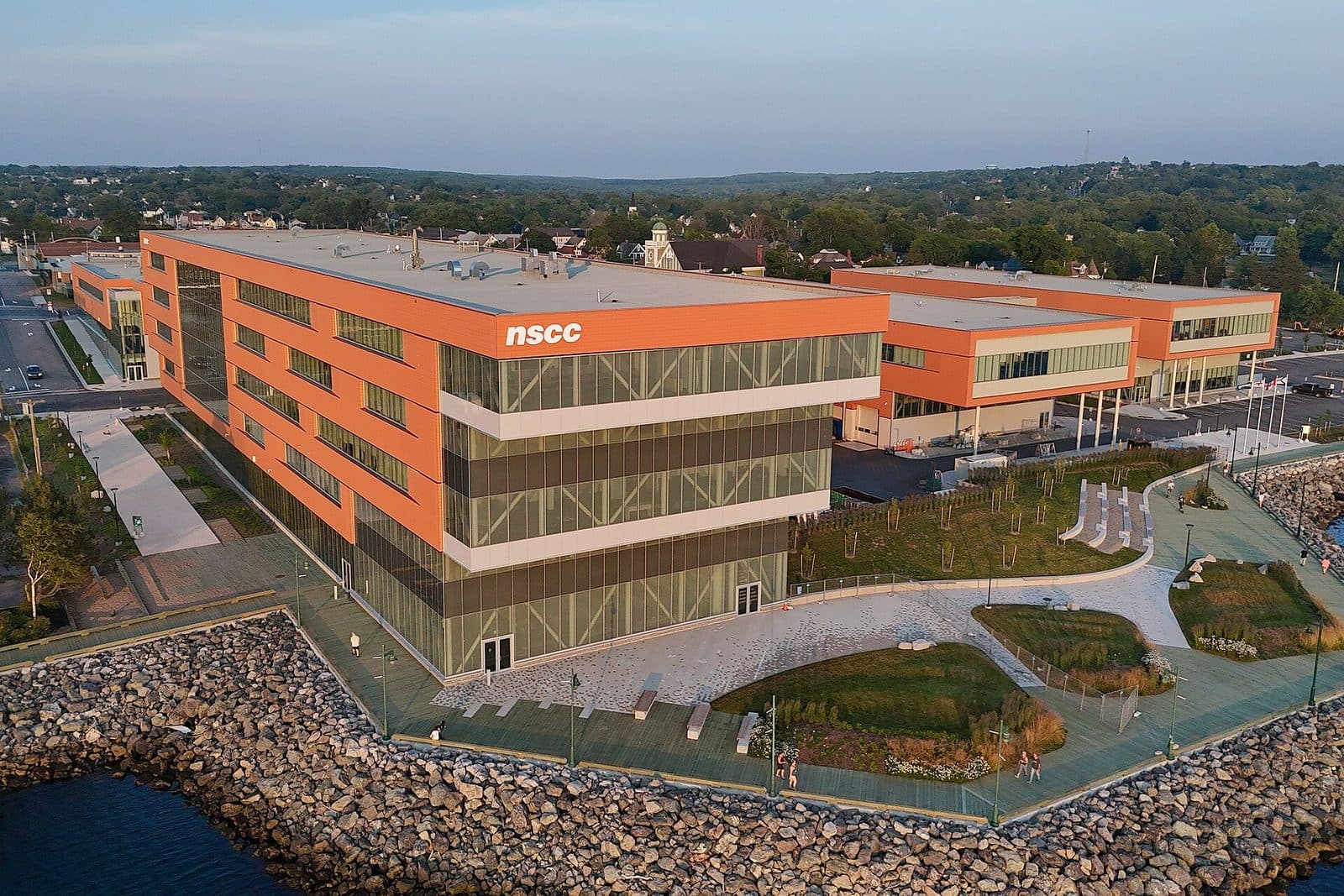
NSCC lists campuses and learning centres across Nova Scotia, plus online and flexible options in selected programs.
The NSCC program directory shows the campus, delivery mode and availability for each offering. Its navigation lists locations. These include Institute of Technology Campus in Halifax, Ivany Campus in Dartmouth, Sydney and Truro. It also lists other regional campuses and eCampus. A campus name in the directory belongs to a particular offering. Confirm it before you plan travel or housing.
More about NSCC campuses and delivery
The directory includes certificates, diplomas, advanced diplomas and other learning options. Use the program page to tell apart full-time, part-time, in-person, blended and online study. On September 12, 2026, the IT Programming page showed January 2027 seats at Institute of Technology Campus for domestic applicants. It also showed a waitlist for international applicants. NSCC says its openings list changes daily. Check the exact intake before applying.
Decision checklist
- Write down the exact program, intake and campus.
- Check delivery mode before making a housing plan.
- Ask NSCC about a campus or delivery change before submitting an application.
Applying to NSCC
Your applicant category and program determine the application route, documents and admission requirements.
NSCC has different guidance for Canadian and permanent-resident applicants and for international students. Canadian and permanent-resident applications are processed first come, first served. You can have one active application with up to two program choices. The same program at two campuses counts as two choices. Nova Scotia high-school applicants can give their Nova Scotia student ID so NSCC can get the transcript. Other applicants should follow the document instructions for their record type.
More about admissions and deadlines
The general requirements page explains that many programs require a high-school graduation diploma or equivalent, while individual programs can add academic or other conditions. IT Programming currently lists a high-school graduation diploma or equivalent; international equivalency and English requirements vary by country. Meeting a published minimum does not by itself guarantee a seat when a program has limited availability.
Applications require a non-refundable fee. It is $40 for domestic applicants and C$100 for international applicants. There is no fee for Achieve or the Adult Learning Program. After admission, the non-refundable tuition deposit is $200 for domestic students and C$5,000 for international students. NSCC must receive it by the deadline in the admission letter or email. Otherwise, the applicant risks losing the seat. The deposit counts toward tuition but cannot transfer to another academic year.
Check an NSCC application
Choose the route
Start with NSCC’s Canadian, permanent-resident or international applicant guidance.
Check the program
Record the exact intake, campus, delivery mode and program requirements.
Submit documents
Apply through the route NSCC names and monitor your account for missing documents or decisions.
Checked . Sources: Apply to NSCC; Canadian and permanent resident applicants; Admission requirements; Program application fee and tuition deposit
Decision checklist
- Use the applicant route matching your status.
- Check program-specific requirements after the general requirements page.
- Keep translations or credential documents moving when NSCC requests them.
NSCC work experience and pathways
Work experience and transfer planning are program- and receiving-institution-specific; neither guarantees a placement or admission result.
Work-experience rules differ by program and course type. IT Programming has a mandatory field-experience credit course that is typically unpaid and lasts about five weeks. It separately offers an optional co-op credit course between years one and two: paid full-time related work lasting at least 12 weeks and 420 hours. Do not treat the optional paid co-op as a substitute for the mandatory field experience.
More about careers and work experience
NSCC lists co-op only for selected programs. Students apply for co-op, pay the applicable co-op tuition and remain responsible for securing employment, transportation, accommodation and other work-term costs. Eligibility therefore does not guarantee a placement; check the exact program page and current course requirements.
NSCC’s student and graduate employment service provides job postings, career resources and guidance for job-search preparation. It also connects employers with students and graduates, and NSCC says each campus offers graduate employment services. These services support a search but do not promise employment.
NSCC’s after-college and combine-college-and-university guidance can help students explore further study. Credit for prior learning is a separate assessment: NSCC says relevant previous learning may be eligible, but not all programs participate. A university or receiving college controls its own admission and credit decision, so request a named pathway or written assessment for your exact credential and courses.
NSCC pathway planning boundaries (table)
Checked
| Question | What the official guidance supports |
|---|---|
| Prior learning | Relevant course or employment learning may be assessed through NSCC’s RPL process; eligibility varies by program |
| University study | NSCC provides guidance for combining college and university; receiving institutions set admission and credit rules |
| Co-op | Selected programs; student secures the placement and pays related work-term costs |
Source for this table: 2026–27 co-op programs, Credit for prior learning, Combine college and university
Decision checklist
- Confirm WIL or co-op in your exact program.
- Ask the receiving institution to assess your named credential and courses.
- Keep placement, travel and accommodation costs in your work-term plan.
Continue by decision
Admissions & Deadlines
Your applicant category and program determine the application route, documents and admission requirements.
Read on this pagePrograms & Pathways
NSCC offers certificates and diplomas with different campus, delivery and work-experience rules. IT Programming is one example: a diploma that typically takes two years, as checked in October 2026. Compare it with Electrical Construction and Industrial, Culinary Management and Business Administration below.
Open sectionResidence & Housing
Campus housing exists at selected NSCC locations, with room types, priority rules and costs set by location.
Open sectionCosts & Financial Aid
NSCC domestic full-time tuition is $3,800 for certificate, diploma and advanced diploma programs in 2026–27. Student fees, books and program costs can be separate. Compare international tuition, payment dates, refund rules and award eligibility below.
Open sectionStudent Life & Support
MyNSCC and NSCC’s student-support pages point students to records, services, learning help and wellbeing resources.
Open sectionCareers & Work Experience
Work experience and transfer planning are program- and receiving-institution-specific; neither guarantees a placement or admission result.
Read on this page
At a glance
- Nova Scotia campus and delivery choices
- IT Programming diploma example
- 2026–27 domestic and international tuition scope
- MyNSCC and student support tools
Official sources
Open the official page again before applying, accepting an offer, paying, selecting housing, or relying on a transfer or immigration pathway.
- ProgramsNova Scotia Community College · checked
- IT ProgrammingNova Scotia Community College · checked
- Apply to NSCCNova Scotia Community College · checked
- Canadian and permanent resident applicantsNova Scotia Community College · checked
- Admission requirementsNova Scotia Community College · checked
- Graduate employment servicesNova Scotia Community College · checked
- Work experienceNova Scotia Community College · checked
- 2026–27 co-op programsNova Scotia Community College · checked
- Credit for prior learningNova Scotia Community College · checked
- Combine college and universityNova Scotia Community College · checked
- Program openings 2026–2027Nova Scotia Community College · checked
- Program application fee and tuition depositNova Scotia Community College · checked
Educational guidance only. Requirements, prices, transfers, housing, immigration eligibility, and availability can change; use the official links in this guide before acting.
Plan your next step
Reopen the exact official program page for your intake and applicant category. Save the requirement, cost, campus, and deadline evidence you used, then confirm any uncertainty with the institution.
Prepared by the Stellar Advisers editorial team · reviewed September 13, 2026