
Emily Carr University of Art + Design
Vancouver, British Columbia
Compare Emily Carr University of Art + Design programs, admissions, costs, residence, student support, and career pathways in one source-reviewed guide. Jump to the decision section you need below.
The short answer
- Apply by January 15, 2027 for Fall 2027 through EducationPlannerBC, then submit your portfolio by January 31, 2027.
- High-school applicants need a 67.0% average (C+, 2.50 GPA) and at least 60.0% in English. GPA means grade point average.
- The portfolio has four equally weighted parts and counts for most of your admission score.
- Tuition for 2026–2027 is about $7,068.50 a year for domestic students and about $31,214 for international students.
- Emily Carr has no on-campus housing, so budget $800–$1,200 a month for shared housing in Vancouver.
Reviewed August 15, 2026 · Official university sources · How we review guides
Save this to your free account
Keep these dates where you'll see them. Free account; we email you before each saved date; unsubscribe any time. Your account’s email pause still applies. The calendar file needs no account.
- Emily Carr application and documentsJanuary 15, 2027
Free account. No card needed.
Overview
Direct planning answer
A portfolio-led art, design, and media university
Emily Carr University of Art + Design is a specialized university in Vancouver. It offers BFA, BDes, and BMA degrees. Every undergraduate starts in Foundation Year. Then you continue into a current major. These majors include Visual Arts, Illustration, Communication Design, Industrial Design, Interaction Design, Animation, or Film + Screen Arts.
67.0%
Published high-school academic minimum
4 components
Equally weighted parts of the 2027 portfolio
Jan 31, 2027
Fall 2027 portfolio deadline
Two ECU pages disagree about the 2027 portfolio
The application-requirements page now publishes the full 2027 specification — four equally weighted components with quotas, prompts, formats, and word limits. The separate Portfolio Tips page still carries an older banner saying its content is “for historical reference only” while approved standards are pending. Treat the requirements page as the operative spec, use the Tips page for judgement rather than counts, and re-open both before you submit.
Fall 2027 cycle status
Fall 2027 · Published for this period
This is unusual for a Canadian university. Emily Carr already publishes the Fall 2027 sequence. Applications open October 1, 2026. The deadline to apply through EducationPlannerBC is January 15, 2027. You must also submit transcripts and required documents by January 15, 2027. The deadline to submit the portfolio through the ECU Admissions Portal is January 31, 2027. The Fall 2027 semester begins September 7, 2027. ECU publishes the 2028 and 2029 cycles on the same page.
These are ECU's own published Fall 2027 dates, not a recurring pattern inferred from an older cycle. Re-check the page before submitting, because ECU labels application fees as subject to change.
Applies to: All applicants
Emily Carr University of Art + Design: How to apply: intakes, deadlines through 2029, and application fees · Verified August 15, 2026
The portfolio decides most of the admission score
Current requirements · Published for this period
ECU states plainly that the portfolio 'counts for the majority of an applicant's overall admissions score.' Qualifying for admission has three components — academic history, portfolio, and English language proficiency — and ECU warns that entrance is highly competitive and not all applicants who meet the academic requirements will receive an offer.
Applies to: All applicants
Emily Carr University of Art + Design: Application requirements: academics, portfolio, and English proficiency · Verified August 15, 2026
Size, founding, and institutional positioning
University-published counts · Published for this period
ECU publishes 2,400+ undergraduate and graduate students, 1,900+ Extended Learning students each year, students from 50+ countries, a 1:19 faculty–student ratio, and 700+ faculty and staff. Founded in 1925 as the Vancouver School of Decorative and Applied Arts, it became a university in 2008 and describes itself as the only university in British Columbia dedicated exclusively to practice-based education in the arts, media, and design, and one of just four post-secondary art institutions in Canada.
These are ECU's own marketing counts. Treat them as directional rather than audited enrolment data.
Applies to: All applicants
Emily Carr University of Art + Design: ECU at a Glance: enrolment, rankings, facilities, and outcomes · Verified August 15, 2026
How ECU states its ranking position
Current published rankings · Published for this period
ECU says it is 'Canada's top art and design university, ranked among the world's top 30' and lists #1 in Canada for Art + Design (QS 2026), top 30 worldwide in Art + Design (QS 2026), #7 worldwide in Animation (Animation Careers 2026), and 100+ years of history. Its history page adds that ECU has been ranked #1 in Canada for art and design since 2021.
ECU is citing third-party subject rankings. It is not using its own measurement. Before you use a ranking as a decision factor, verify the current QS art and design table directly.
Applies to: All applicants
Emily Carr University of Art + Design: ECU at a Glance: enrolment, rankings, facilities, and outcomes · Verified August 15, 2026
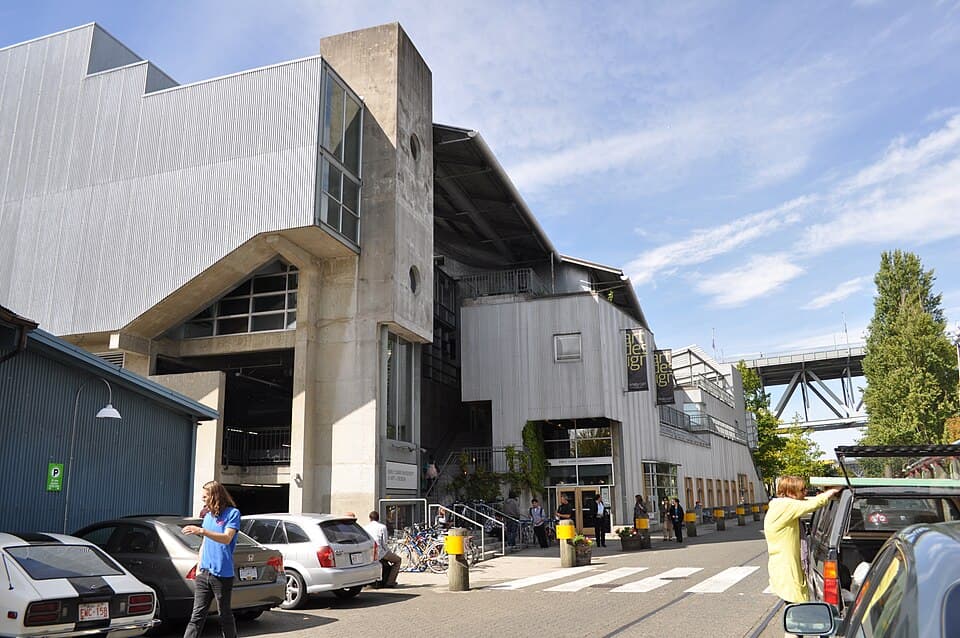
The Great Northern Way campus in Vancouver
Current campus · Published for this period
ECU moved from Granville Island to the purpose-built Great Northern Way campus at 520 East 1st Avenue in 2017. It expanded into the Centre for Digital Media in 2025. The 26,600-square-metre building is LEED Gold-certified and was designed by Diamond Schmitt Architects. ECU describes it as Canada's first purpose-built facility for education and research in visual arts, design, and media arts. ECU places it in Vancouver's innovation and arts district, steps from Mount Pleasant and Olympic Village. Regular building hours are 7:30am to 11:00pm on weekdays.
Applies to: All applicants
Emily Carr University of Art + Design: Our History: founding, timeline, and the Great Northern Way campus · Verified August 15, 2026
Official overview sources
Detailed application guides
Admissions Planning
Emily Carr admission and portfolio requirements for 2027
Grades set academic eligibility. But they are not the whole decision. ECU says admission is competitive. The portfolio counts for the majority of the overall admission score.
| Application item | Current official requirement |
|---|---|
| Application route and fee | ECU has no front-door application of its own. Apply through EducationPlannerBC and pay the non-refundable fee there — $72.83 domestic, $112.20 international — then upload documents and the portfolio through the ECU Admissions Portal, which opens within three days. Applicants of Indigenous ancestry and former youth in care may request a fee waiver. |
| Canadian high-school minimum | Graduate from high school with a minimum 67.0% average (C+, 2.50 GPA (grade point average)) across the required courses. You also need at least 60.0% (C) in the required English Studies or English Language Arts course. |
| B.C. and Yukon course pattern | You need English Studies 12 or English First Peoples 12. You also need two Grade 12 academic courses in mathematics, science, social studies, languages, or language arts. Plus two additional Grade 12 academic or eligible elective courses. Ontario applicants present ENG4U plus five more 12U/12M courses. |
| International high school | Finish the highest high school credential that leads to university entry. Show at least 67.0% across the five courses that best match ECU's B.C. pattern. Applicants from China must verify documents through CHESICC. |
| Transfer applicant | Applicants with 15 or more attempted post-secondary credits use the transfer route. They need at least a 2.0 cumulative GPA. Below 2.0 is generally not considered. Second-year standing needs 30 credits, including 18 studio and 12 academic credits. |
| Portfolio | Foundation Year applicants submit four equally weighted components through the ECU Admissions Portal. These are 10 to 20 artwork files (or up to 10 minutes of time-based media). They also include a process-documentation compilation. They also include one of three studio assignments. They also include a two-part writing assignment. ECU says the portfolio counts for the majority of the overall admission score. |
| Portfolio waiver | B.C. public-institution transfers into the BFA in Visual Arts can be admitted on academics alone. They need second-year credit standing and a 3.0 CGPA. Unclassified Studies practising professionals can also be admitted on academics alone. One-semester visiting students can also be admitted on academics alone. |
| English proficiency | Accepted tests include IELTS Academic 6.5 (no band below 6.0), TOEFL 4.5 overall with 4.0 per section from January 21, 2026 onward, Duolingo 110, CAEL 70, CELPIP Academic 4L, PTE Academic 56, and CAE 176. Qualifying education can exempt you: three consecutive years of English-medium Canadian high school at 60%+, four years in a qualifying English-medium country, AP English at 4+, IB English A at 5+, or six post-secondary English credits. |
Confirmed 2027 application deadlines
Apply through EducationPlannerBC, then use the ECU Admissions Portal for documents and the portfolio. The dates below are explicitly published for the 2027 intakes.
Spring 2027
September 15, 2026
Opens August 1, 2026. Semester begins January 11, 2027. Limited seats in selected programs; application, portfolio, transcripts, and required documents share one deadline.
Accelerated Summer Foundation 2027
January 15, 2027
Opens October 1, 2026. Semester begins May 3, 2027. Fast-tracks Foundation Year; application, portfolio, transcripts, and required documents share one deadline.
Fall 2027
January 15 / January 31, 2027
Opens October 1, 2026. Semester begins September 7, 2027. Apply through EducationPlannerBC and submit transcripts/documents by January 15; submit the portfolio through the ECU Admissions Portal by January 31. Fall is the only intake open to all programs.
The four equally weighted portfolio components
These are ECU's published requirements for Foundation Year applicants. They also cover mature students, home-based learners, and the Indigenous learner pathway. Transfer applicants follow a different brief. They submit 10 to 15 recent works, at least half self-directed outside class, plus a nine-prompt questionnaire.
1. Examples of your creative practice
Choose one: 10 to 20 single image files; up to 10 minutes of time-based media; or up to 5 minutes of time-based media plus up to 10 images. All work must be original, made by you, and created within the last two years. Images up to 5 MB (JPG, JPEG, PNG, TIF, TIFF, GIF), video up to 250 MB, audio up to 30 MB. Each PDF page counts as one item.
2. Process documentation
One compilation showing how you move from idea to finished work — sketchbook pages, project documentation, process journals, rough clips, storyboards, or writing about iteration. Submit either a PDF of up to 10 pages or a video of up to 3 minutes, labelled “Process Documentation” in the portal.
3. Studio assignment
Answer exactly one prompt. Build a 3D object using only three sheets of paper and glue, and photograph it from at least two angles. Or map your week in any medium. Or tell a story in three original images that shows something about your creative self.
4. Writing assignment
You enter two pieces on a separate portal screen. The first is a reflection of about 250 words on your studio assignment. It answers five set questions. The second is a 75-word answer on which ECU program you applied to and why.
Build for review quality
Show original ideas, iteration, experiments, and decisions. Show the link between your process and your finished work. ECU asks for at least one piece made from direct observation. Use simple tools, not polished filters. ECU warns against derivative styles or characters borrowed from established sources.
Finish inside the portal
Uploading is not submitting. After every file is in, tick off each component on your status page so ECU knows it is ready for review. Linked media from Vimeo, YouTube, SoundCloud, or Sketchfab must be a single public file that allows embedding — a link a reviewer cannot open may be scored as incomplete.
EducationPlannerBC plus the ECU Admissions Portal
Current published fees · Published for this period
Emily Carr does not run its own front-door application. Applicants apply through EducationPlannerBC. You pay a non-refundable fee there. The fee is $72.83 for domestic applicants and $112.20 for international applicants. Then you upload transcripts, English test results, and the portfolio through the ECU Admissions Portal. That portal opens within three days of applying. Applicants of Indigenous ancestry and former youth in care may request a fee waiver through student recruitment. Portfolios are not accepted by email, in person, or on any other platform.
ECU labels the application fees 'subject to change'. Confirm the amount on EducationPlannerBC before you pay.
Applies to: All applicants
Emily Carr University of Art + Design: How to apply: intakes, deadlines through 2029, and application fees · Verified August 15, 2026
Three intakes a year and their 2027 deadlines
2027 intakes · Published for this period
Spring 2027 begins January 11, 2027. Applications open August 1, 2026. The single September 15, 2026 deadline covers the application, portfolio, transcripts, and documents. Accelerated Summer Foundation 2027 begins May 3, 2027. Applications open October 1, 2026. One January 15, 2027 deadline covers everything. Fall 2027 begins September 7, 2027. Applications open October 1, 2026. January 15, 2027 is for the application and documents. A separate January 31, 2027 deadline is for the portfolio. Spring is a limited-seat, smaller-cohort mid-year intake. Fall is the only intake open to all programs.
Only Fall has a portfolio deadline later than the application deadline. For Spring and Summer, you must finish the portfolio on the application deadline itself.
Applies to: All applicants
Emily Carr University of Art + Design: How to apply: intakes, deadlines through 2029, and application fees · Verified August 15, 2026
The published academic floor
Current requirements · Published for this period
You need high-school graduation with a minimum 67.0% average (C+ letter grade, 2.50 GPA) across the required courses. This includes a minimum 60.0% (C) in English Studies or the provincial English Language Arts equivalent. B.C. and Yukon applicants present English Studies 12 or English First Peoples 12. They also present two Grade 12 academic courses and two further Grade 12 academic or elective courses. Ontario applicants present ENG4U, two 12U/12M academic courses, and three more 12U/12M courses. That is six Grade 12 credits in total. Quebec applicants need at least one full-time year of CEGEP (a Quebec college most Quebec students attend before university) academic-diploma study. This must include English 603 or 604 at C or better.
Applies to: Ontario high school, Other Canadian, International
Emily Carr University of Art + Design: Application requirements: academics, portfolio, and English proficiency · Verified August 15, 2026
The four equally weighted first-year portfolio components
Current published specification · Published for this period
For Foundation Year applicants — including mature students, home-based learners, and the Indigenous learner pathway — the portfolio has four equally weighted components. (1) Examples of your creative practice: 10 to 20 single images, OR up to 10 minutes of time-based media, OR up to 5 minutes of time-based media plus up to 10 images, all original, made by you, and created within the last two years. (2) Process documentation: one compilation as a PDF of up to 10 pages or a video of up to 3 minutes. (3) A studio assignment answering one of three prompts. (4) A writing assignment of roughly 250 words reflecting on the studio assignment plus a 75-word answer on the program you chose and why.
Applies to: All applicants
Emily Carr University of Art + Design: Application requirements: academics, portfolio, and English proficiency · Verified August 15, 2026
The three studio-assignment prompts
Current published specification · Published for this period
Applicants respond to exactly one of three published prompts: construct a three-dimensional object using only three sheets of paper and glue, and include images from at least two different angles; map your week by making something that responds to the activities of a typical week, in any medium; or tell a story in three original images that reveals something about your creative self. The written reflection then answers five set questions — why you made it, your inspirations, what challenged you, how you adjusted through making, and what you learned that you might develop further at ECU.
The studio assignment and the writing assignment are linked. ECU says the studio piece informs the reflection, so make the object before writing about it.
Applies to: All applicants
Emily Carr University of Art + Design: Application requirements: academics, portfolio, and English proficiency · Verified August 15, 2026
File formats, size caps, and the submission checklist
Current published specification · Published for this period
Images must be JPG, JPEG, PNG, TIF, TIFF, or GIF at up to 5 MB each. Files taller or wider than 1,920 pixels may be downsized by the platform. Video must be MP4, MOV, MPG, MPEG, or MPV at up to 250 MB each. Audio must be MP3, FLAC, or OGG at up to 30 MB. Documents must be PDFs, and each PDF page counts as one portfolio item against the quota. Linked streaming media is accepted from Vimeo, YouTube, SoundCloud, and Sketchfab only. It must be an individual publicly accessible file that allows embedding. It may be scored as incomplete if a reviewer cannot open it. Playlists and collections are rejected. After uploading, each component must be ticked off on the applicant status page for ECU to review it.
Applies to: All applicants
Emily Carr University of Art + Design: Application requirements: academics, portfolio, and English proficiency · Verified August 15, 2026
Two official pages disagree about whether the 2027 spec is final
Official-source conflict · 2027 entry
ECU's Portfolio Tips page still shows this banner: 'ECU is changing its portfolio standards for 2027. Updated information will be published here as soon as it is approved. The information contained here is for historical reference only.' The Application Requirements page now publishes the full 2027 specification, component by component. It lists quotas, prompts, formats, and word limits. Treat the Application Requirements page as the operative spec. Treat the Tips page as advisory colour. But re-open both before you submit.
The Tips page's own guidance is still useful and consistent. It covers at least three different mediums. It covers recent work from the last two years. It covers experimental and observational studies. It covers no copied imagery without context. It covers detail or in-progress shots. But do not build a file count from it.
Applies to: All applicants
Emily Carr University of Art + Design: Portfolio Tips page and its 2027 historical-reference notice · Verified August 15, 2026
The transfer path and its separate portfolio rules
Current requirements · Published for this period
Anyone with 15 or more attempted post-secondary credits (about five courses) uses the transfer path. You need a minimum 2.0 cumulative GPA on all attempted undergraduate study. Applicants below 2.0, or required to withdraw, are generally not considered. Fewer than 15 credits means you are assessed on high-school credentials instead. Consideration for second year requires at least 30 credits. That includes 18 visual art studio credits and 12 academic credits (six English literature and six art history). Transfer portfolios are 10 to 15 examples of recent work. 50% or more must be original self-directed projects made outside a structured class. You also need a nine-prompt applicant questionnaire. Conditional admission on a partial CGPA is possible with a final official transcript before the program begins.
Applies to: Transfer
Emily Carr University of Art + Design: Application requirements: academics, portfolio, and English proficiency · Verified August 15, 2026
Who is exempt from the portfolio
Current policy · Published for this period
Three groups can be admitted on academic performance alone. Transfer applicants to the BFA in Visual Arts from a public B.C. college, university, or polytechnic qualify for a waiver if they meet three conditions. They must meet ECU's credit minimum for second year or higher. They must hold a CGPA of 3.0 or higher on a 4.0 scale. They must have official transcripts sent directly to ECU Admissions by the intake's transcript deadline. Post-secondary-educated practising artists applying through the Unclassified Studies pathway do not submit a portfolio. Visiting students taking one semester from an accredited visual arts or design degree also do not submit one.
The waiver is narrow. It applies to B.C. public-institution transfers into BFA Visual Arts only. Applicants mixing credits from inside and outside B.C. must ask a recruitment coordinator whether they qualify.
Applies to: Transfer, Mature
Emily Carr University of Art + Design: Application requirements: academics, portfolio, and English proficiency · Verified August 15, 2026
English-language evidence
Current requirements · Published for this period
Accepted tests and minimums: IELTS Academic 6.5 with no component below 6.0. TOEFL 4.5 overall with at least 4.0 in each of listening, reading, speaking, and writing for tests taken from January 21, 2026 onward. Or TOEFL iBT 84 with 20 in speaking, reading, and listening and 18 in writing for earlier tests. Duolingo English Test 110. CAEL 70 overall. CELPIP Academic Level 4L. PTE Academic 56. CAE 176 with no individual score below 169. MELAB 81. Exemption routes include three consecutive years of full-time English-medium Canadian high school at a 60% average. They include four consecutive years of English-medium study in a qualifying country. They include AP English Language or Literature at 4 or higher. They include IB English A at 5 or higher. They include six post-secondary English credits, or a degree taught in English. Applicants from India need 75% on their senior English subject.
The Creative Art Pathway runs with Vancouver Community College. It combines English upgrading with ECU studio courses. It is for international applicants. They must meet the academic and portfolio bars, but not the language bar.
Applies to: International
Emily Carr University of Art + Design: Application requirements: academics, portfolio, and English proficiency · Verified August 15, 2026
First and second choice, and what competitiveness means
Current policy · Published for this period
Applicants pick a first-choice program and a second-choice program. ECU tries to admit qualified applicants to their first choice. Once that program is full, ECU may admit them to their second choice instead. ECU repeats twice on the how-to-apply page that entrance is highly competitive. Meeting the academic requirements does not produce an offer. Applicants must disclose every high school and post-secondary institution they attempted. They must give a transcript for each, regardless of the grade earned.
Applies to: All applicants
Emily Carr University of Art + Design: How to apply: intakes, deadlines through 2029, and application fees · Verified August 15, 2026
Official admission and portfolio sources
Programs and Pathways
Emily Carr undergraduate programs and Foundation Year
Choose a first- and second-choice program when applying, but plan for the shared first year. Foundation courses let students work across art, design, and media before the major sequence becomes more specialized.
| Degree or stage | Current route |
|---|---|
| Bachelor of Fine Arts | Illustration and Visual Arts, in the Audain Faculty of Art, spans ceramics, drawing, painting, print media, sculpture, photography, and new media and sound arts. Critical + Cultural Practice no longer appears in ECU's live major directory. |
| Bachelor of Design | Communication Design, Industrial Design, and Interaction Design, in the Ian Gillespie Faculty of Design + Dynamic Media. |
| Bachelor of Media Arts | 2D + Experimental Animation, 3D Computer Animation, and Film + Screen Arts, also in the Ian Gillespie Faculty of Design + Dynamic Media. |
| Minors and course tracks | Five minors — Art + Text, Curatorial Practices, Ecological Design Practice, Ecological Practices in Art, and Social Practices + Community Engagement — plus two course tracks, the Creative Art Pathway and Writing. Students graduate with a major and an optional minor. |
| Foundation Year | All undergraduate degrees begin with a common Foundation Year in art, design, media, critical thinking, and writing before students continue into a major. The Accelerated Summer Foundation Program fast-tracks the same year. |
Architecture correction
ECU does not list an undergraduate architecture major. Are you drawn to spatial, product, interaction, or communication design? Compare the actual BDes majors instead. Do not treat Architecture as an Emily Carr degree.
Critical + Cultural Practice correction
Critical + Cultural Practice no longer appears among the eight majors in ECU's live directory, and the Audain Faculty of Art lists only Illustration and Visual Arts. The name still survives in one line of the application-requirements page. Confirm with ECU admissions before applying to it.
Three degrees and the eight majors currently listed
Current inventory · Published for this period
Emily Carr awards the Bachelor of Fine Arts, the Bachelor of Design, and the Bachelor of Media Arts. The live undergraduate directory lists eight majors: 2D + Experimental Animation, 3D Computer Animation, Communication Design, Film + Screen Arts, Illustration, Industrial Design, Interaction Design, and Visual Arts. At the graduate level ECU offers the MFA and MDes.
Applies to: All applicants
Emily Carr University of Art + Design: Undergraduate degrees, majors, minors, and course tracks · Verified August 15, 2026
Critical + Cultural Practice is no longer listed as a major
Official-source conflict · Current inventory
Critical + Cultural Practice does not appear among the eight majors on ECU's undergraduate directory, and the Audain Faculty of Art page lists only Illustration and Visual Arts as its programs. The name still survives on the application-requirements page, where two transfer questionnaire prompts are marked 'not required for applicants to Visual Arts, Illustration or Critical + Cultural Practice.' The live directory is the stronger evidence, so treat the major as retired or renamed.
Do not build an application around Critical + Cultural Practice. Do not do this without confirming directly with ECU admissions. Confirm that it is still an entry option for your intake.
Applies to: All applicants
Emily Carr University of Art + Design: Undergraduate degrees, majors, minors, and course tracks · Verified August 15, 2026
Minors and the two unique course tracks
Current inventory · Published for this period
ECU currently lists five minors — Art + Text, Curatorial Practices, Ecological Design Practice, Ecological Practices in Art, and Social Practices + Community Engagement — and says students graduate with a major plus an optional minor. Two unique course tracks sit alongside them: the Creative Art Pathway and Writing.
Applies to: All applicants
Emily Carr University of Art + Design: Undergraduate degrees, majors, minors, and course tracks · Verified August 15, 2026
Every degree starts in Foundation Year
Current structure · Published for this period
All undergraduate programs start with a common Foundation Year. It covers art, design, and media, plus critical thinking and writing. It includes hands-on studio projects, reading, dialogue, and reflection. ECU lists these highlights: interdisciplinary exploration, the Foundation Forum lecture series with guest artists and designers, and theory-plus-practice preparation for the major. Students choose a major after Foundation Year. Then they build through second, third, and fourth year. They get access to ECU's shops and studios.
Applies to: All applicants
Emily Carr University of Art + Design: Foundation Year: structure and program highlights · Verified August 15, 2026
The Accelerated Summer Foundation route
Summer 2027 · Published for this period
ECU runs a separate Accelerated Summer Foundation Program. It fast-tracks the Foundation Year. The Summer 2027 cohort begins May 3, 2027. Applications open October 1, 2026. There is a single January 15, 2027 deadline for the application, portfolio, transcripts, and documents.
Applies to: All applicants
Emily Carr University of Art + Design: Accelerated Summer Foundation Program · Verified August 15, 2026
Four faculties and which degrees each houses
Current structure · Published for this period
The Audain Faculty of Art houses Illustration and Visual Arts. Its disciplines are ceramics, drawing, painting, print media, sculpture, photography, and new media and sound arts. The Faculty of Culture + Community provides the academic core for every undergraduate, including Foundation Year. It owns the minors. The Ian Gillespie Faculty of Design + Dynamic Media houses the Bachelor of Design and the Bachelor of Media Arts. These cover communication, industrial, and interaction design plus animation, film, and new media. The Jake Kerr Faculty of Graduate Studies holds the MFA and MDes.
Applies to: All applicants
Emily Carr University of Art + Design: The four faculties and which degrees each one houses · Verified August 15, 2026
Architecture is not an Emily Carr degree
Current inventory · Published for this period
Architecture does not appear among ECU's three degrees, eight majors, five minors, or two course tracks. Some applicants like spatial, product, or environment-scale work. They should compare Industrial Design, Interaction Design, and Communication Design in the Ian Gillespie Faculty of Design + Dynamic Media. They should not treat architecture as an ECU route.
This is evidenced by absence from the live program directory rather than by an explicit ECU statement. Re-check the directory if a new program is announced.
Applies to: All applicants
Emily Carr University of Art + Design: Undergraduate degrees, majors, minors, and course tracks · Verified August 15, 2026
Emily Carr Residence & Off-Campus Vancouver Housing
Emily Carr residence and off-campus Vancouver housing
Emily Carr does not have on-campus residence. Students must secure off-campus housing, so there is no first-year bed guarantee or university meal-plan package to compare.
Start early
Vancouver's rental market is competitive. Prepare references, identification, budget evidence, and a temporary-arrival plan before listings peak.
Expand the map
Compare Vancouver neighbourhoods with transit-connected options in Burnaby, New Westminster, and nearby communities.
Verify every listing
Never send money before you confirm the landlord, unit, lease terms, included utilities, transit time, and renter protections. ECU names GEC Living as its only official partner. ECU clearly does not endorse homestay providers.
Emily Carr has no on-campus housing
Current · Published for this period
ECU states directly on its housing guide that 'while ECU doesn't offer on-campus housing, these resources can help you navigate the city's competitive rental market.' There is no residence, no first-year bed guarantee, no residence application deadline, and no university meal plan to compare — every student arranges off-campus accommodation. ECU staffs a Housing Support contact at housingsupport@ecuad.ca.
Applies to: All applicants
Emily Carr University of Art + Design: Off-Campus Housing + Living Guide (no on-campus housing statement) · Verified August 15, 2026
The official off-campus partner and the other listed options
Current · Published for this period
ECU names one official partner: 'GEC Living, Vancouver's largest off-campus student housing provider and ECU's official partner.' There is an ECU-specific inquiry link. Alongside it ECU lists homestays (Liane's Vancouver Homestay, Homadorma). It lists artist residencies (Railway Studios, ARC Live/Work Studios, the City of Vancouver Artist Studio Award Program, Skwachàys Lodge for Indigenous artists). It lists a dozen rental platforms. It lists needs-specific supports for families, women, Indigenous students, and LGBTQIA2S+ students. ECU explicitly says it does not endorse specific homestay providers. It says students must confirm all pricing and conditions themselves.
ECU publishes no rate for GEC Living or any other listed provider. Every price you find is a third-party quote, not an ECU-published fee.
Applies to: All applicants
Emily Carr University of Art + Design: Start Your Housing Search: official partner, homestays, and residencies · Verified August 15, 2026
ECU's published Vancouver living-cost bands
2026–2027 · Latest published information; newer cycle not yet confirmed
For 2026–2027 ECU publishes shared housing at $800–$1,200 per month (roughly $9,600–$14,400 a year). It publishes private apartments at $1,800–$3,000 per month (roughly $21,600–$36,000 a year). It also publishes food at $400–$600 per month ($4,800–$7,200 a year) and personal expenses at $530–$730 per month ($6,360–$8,760 a year). Transportation is largely covered by the U-Pass BC included in mandatory fees. Evo car share at $0.49 per minute and Mobi bike share at $49 per month are extras.
Applies to: All applicants
Emily Carr University of Art + Design: 2026/2027 undergraduate tuition, per-credit fee tables, and Vancouver living costs · Verified August 15, 2026
Fall 2027 housing budget status
2027 pending · 2027–2028
Not yet published. Because ECU operates no residence it will never post a room rate, and the only ECU-published housing numbers are the Vancouver living-cost bands attached to the 2026/2027 tuition page. No 2027–2028 band has been posted.
Budget with the labelled 2026–2027 bands, add a market-rent buffer, and re-check the tuition page when ECU posts the next academic year.
Applies to: All applicants
Emily Carr University of Art + Design: 2026/2027 undergraduate tuition, per-credit fee tables, and Vancouver living costs · Verified August 15, 2026
Official Emily Carr housing sources
Tuition, Scholarships, and Aid
Emily Carr tuition, living costs, and scholarships
ECU's 2026–2027 annual examples assume a 120-credit bachelor's degree completed over four years. They include tuition and mandatory fees but not all studio materials, course charges, rent, food, or personal costs.
| 2026–2027 status | Annual tuition + mandatory fees | Four-year estimate |
|---|---|---|
| Domestic undergraduate | Approximately $7,068.50 | Approximately $28,274 |
| International undergraduate | Approximately $31,214 | Approximately $124,856 |
ECU's published living-cost benchmarks
Shared off-campus housing
$800–$1,200 per month
Private apartment
$1,800–$3,000 per month
Books and supplies
$3,500 per year
Food
$400–$600 per month
Personal expenses
$530–$730 per month
U-Pass BC transit
$191.40 per term (included in mandatory fees)
Entrance-award planning
ECU says applicants are automatically considered for most entrance scholarships. These are judged on academic achievement and artistic merit together. Current examples include several full-Foundation-Year tuition awards for B.C. high-school students entering directly after graduation. They also include international entrance awards from $2,000 to $5,000. ECU publishes no dollar value or average threshold for the B.C. awards. It publishes no per-cycle count for any of them. So an award cannot be budgeted as expected income.
Domestic 2026/2027 tuition and mandatory fees
2026/2027 · Latest published information; newer cycle not yet confirmed
ECU estimates approximately $7,068.50 per year for a domestic student. It estimates approximately $28,274.00 across four years. This is for a domestic student finishing the 120-credit degree in four years. The Fall 2026 and Spring 2027 per-term table shows a domestic student at 12 credits. That student pays $2,093.88 in tuition and related fees plus $1,014.40 in other mandatory fees. That is $3,108.28 per term. 15 credits comes to $3,676.75 and 18 credits to $4,225.81. Mandatory fees include the Student Technology Fee and the Student Support Fee. They also include the Capital Refresh Fee and U-Pass BC for all students. They include the ECSU Health Plan for students taking more than six credits.
ECU labels fees subject to change and reviewed annually by the Board of Governors. Students typically take 12–15 credits per term, so the annual estimate assumes a normal load rather than a guaranteed total.
Applies to: Ontario high school, Other Canadian, Transfer, Mature
Emily Carr University of Art + Design: 2026/2027 undergraduate tuition, per-credit fee tables, and Vancouver living costs · Verified August 15, 2026
International 2026/2027 tuition and the health premium
2026/2027 · Latest published information; newer cycle not yet confirmed
ECU estimates approximately $31,214 per year for an international student. It estimates approximately $124,856 across four years. This is for an international student finishing the 120-credit degree in four years. The Fall 2026 and Spring 2027 per-term table shows an international student at 12 credits. That student pays $11,752.08 in tuition and related fees plus $1,014.40 in other mandatory fees. That is $12,766.48 per term. 15 credits comes to $15,749.50. Newly admitted international students are also charged a one-time $217.24 international health-care insurance premium. It covers four months until B.C. Medical Services Plan coverage begins. It is charged again the following term if MSP is not in place.
Some students have alternative temporary insurance. They can opt out. They must prove coverage to intadvising@ecuad.ca. The deadline is August 15 for a Fall intake. The deadline is December 15 for a Spring intake.
Applies to: International
Emily Carr University of Art + Design: 2026/2027 undergraduate tuition, per-credit fee tables, and Vancouver living costs · Verified August 15, 2026
ECU's own guidance on annual increases
Current policy · Published for this period
Tuition is charged per semester, not per year. It is in Canadian dollars. Rates are domestic or international. ECU says its Board of Governors reviews fees each year. Domestic students can expect tuition to rise by two per cent each year. This is in line with other B.C. universities. International students can expect rises of up to six per cent each year.
Applies to: All applicants
Emily Carr University of Art + Design: 2026/2027 undergraduate tuition, per-credit fee tables, and Vancouver living costs · Verified August 15, 2026
2027–2028 tuition status
2027 pending · 2027–2028
Not yet published. ECU's live schedule covers Summer 2026 and the Fall 2026 plus Spring 2027 terms only, and every figure is labelled subject to change pending Board of Governors review. Use ECU's own stated escalation guidance — two per cent domestic, up to six per cent international — as a planning range rather than a quote.
Budget with the labelled 2026/2027 schedule and re-check the tuition page before treating any figure as a Fall 2027 quote.
Applies to: All applicants
Emily Carr University of Art + Design: 2026/2027 undergraduate tuition, per-credit fee tables, and Vancouver living costs · Verified August 15, 2026
The art-school costs the tuition table excludes
2026/2027 · Latest published information; newer cycle not yet confirmed
ECU publishes books and supplies at $3,500 per year. ECU calls this the single largest cost most applicants forget. ECU warns that extra individual course fees may be charged. These fees cover materials used in or added to student work. Other charges apply too. There is a one-time $40 orientation fee in the first term. There is an $85 graduation fee in the final year. There is a $15 OneCard replacement fee. Locker rental is optional at $17 per term or $30 per academic year. The campus Tool Checkout + Material Resale sells consumables and lends tools short-term.
Material spend varies enormously by major. Ask the specific major how much students buy themselves before locking a budget.
Applies to: All applicants
Emily Carr University of Art + Design: 2026/2027 undergraduate tuition, per-credit fee tables, and Vancouver living costs · Verified August 15, 2026
Entrance scholarships and automatic consideration
Current published awards · Published for this period
ECU says applicants are automatically considered for most entrance awards when they apply. Selection is based on a combination of academic achievement and artistic merit. Several ECU entrance scholarships cover full tuition for the Foundation year. They go to B.C. high-school students entering directly after graduation. Several international entrance scholarships range from $2,000 to $5,000 CAD. They are available for study at any level. Named awards include the Audain Foundation Annual Entrance Scholarships for B.C. students from outside the Greater Vancouver Regional District in years one to three. They include the $1,000 Renée Van Halm + Pietro Widmer Entrance Scholarship for a Foundation entrant. They include the Maple Batalia Memorial Scholarship for a domestic female Foundation entrant. They include the Lloyd Williams Award for top students from the Chilcotin region. They include the Francisco de la Cajiga Entrance Scholarship for the top entering student of Mexican citizenship. They include the Helen Ying Ping Shu Fund established in 2026.
ECU publishes no dollar value or average-threshold table for the full-tuition B.C. awards. It publishes no per-cycle count for any award. So none of these can be budgeted as expected income.
Applies to: All applicants
Emily Carr University of Art + Design: Undergraduate entrance scholarships and automatic consideration · Verified August 15, 2026
Loans, bursaries, and targeted funding
Current · Published for this period
Beyond entrance awards, ECU points undergraduates to government loans and grants. It also points to external scholarships and ECU tuition scholarships. ECU notes some require a separate application with their own deadlines. Targeted routes include funding for Indigenous students. They include tuition waivers, grants, and bursaries for former youth in care. They include donor-funded student awards. They include provincial emergency funding for domestic B.C. residents. Nine credits are required for B.C. student loan eligibility. Twelve credits are required to maintain a BC Arts Council scholarship.
Applies to: All applicants
Emily Carr University of Art + Design: Financial Aid + Awards: loans, grants, bursaries, and donor awards · Verified August 15, 2026
Official tuition and funding sources
Student Life and Support
Studio life and student support at Emily Carr
Fit depends on more than the major name. Look at access to shops and studios. Look at critique culture and equipment booking. Look at galleries, academic advising, and accessibility. Look at counselling, writing support, and international advising. Look at the time and cost of commuting from off-campus housing.
Creative environment
Foundation Year mixes disciplines before specialization. Exhibitions and studio critique make work visible. Peers, faculty, and industry can see the work.
Practical fit
Ask how often the target major uses specialized shops, studios, software, and borrowed equipment. Also ask what materials students buy themselves.
Personal support
Review counselling, wellness, accessibility, advising, writing support, Indigenous initiatives, and international-student services before arrival.
Vancouver routine
Model rent, transit, and food. Model evening studio access and safety. Model the commute home after critiques or project deadlines.
Where students actually spend time on campus
Current campus life · Published for this period
ECU describes the Student Commons on Level 2 as the social heart of campus. It also describes the Oasis Wellness Lounge with programming such as dog therapy and mindfulness. The Wellness Kitchen is for cooking socials. The library has swinging chairs, group tables, and quiet nooks. Food on campus is The Caf and The Tuck Shop, which closes in summer. Mount Pleasant and Olympic Village cafés are steps away. ECU publishes 30+ student clubs and more than 40 exhibitions and events each year. Many of them are student-led.
Applies to: All applicants
Emily Carr University of Art + Design: Campus + Community: student spaces, food, galleries, and the AGP · Verified August 15, 2026
The Emily Carr Students' Union
Current · Published for this period
The Emily Carr Students' Union (ECSU) is an independent, student-led organization. All full-time and part-time ECU students are automatic members. It advocates on student rights, runs events, and supports clubs. These clubs include the Anime + Manga Club, the FLUI Hackathon, the Film Club, the Aboriginal Student Collective, and the BIPOC Artist Collective. There is an application route to start your own. Student media includes WOO Publication and the student-run station Radio Emily. The Student Exhibitions Committee works with the Libby Leshgold Gallery on student-led shows.
Applies to: All applicants
Emily Carr University of Art + Design: Students' Union: membership, clubs, health plan, and student media · Verified August 15, 2026
Galleries, the Urban Screen, and READ Books
Current · Published for this period
The Libby Leshgold Gallery is ECU's public art gallery. It presents contemporary art by established and emerging artists. It also presents artist talks, book launches, lectures, and symposia. The Michael O'Brian Exhibition Commons and RBC Media Gallery on Level 2 are flexible spaces. A rotating committee of students, faculty, and staff programs them. The Urban Screen is on the northeast wall of the Wilson Arts Plaza. It is a partnership with the City of Vancouver's Public Art Program. It runs daily from 8am to 9pm. READ Books is beside the Libby Leshgold Gallery. It is ECU's specialized art bookstore. It is a hub for Vancouver's publishing community.
Applies to: All applicants
Emily Carr University of Art + Design: Galleries + Bookstore: Libby Leshgold, the Commons, Urban Screen, READ · Verified August 15, 2026
Shops, studios, and technical support
Current facilities · Published for this period
ECU describes 20+ unique art, design, and media production environments. Expert technical staff support each one. They give hands-on instruction in motion capture, 3D printing, ceramics, textiles, printmaking, and more. 40 technicians support students in and out of the classroom. Campus-wide services include Tool Checkout + Material Resale for short-term tool loans and consumables. They also include the Digital Output Centre for wide-format printing, risograph, vinyl cutting, and high-resolution scanning. They include the Media Resources Centre for borrowing audio, video, and photo equipment.
ECU's at-a-glance page says '19+ shops, labs + studios' while the shops page says '20+'. Treat the count as approximate and check that the specific facility a major needs is currently open.
Applies to: All applicants
Emily Carr University of Art + Design: Shops + Studios: production environments and technical support · Verified August 15, 2026
U-Pass, the ECSU health and dental plan, and support services
2026/2027 · Latest published information; newer cycle not yet confirmed
The U-Pass BC regional transit pass costs $191.40 per term. It is included in mandatory tuition fees for all students. The ECSU Extended Health and Dental Benefits Plan covers services beyond B.C.'s basic Medical Services Plan. It automatically enrols every student taking more than six credits. It is paid in the Fall term for full-year coverage. It includes legal assistance. You can opt out of it through ECSU. ECU's campus directory also lists several services. These are Counselling Services + Wellness, Accessibility Services, Academic Support, International Student Services, Indigenous Student Services, the Aboriginal Gathering Place, and the Writing Centre.
Applies to: All applicants
Emily Carr University of Art + Design: 2026/2027 undergraduate tuition, per-credit fee tables, and Vancouver living costs · Verified August 15, 2026
Emily Carr Paid Work Experience, Internships & Careers
Paid work experience, internships, and creative careers
ECU's Work Experience Program is the closest match to co-op. Eligible third- and fourth-year undergraduates can earn credit through competitive, paid placements that may be part-time or full-time and normally run for 12 weeks in spring, summer, or fall.
Paid + for credit
The official program describes structured paid work. It does not assume every informal internship is paid or for credit.
Later-year access
Plan for eligibility in third or fourth year. Admission to ECU is not the same as receiving a placement.
Career preparation
The career office also supports portfolios, resumes, and interviews. It helps with job search and mentorship. It also gives access to The Leeway opportunity platform.
The Work Experience Program is ECU's co-op equivalent
Current program · Published for this period
ECU does not run a program branded as co-op. Its Work Experience Program is described as 'also known as co-ops and internships'. These are structured, paid, for-credit placements. They let undergraduate students in their third and fourth year earn academic credit while gaining real-world experience. Terms can be part-time or full-time. They span 12 weeks during the spring, summer, or fall semesters. Employers engage students for specific projects or general support roles.
Eligibility begins in third year and placements are competitive. Admission to ECU is not the same as securing a work term, and ECU publishes no placement rate.
Applies to: All applicants
Emily Carr University of Art + Design: Work Experience Program: paid, for-credit placements · Verified August 15, 2026
What the career office actually provides
Current · Published for this period
The Career Development + Work Integrated Learning office supports students and alumni. It offers one-on-one advising, career exploration, workshops, and information sessions. These cover resumes, cover letters, portfolios, job-search strategy, and interview preparation. It administers the Work Experience Program. It provides access to The Leeway, ECU's job and mentorship platform. The Leeway carries job postings, internships, exhibitions, artist calls, residencies, collaborations, and peer networking. It also runs employer partnerships and hiring support. The office sits at A1001 Level 1 by the Reliance Theatre. It is open weekdays 8:30am–4:30pm from September to May.
Applies to: All applicants
Emily Carr University of Art + Design: Career Development + Work Integrated Learning office · Verified August 15, 2026
The Shumka Centre for Creative Entrepreneurship
Current programs · Published for this period
The Shumka Centre for Creative Entrepreneurship exists to foster 'the movement of artists and designers into systems and situations where their work and ideas can have the most impact.' Its two currently listed programs are Design for Startups, which pairs emerging designers with early-to-mid-stage technology startups on a specific design problem, and the Art Apprenticeship Network, which connects emerging ECU artists with established artists, curators, and cultural workers. ECU lists Shumka alongside the Health Design Lab, Material Matters Lab, and The Basically Good Media Lab as its research centres and labs.
Applies to: All applicants
Emily Carr University of Art + Design: Shumka Centre for Creative Entrepreneurship · Verified August 15, 2026
The outcome figures ECU does and does not publish
Current published figures · Published for this period
ECU publishes 200+ Work Integrated Learning placements each year. It reports a 100,000+ alumni network worldwide. It says alumni are featured at TIFF, VIFF, SXSW, The New Yorker, and the Venice Biennale. It also says alumni have careers at Pixar, Microsoft, Ubisoft, EA, CBC, and IKEA. ECU lists real-world briefs and collaborations with Science World, the City of Vancouver, Native Shoes, and artist-run centres. It reports more than $3.1M in annual research funding. It also lists paid research-assistant roles for students.
ECU publishes no graduate employment rate, no median salary, and no time-to-employment figure. Named employers are examples of where alumni have worked, not an outcome statistic.
Applies to: All applicants
Emily Carr University of Art + Design: ECU at a Glance: enrolment, rankings, facilities, and outcomes · Verified August 15, 2026
Official career and work-experience sources
Emily Carr applicants need to tell the 67% academic eligibility floor apart from the portfolio-led competitive decision. They need to use the confirmed 2027 intake deadlines. They need to wait for approved 2027 portfolio specifications. They need to choose among the real BFA, BDes, and BMA majors. They need to budget tuition, studio supplies, and off-campus Vancouver housing. They should not assume residence or a guaranteed co-op placement. This guide keeps those decisions on one canonical, official-source-backed page.
Emily Carr admission, portfolio, deadlines, programs, tuition, scholarships, housing, and work-experience questions
Direct answers to Emily Carr University's 67% high-school minimum, portfolio-led review and announced 2027 standards change, confirmed 2027 deadlines, Foundation Year, BFA, BDes and BMA majors, 2026–2027 tuition and living costs, entrance scholarships, off-campus Vancouver housing, English requirements, and paid Work Experience Program.
Official Sources and Next Steps
Stellar keeps this guide structured for comparison. But official university pages remain the source of truth. They are the source of truth for program requirements, tuition, residence, scholarships, deadlines, and policy changes.
Prepared by Stellar Advisers Editorial Team · Reviewed August 15, 2026 · Editorial, corrections, and source methodology
Related Canadian universities
Compare 3 other British Columbia records, then continue through the national directory.